
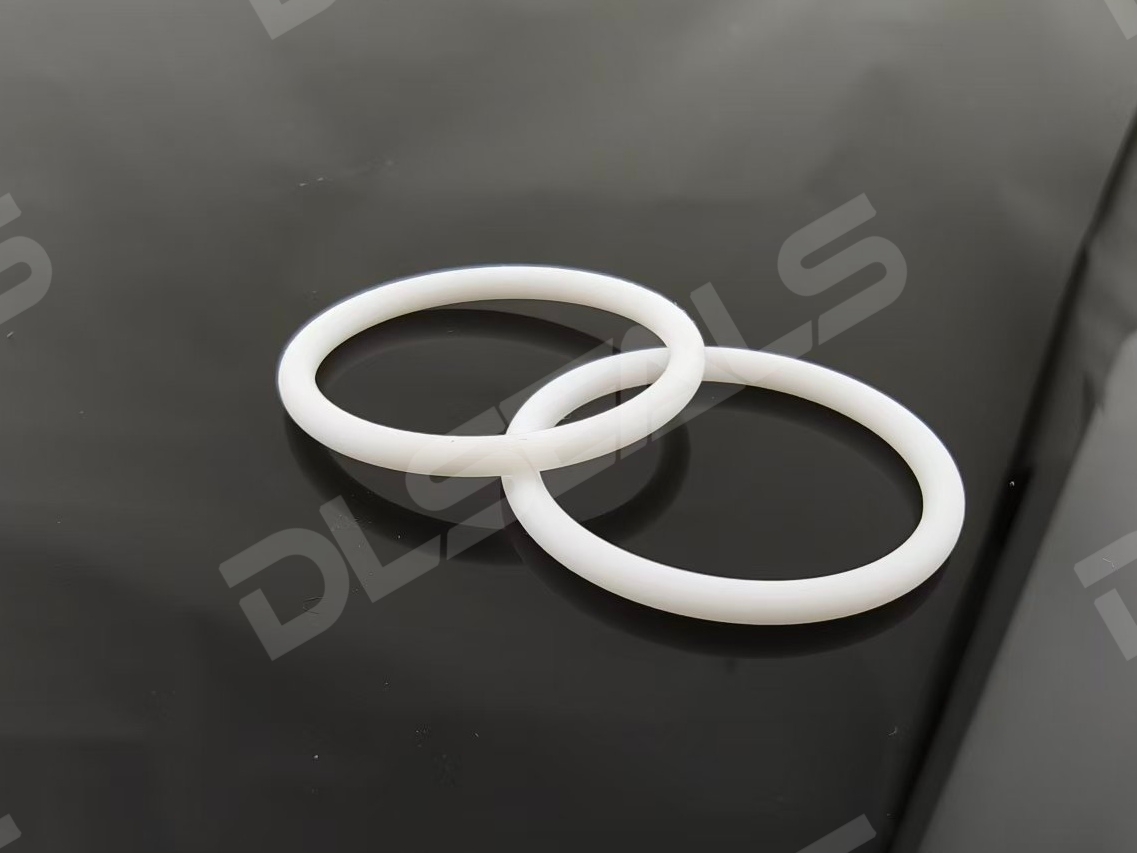
O-rings may be small components, but they play a critical role in preventing leakage and ensuring the reliability of mechanical systems. In many cases, sealing failures are not caused by material issues, but by improper sizing or groove design.
This guide explains the most common O-ring dimension terms in a clear and practical way.
1. The Three Basic Dimensions of an O-Ring
Understanding these three dimensions is essential when selecting an O-ring:
Inner Diameter (ID)
The inner diameter refers to the diameter of the hole at the center of the O-ring.
When installed on a shaft, the ID determines how tightly the O-ring fits.
- A smaller ID results in a tighter fit but may cause excessive stretching
- A larger ID may lead to a loose fit and reduced sealing performance
Outer Diameter (OD)
The outer diameter is the total diameter measured across the outside of the O-ring.
It affects how the O-ring fits within a housing or groove and ensures proper contact with surrounding surfaces.
Cross Section (CS)
The cross section refers to the thickness of the O-ring.
- A larger cross section generally provides better sealing capability
- A smaller cross section reduces friction but may weaken sealing performance
O-rings are typically specified using:
ID × CS (e.g., 20 × 2.5 mm)
2. Groove Dimensions (Installation Space)
O-rings function properly only when installed in a well-designed groove.
Groove Width
The groove width must provide enough space for the O-ring to deform properly.
- Too narrow: excessive compression and deformation
- Too wide: instability, rolling, or twisting
Groove Depth
Groove depth determines how much the O-ring is compressed after installation.
This is one of the most critical factors in sealing performance.
3. Key Parameter: Compression (Squeeze)
What is Compression?
When installed, an O-ring is slightly compressed between mating surfaces.
This deformation is called compression (or squeeze).
Why is Compression Important?
- Too little compression → leakage
- Too much compression → increased friction, wear, and reduced service life
Recommended Compression Range
- Static sealing: 15% – 30%
- Dynamic sealing: 10% – 20%
Proper compression ensures a reliable seal without excessive wear.
4. Other Important Parameters
Stretch
When an O-ring is installed on a shaft, it is slightly stretched.
- Recommended range: 2% – 5%
- Excessive stretch reduces cross-section thickness and shortens service life
Clearance Gap
This refers to the gap between mating components (such as shaft and bore).
Excessive clearance under pressure may cause extrusion failure, where the O-ring is forced into the gap and damaged.
Fill Rate
Fill rate describes how much of the groove volume is occupied by the O-ring.
- Too high: no room for thermal expansion, risk of damage
- Too low: unstable sealing
5. Conclusion
In most applications, successful sealing depends on three key factors:
- Correct O-ring size
- Proper groove design
- Controlled compression
In short:
Reliable sealing is not just about materials—it starts with the right dimensions.
Post time: Apr-30-2026


