
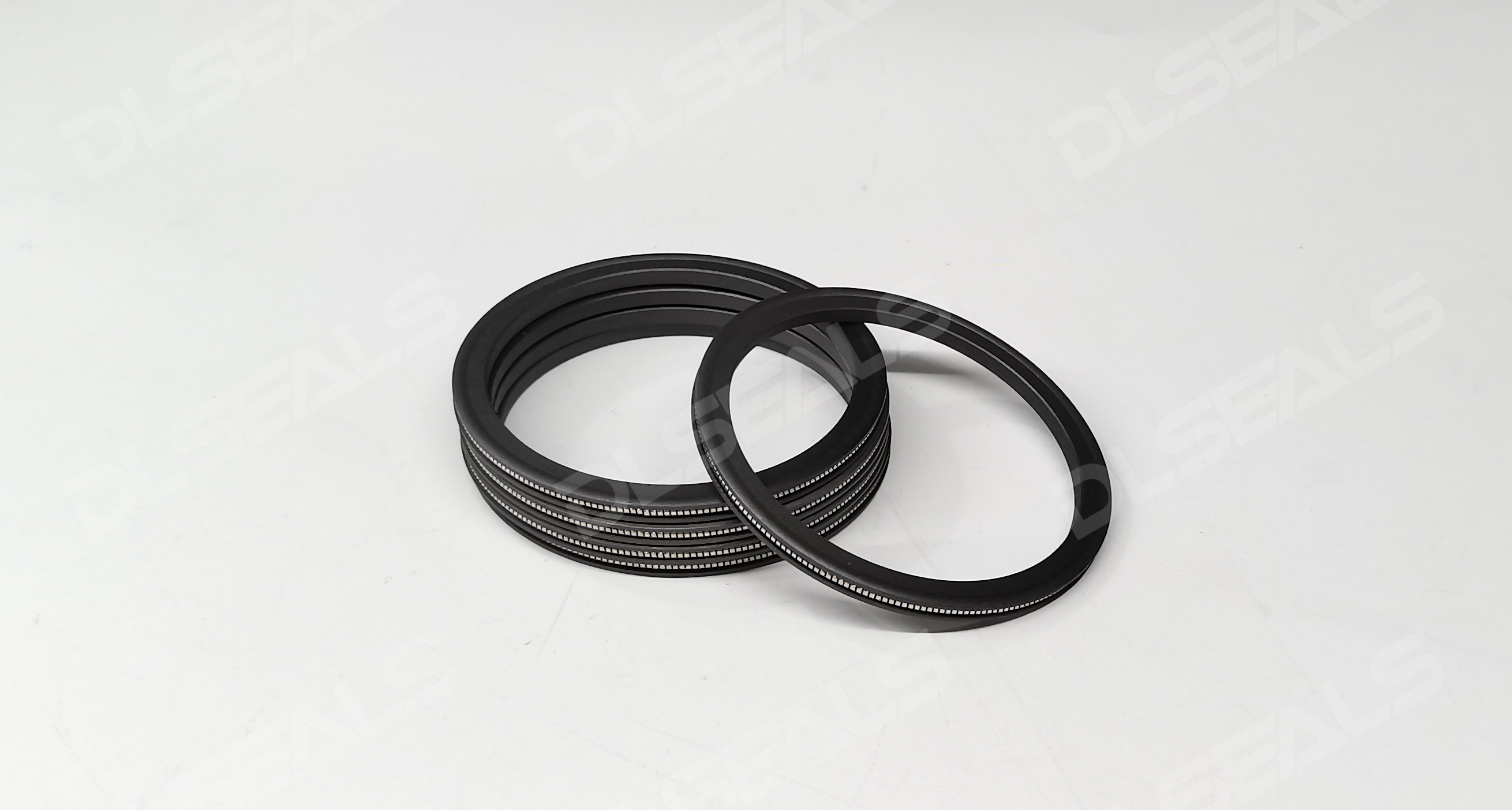
At the scorching edges of an aero-engine combustion chamber, in the throbbing heart of a heavy-duty hydraulic system, within the high-pressure confines of a chemical reactor, there exists a category of components inconspicuous yet vital—the “gatekeepers” of industrial systems: high-temperature, high-friction seals. They silently endure the dual assault of extreme heat and tremendous frictional forces, and their failure can lead to catastrophic consequences. Choosing the right “armor” for these sentinels is not merely a science but an art of finding the optimal solution under multiple constraints.
I. The Severe Challenges of Extreme Conditions: A Purgatory of Heat and Friction
The operating environment for high-temperature, high-friction seals typically means sustained temperatures above 300°C, with peaks reaching thousands of degrees, coupled with intense mechanical friction and wear. Materials face multiple ordeals in this “purgatory”:
- Thermal Stability Challenges: Materials must resist softening, creep (slow plastic deformation), phase transformation (drastic property changes due to internal structural shifts), and oxidation/corrosion at high temperatures. Heat rapidly degrades the strength of most polymers and many metals.
- Tribological Challenges: Under high pressure and high-speed relative motion, materials require excellent wear resistance, a low coefficient of friction, and good self-lubricating properties or compatibility with lubricants. Frictional heat can locally accelerate material degradation.
- Comprehensive Performance Challenges: While resisting heat and friction, materials must also retain sufficient strength, elasticity (to ensure conformal sealing), thermal conductivity (to dissipate frictional heat), and compatibility with mating materials (to prevent galling or galvanic corrosion).
II. The Material Spectrum: From Traditional Strength to Cutting-Edge Innovation
To meet these challenges, engineers have developed a range of specialized material systems, forming the core spectrum of choices.
1. Special Alloys and Metals: The Bedrock of Resilience
- Superalloys: Such as nickel-based (e.g., Inconel series) and cobalt-based alloys, with their outstanding high-temperature strength, creep resistance, and oxidation resistance, are prime choices for extreme temperatures (above 800°C), commonly used in seal rings and blade tip seals for jet engines and gas turbines.
- Specialty Stainless Steels: Such as precipitation-hardening and austenitic stainless steels, offer stability in moderately high temperatures (300-600°C) and corrosive environments, widely used in pumps, valves, and reactors.
2. Engineering Ceramics: The Hard Bones in the Flame
- Silicon Carbide/Silicon Carbide: Especially reaction-bonded or sintered silicon carbide, offers extremely high hardness, excellent wear resistance, a low thermal expansion coefficient, and stable chemical properties at high temperatures. It is a top-tier material for high-temperature mechanical seal faces and bearing seals. Silicon carbide paired with itself is a classic combination for severe conditions.
- Alumina: Relatively low-cost, high hardness, wear and corrosion resistant, but with lower toughness, suitable for high-temperature environments with minimal shock.
3. Carbon-Graphite Materials: The Self-Lubricating Sage
- Carbon-graphite impregnated with various substances (e.g., resins, metals, anti-oxidants) offers good self-lubricity, thermal conductivity, and thermal shock resistance. It is particularly suitable for dry or starved lubrication conditions. Impregnation with metals like antimony or copper enhances strength and wear resistance; special anti-oxidation treatments can raise its continuous service temperature limit to 500-600°C or even higher.
4. Advanced Composites: The Wisdom of Synergy
- Carbon-Carbon Composites: Carbon fiber reinforced with a carbon matrix, offers high strength, low density, and exceptional high-temperature performance (above 2000°C in inert atmospheres). It is a core material for thermal protection systems on spacecraft and seals for hypersonic vehicles, though oxidation resistance requires coating protection.
- Flexible Graphite: Made by chemically treating, exfoliating, and compressing natural flake graphite, it possesses excellent thermal conductivity, self-sealing ability, and high-temperature stability (450-600°C in oxidizing atmospheres, higher in inert gases). It is an outstanding material for static seals (e.g., gaskets), capable of conforming to irregular surfaces.
5. Pushing the Limits with Special Polymers and Elastomers
- Perfluoroelastomer (FFKM): Among the most heat-resistant rubbers, with continuous service temperatures up to 300°C or more, coupled with exceptional chemical inertness. It is a key material for dynamic/static seals in demanding semiconductor and chemical industry applications.
- Polyimide: A high-performance engineering plastic with long-term temperature resistance over 300°C, high mechanical strength, and good frictional properties, often used for seal rings, bearing cages, etc.
III. The Selection Logic: A Systems Engineering Approach from Requirement to Solution
Material selection is far from a simple comparison of performance parameters; it is a systematic decision-making process:
- Precisely Define Operating Conditions: Temperature range (normal, peak, cyclic), pressure, medium (corrosiveness, oxidizing/reducing nature), motion type (rotary, reciprocating, static), speed, lubrication conditions, and expected lifespan are the essential initial inputs.
- Prioritize Core Properties: Based on the conditions, determine the performance hierarchy. For example, an aero-engine seal might prioritize “high-temperature strength and oxidation resistance,” while a high-speed pump mechanical seal may value “wear resistance and low friction coefficient” more.
- Balance Compatibility and Cost: Evaluate the chemical and electrochemical compatibility of the material with the sealed medium and the counter-face material. Simultaneously, conduct a cost-benefit analysis, considering material cost, manufacturability, replacement intervals, and maintenance costs, while meeting the minimum performance requirements.
- Synergy with Design and Surface Engineering: Excellent materials must be paired with rational design (e.g., hydrodynamic groove patterns, heat dissipation structures) and surface treatments (e.g., ceramic coatings, diamond-like carbon coatings, laser texturing), which can significantly enhance sealing performance and lifespan. For example, applying tungsten carbide or DLC coatings to metal seal rings is a common strategy combining a tough substrate with an ultra-hard surface.
IV. Frontier Trends: Material Innovation for the Future
With technological advances, sealing materials are evolving towards smarter and more durable solutions:
- Functionally Graded Materials (FGMs): By precisely controlling composition, material properties change continuously from one side to the other (e.g., heat-resistant on one side, tough on the other), achieving optimal performance combinations.
- Smart and Self-Healing Materials: Exploring the use of shape memory alloys, self-healing polymers, etc., in seals, enabling them to actively adapt to deformation or repair minor damage.
- Computational Materials Science and Simulation-Driven Design: Utilizing molecular dynamics, finite element analysis, and other methods to predict high-temperature and tribological properties beforematerial synthesis, accelerating the development of new materials.
Conclusion
The selection of materials for high-temperature, high-friction seals is a delicate balancing act between thermodynamic limits, tribological laws, chemical compatibility, and economic feasibility. There is no “universal” material, only the “best guardian” tailor-made for a specific “purgatory.” From traditional alloys and ceramics to advanced composites, and onwards to future intelligent materials, the human pursuit of reliable sealing drives materials science to continually break through limits. Each successful selection reflects not only a deep understanding of materials but also a precise grasp of the needs of complex engineering systems, ensuring that the critical hearts operating between flame and pressure can continue to run safely, reliably, and powerfully.
Post time: Dec-13-2025