
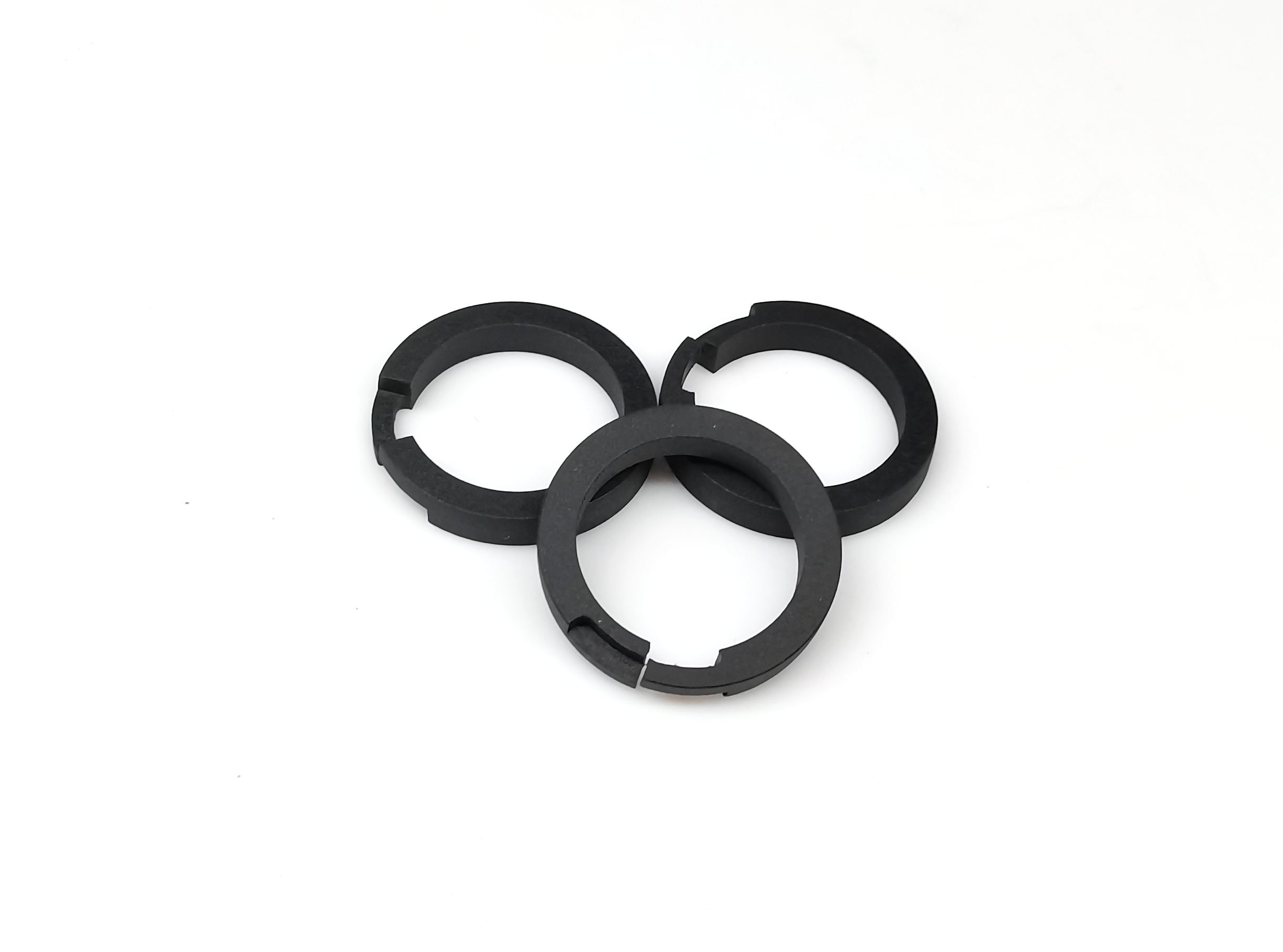
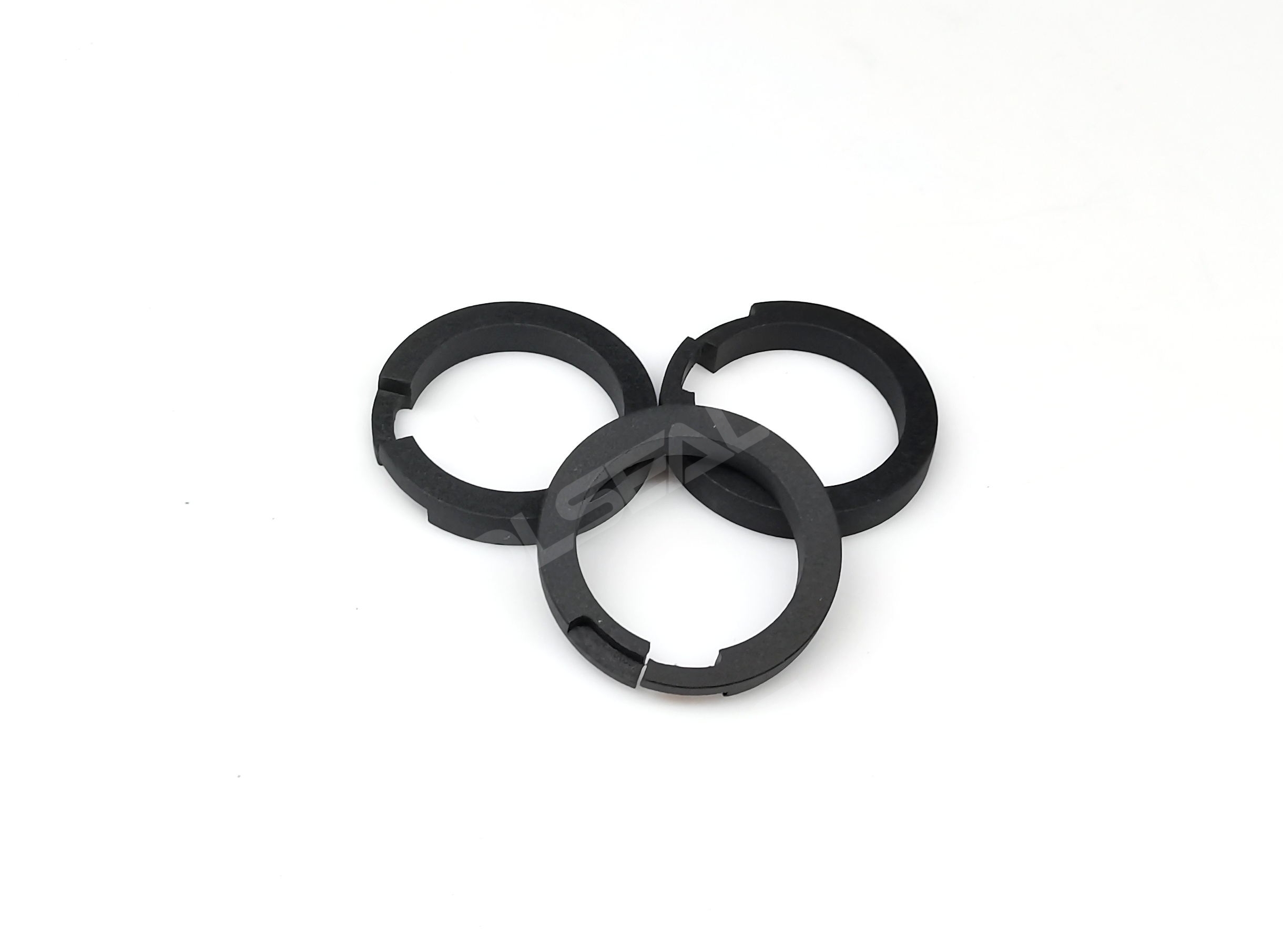
Piston rings are widely used in hydraulic cylinders, pneumatic equipment, compressors, and various industrial machinery. They provide sealing, wear resistance, and, depending on the design, guidance between moving components. In many applications, standard piston rings cannot fully meet the requirements for special dimensions, operating conditions, or installation structures. Custom piston rings are therefore an important solution for improving equipment performance and sealing reliability.
When customizing a piston ring, material selection, dimensional accuracy, cross-sectional design, and operating conditions must all be considered. A suitable design should not only meet the required dimensions but also maintain stable performance throughout the service life of the equipment.
1. Material Selection: Matching the Material to the Operating Conditions
Material selection is one of the most important steps in piston ring customization. Different materials have different properties in terms of friction, wear resistance, mechanical strength, temperature resistance, and chemical compatibility.
PTFE (Polytetrafluoroethylene) is widely used for piston rings because of its low friction coefficient, excellent chemical resistance, and good dimensional stability. However, unfilled PTFE has relatively low mechanical strength and is susceptible to creep under sustained loads. Modified PTFE compounds containing carbon, graphite, bronze, or glass fiber can improve wear resistance, compressive strength, and dimensional stability. The appropriate filler should be selected according to the operating conditions.
PEEK (Polyether Ether Ketone) offers high mechanical strength, excellent wear resistance, and good performance at elevated temperatures. It is suitable for demanding applications involving high loads, elevated temperatures, or aggressive operating environments. Its higher material cost should also be considered during selection.
POM (Polyoxymethylene) provides good stiffness, dimensional stability, and machinability. It can be used for certain piston rings and guide components where moderate mechanical loads and dimensional accuracy are required.
PA (Nylon) offers good mechanical strength and wear resistance, making it suitable for some guide and support applications. However, its moisture absorption and dimensional changes must be considered, particularly where tight tolerances are required.
The final material choice should be based on the working medium, pressure, temperature, sliding speed, lubrication conditions, and expected service life. Selecting a material based only on its general properties may not guarantee satisfactory performance in the actual application.
2. Dimensional Customization: OD, ID, and Cross-Sectional Width
Dimensional accuracy directly affects piston ring installation and operating performance. As shown in the dimensional illustration, the main dimensions generally include:
- Outer Diameter (OD): The external diameter of the ring, which determines its relationship with the cylinder bore.
- Inner Diameter (ID): The internal diameter, which relates to the piston groove or supporting structure.
- Width (W): The axial width of the ring, which determines how it fits into the piston groove.
- Radial Thickness: The difference between the outer and inner diameters divided by two, which determines the ring’s radial section.
For split piston rings, the opening gap is another important dimension. It affects installation, expansion, and the ring’s ability to maintain contact with the mating surface.
When providing dimensions for customization, it is important to clarify whether the measurements refer to the ring’s free state or its installed condition. For example, the outer diameter of an uninstalled ring may differ from its working diameter after installation in the cylinder.
The dimensional drawing should also specify tolerances, cross-sectional geometry, opening gap, and any special requirements. Measuring only the outer diameter and width is often insufficient for accurate manufacturing.
3. Structural Design and Opening Gap
Piston rings can have different structural designs depending on their intended function and installation requirements. Common designs include split rings, closed rings, and specially profiled rings.
Split rings are widely used because their opening allows installation and provides a degree of radial flexibility. However, the opening gap must be carefully designed. If the gap is too large, it may increase leakage in sealing applications. If it is too small, thermal expansion or deformation during operation may cause the ring ends to contact each other, potentially increasing friction or generating excessive stress.
The cross-sectional shape also influences performance. Rectangular sections are commonly used, while special profiles may be adopted to meet specific sealing or guiding requirements.
For high-pressure applications, the designer must also consider the clearance between the piston ring and the mating components. Excessive clearance may allow material extrusion, especially when using relatively soft polymer materials. The groove geometry, ring dimensions, material hardness, and pressure conditions should therefore be evaluated together.
4. Key Operating Conditions for Customization
A successful custom piston ring design requires a clear understanding of the actual operating environment.
- Working Pressure: Determines the mechanical load on the ring and influences material strength, groove design, and extrusion resistance.
- Operating Temperature: Affects material hardness, dimensional changes, thermal expansion, and long-term deformation.
- Sliding Speed: Influences frictional heat generation and wear. Higher speeds may require materials with better tribological properties.
- Working Medium: The ring material must be compatible with the hydraulic oil, lubricants, gases, chemicals, or other media in contact with it.
- Lubrication Conditions: Dry-running applications generally require different material considerations from continuously lubricated systems.
- Service Life: Continuous operation, frequent reciprocating movement, and pressure cycling may require materials with improved wear resistance and fatigue performance.
These parameters should be considered together rather than evaluated independently. For example, a material with excellent wear resistance may not be suitable if its thermal expansion or creep behavior is incompatible with the installation structure.
5. Custom Manufacturing and Quality Inspection
After confirming the material and dimensional requirements, the piston ring can be manufactured according to the approved drawing. Depending on the material, geometry, and production quantity, manufacturing methods may include precision turning, CNC machining, molding, or other suitable processes.
Quality inspection should focus on the following aspects:
- Outer diameter, inner diameter, and axial width
- Cross-sectional dimensions and geometric accuracy
- Opening gap and end-face condition
- Surface finish and visible manufacturing defects
- Material grade and consistency
- Dimensional stability and functional performance where required
For critical applications, prototype testing is recommended before mass production. Actual installation and operating tests can help identify problems related to friction, wear, leakage, deformation, or dimensional compatibility.
6. Information Required for Custom Piston Rings
To improve design accuracy and manufacturing efficiency, customers should provide as much of the following information as possible:
- Dimensions: Outer diameter, inner diameter, width, radial thickness, opening gap, and dimensional tolerances.
- Material Requirements: Preferred material or required properties, such as low friction, high wear resistance, or chemical compatibility.
- Operating Conditions: Working pressure, temperature range, sliding speed, and working medium.
- Application Type: Hydraulic cylinder, pneumatic cylinder, compressor, or other equipment.
- Installation Details: Piston groove dimensions, mating clearance, and assembly requirements.
- Quantity: Prototype, small-batch, or mass-production requirements.
If an existing sample is available, it can also be provided for dimensional measurement and material evaluation. A sample combined with the equipment’s operating parameters can help establish a more accurate custom design.
Conclusion
Custom piston rings require more than simply matching the outer diameter and width of an existing component. Material selection, cross-sectional dimensions, opening gap, groove geometry, and operating conditions all influence the final sealing and wear performance.
By evaluating these factors together, manufacturers can develop piston rings that meet specific equipment requirements, improve operational reliability, and extend component service life. Whether the application requires modified PTFE, PEEK, POM, nylon, or another engineering material, a properly engineered custom solution is essential for achieving consistent performance.
Post time: Nov-05-2026


