
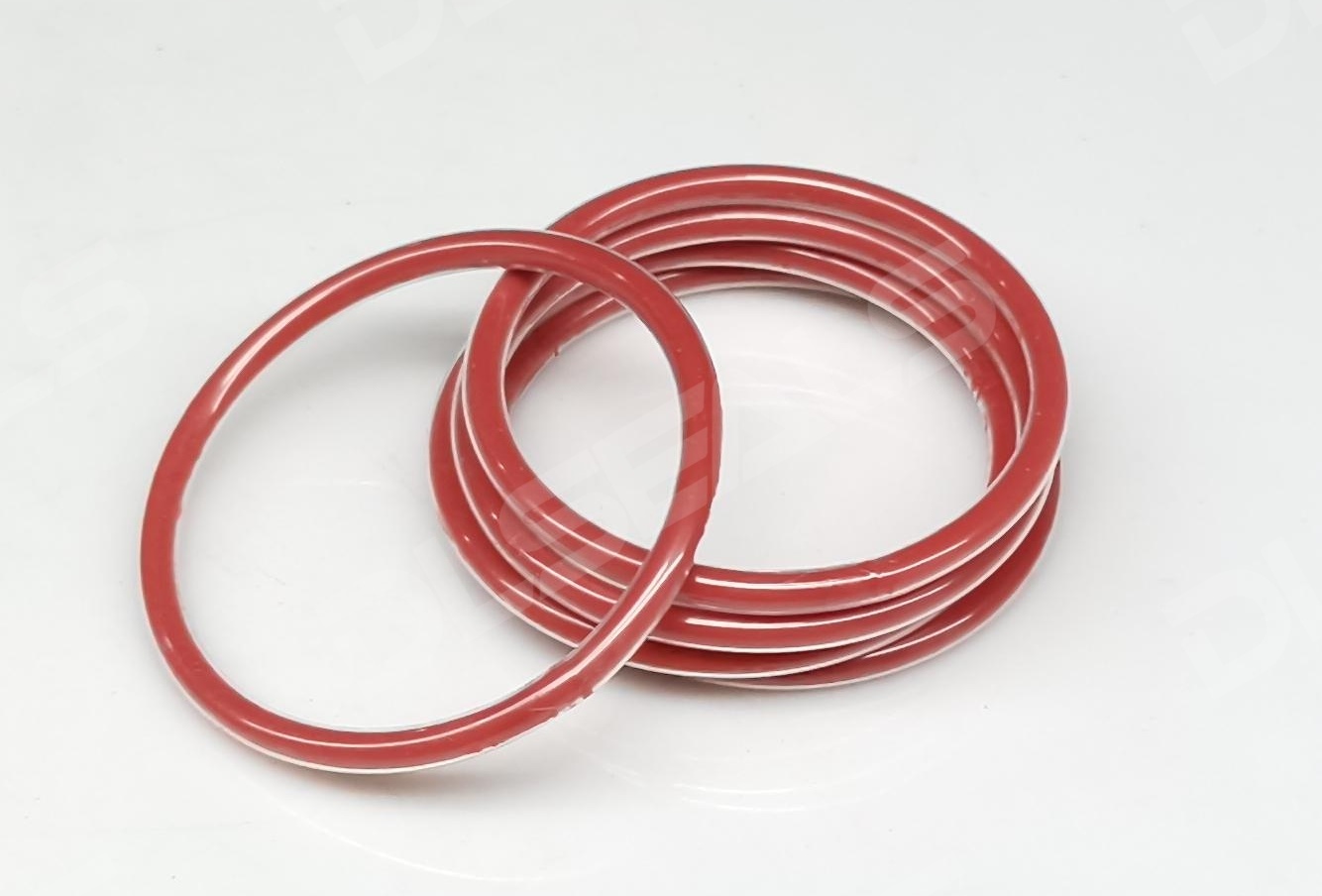
1. The Engineering Logic of Composite Design The Encapsulated O-Ring is a composite sealing element where two materials complement each other: The inner core provides pre-load, and the outer jacket provides a chemical barrier.
-
Inner Core (Elasticity): Typically made of high-quality FKM (Viton) or VMQ (Silicone). It generates continuous tension under compression, compensating for surface roughness and maintaining sealing pressure.
-
Outer Jacket (Protection): A seamless FEP or PFA (Teflon) shell. This layer offers extremely low surface energy and chemical inertness, resisting most solvents, strong acids, and alkalis.
2. Key Differences: FEP vs. PFA Jackets
-
FEP: Standard usage up to 205°C. Excellent smoothness and transparency. Ideal for static sealing and general corrosive environments.
-
PFA: High-performance usage up to 260°C. Superior mechanical strength and fatigue resistance. Preferred for high-frequency or extreme-temperature applications.
3. Engineering Limitations and Installation Tips Unlike pure rubber, encapsulated rings are less stretchable. DLSEALS recommends heating the rings in 80°C – 100°C water before installation to soften the jacket, preventing cracks during stretching.
Conclusion: Encapsulated O-rings are the equilibrium between “rigid protection” and “flexible compensation.” Guangdong DLSEALS Technology Co., Ltd. advises engineers to match material combinations precisely to the specific medium concentration and pressure fluctuations for long-term stability.
Post time: Mar-24-2026