
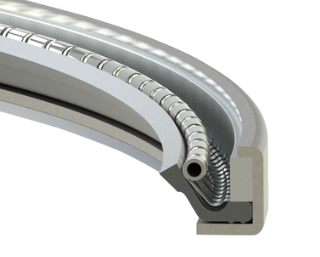
In the precise world of mechanical transmission, an efficient and reliable sealing component acts like a loyal sentinel, silently guarding the purity and stability of the system. The Model 64 oil seal shown in the image is precisely such a “silent sentinel.” It appears structurally simple yet embodies sophisticated engineering design. It serves as a critical barrier, preventing lubricant leakage and blocking external contamination, and is widely used for dynamic sealing on various rotating shafts. It ensures the durable and smooth operation of countless devices, from automotive engines to industrial pumps and valves.
1. Compact Structure, Layered Defense
The exceptional performance of the Model 64 oil seal stems from its classic and efficient composite two-material structure. A cross-sectional view clearly reveals its design layers:
- Elastic Outer Lip & Static Seal Layer: The outermost part and the area contacting the housing are typically made of oil-resistant rubber with a certain hardness (e.g., Nitrile rubber, Fluorocarbon rubber). This material provides necessary elasticity for a tight press-fit into the housing bore, ensuring a reliable static seal to prevent leakage between the seal’s outer diameter and the housing. It also forms the first line of defense against the external environment (like dust, mud, water).
- Main Sealing Lip & Dynamic Seal Core: This is the most technologically advanced part. A flexible rubber sealing lip, precision-ground, contacts the rotating shaft surface with a specific interference fit. Its unique lip shape utilizes hydrodynamic principles to form an extremely thin, stable oil film between the lip and the shaft during rotation. This film provides effective lubrication, reducing friction and wear, while its surface tension is sufficient to prevent bulk oil leakage, achieving the delicate balance of “seeping without leaking.”
- Reinforcement by the Metal Garter Spring: A corrosion-resistant metal coiled garter spring is tightly wound behind the sealing lip. Its role is crucial: to provide a continuous, stable radial load. As the equipment operates over time, normal lip wear or rubber stress relaxation may occur. The spring automatically compensates, ensuring the lip maintains constant contact pressure against the shaft, thus preserving stable sealing performance throughout the equipment’s lifespan. This is the “secret” enabling the Model 64 seal to accommodate complex conditions like slight shaft eccentricity or runout.
2. Core Functions & Outstanding Characteristics
Based on this structure, the Model 64 oil seal performs three core functions:
- Retention: Effectively contains internal lubricating oil, grease, or other working media.
- Exclusion: Firmly blocks external contaminants like dust, dirt, and moisture from entering, protecting precision components such as bearings and gears.
- Separation: In some applications, it isolates two different media or separates chambers.
Its characteristics make it a classic choice:
- Compact & Highly Adaptable: Standardized size series allow installation in limited spaces, suitable for various standard shaft diameters and cavities.
- Durable, Reliable & Easy to Maintain: Offers long service life and high cost-effectiveness when correctly installed and applied within specifications.
- Broad Compatibility: By selecting different rubber compounds (e.g., high-temperature resistant Acrylate rubber, chemical-resistant Fluorocarbon rubber), it can handle temperatures from -40°C to over 200°C and challenges from various oils and chemicals.
3. Wide Applications & Selection Points
The Model 64 oil seal is a universal component ubiquitous in modern industry:
- Automotive: Engine crankshafts, camshafts, transmissions, wheel hubs, differentials.
- Machinery: Various gearboxes, pumps, compressors, fans, agricultural machinery.
- Household Appliances: Washing machine motors, air conditioner compressors.
Correct selection and installation are crucial for its effectiveness:
- Key Selection Factors: Must consider shaft speed, operating temperature, media type, pressure environment, as well as shaft surface hardness and finish to choose the most suitable seal material (rubber type) and spring material.
- Critical Installation: Ensure shaft and housing chamfers are smooth and burr-free. Apply grease to the shaft and seal lip. Use dedicated tools or fixtures to press uniformly, ensuring the seal is straight and not tilted. Particularly, protect the fragile sealing lip from being scratched by keyways or threads on the shaft.
Conclusion
In summary, the Model 64 oil seal in the image is far from a simple rubber ring. It is a masterpiece of engineering—a perfect fusion of static and dynamic, flexible and rigid, elasticity and endurance. Its ingenious cross-sectional structure reveals how it solves the complex challenge of rotary sealing in the most elegant way. As an indispensable sealing element in mechanical transmission systems, it performs its duty steadfastly and inconspicuously. With extremely high reliability, it lays a solid foundation for the smooth operation and long service life of modern industrial equipment, truly exemplifying the principle of “small part, big impact” in the field of mechanics.
Post time: Dec-16-2025