
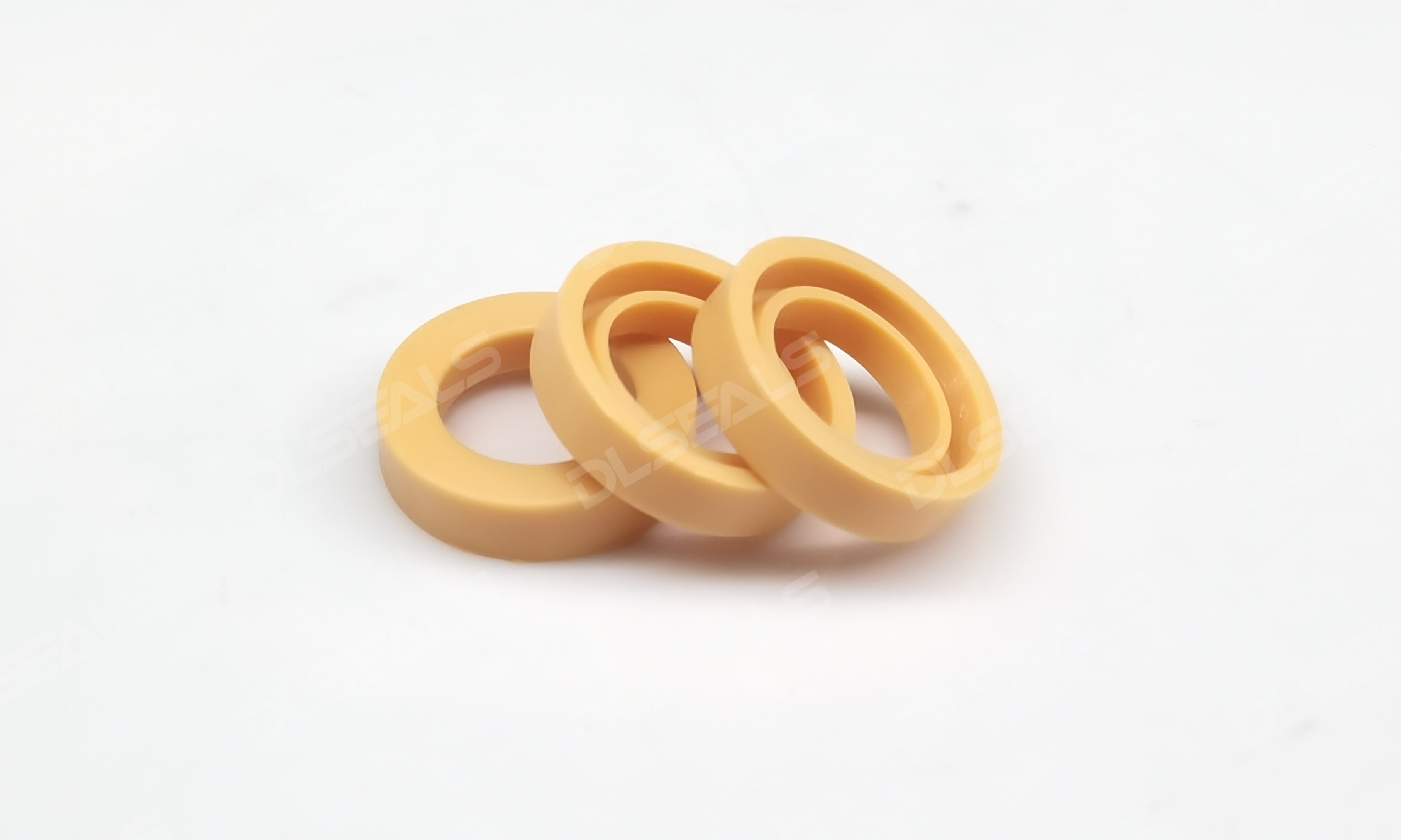
In complex industrial environments involving high temperatures, high pressures, high speeds, aggressive chemicals, and abrasive media, conventional rubber sealing materials may suffer from hardening, swelling, wear, extrusion, or premature aging due to the combined effects of temperature, pressure, media, and friction. As industries such as aerospace, petrochemical processing, hydraulics, semiconductor manufacturing, energy equipment, and advanced machinery continue to develop, sealing materials are required to provide higher levels of temperature resistance, pressure resistance, wear resistance, and dimensional stability.
PEEK (Polyether Ether Ketone) is a high-performance engineering thermoplastic with excellent resistance to high temperatures, chemicals, wear, and mechanical loads, as well as outstanding dimensional stability. These characteristics make PEEK an ideal material for seals operating under demanding industrial conditions. In applications where conventional PTFE, PU, or elastomeric materials may have difficulty maintaining long-term stability, PEEK can provide higher mechanical strength and structural reliability.
Why Is PEEK Suitable for Sealing Applications?
The major advantage of PEEK is not a single outstanding property, but its excellent combination of properties. It can maintain good performance under the combined effects of temperature, pressure, friction, and chemical exposure, making it particularly suitable for demanding sealing applications.
First, PEEK offers excellent high-temperature resistance. Compared with conventional rubber materials, PEEK maintains better dimensional stability and mechanical strength at elevated temperatures and is less likely to experience significant softening, deformation, or rapid performance degradation. This makes PEEK seals suitable for high-temperature hydraulic systems, compressors, pumps, valves, and petrochemical equipment.
PEEK also provides high mechanical strength and rigidity. Under high-pressure conditions, sealing elements are subjected to significant extrusion forces. If the material lacks sufficient strength, the seal may deform, extrude into the clearance gap, or eventually fail. PEEK has excellent compressive strength and resistance to deformation, allowing it to maintain its geometry more effectively in high-pressure sealing systems.
In addition, PEEK has excellent chemical resistance. It can withstand a wide range of oils, fuels, solvents, acids, alkalis, and other chemical media, making it suitable for applications in the petroleum, chemical processing, and energy industries. However, PEEK should not be considered universally resistant to every chemical. Material compatibility should still be evaluated according to the specific medium, concentration, temperature, and pressure.
Wear Resistance of PEEK Seals
For reciprocating, rotary, and high-frequency friction applications, wear resistance has a direct impact on seal service life.
PEEK provides good wear and friction resistance and is particularly suitable for pistons, valve stems, rotating shafts, and guide components where continuous sliding contact occurs. Its performance can be further improved by incorporating fillers such as carbon fiber, glass fiber, graphite, or PTFE.
For example, carbon-fiber-reinforced PEEK generally provides higher mechanical strength and wear resistance and can be used in high-load friction environments. PTFE- or graphite-filled PEEK can help reduce friction and improve sliding performance.
Therefore, PEEK sealing solutions are not limited to unfilled PEEK. Different material formulations can be selected according to the operating conditions, allowing the sealing material to be better matched to the actual application.
Where Are PEEK Seals Used?
PEEK seals are particularly suitable for industrial equipment requiring high mechanical strength, temperature resistance, and wear resistance.
In high-pressure hydraulic systems, PEEK can be used for piston seals, guide rings, back-up rings, and other sealing components. Its high mechanical strength helps reduce deformation and extrusion under high-pressure conditions.
In oil and gas equipment, PEEK seals can be used in valves, wellhead equipment, pumps, and other components exposed to high temperatures and pressures. In environments involving hydrocarbons, chemical media, and significant pressure fluctuations, PEEK can provide reliable overall performance.
In chemical processing equipment, the excellent chemical resistance of PEEK makes it suitable for valves, pumps, and reaction equipment. However, material compatibility should still be evaluated based on the specific chemical medium, operating temperature, and concentration.
In high-temperature equipment and energy systems, PEEK can be used for high-temperature sealing and wear-resistant components, particularly in applications where conventional elastomeric materials cannot withstand long-term exposure to elevated temperatures.
PEEK is also used in aerospace, semiconductor equipment, food-processing machinery, and precision engineering. Its low moisture absorption, dimensional stability, and good radiation resistance make it suitable for certain specialized environments.
PEEK vs. PTFE Seals: What Is the Difference?
PEEK and PTFE are both widely used high-performance sealing materials, but they have different strengths.
PTFE has an extremely low coefficient of friction and excellent chemical resistance. It is therefore highly suitable for low-friction applications, aggressive chemical environments, and a wide range of temperature conditions. However, unfilled PTFE is relatively soft and may experience cold flow or creep under high loads and pressures. Filled PTFE compounds or additional back-up and support components are often used to address these limitations.
PEEK, on the other hand, provides higher mechanical strength, rigidity, and resistance to deformation. It generally offers advantages in high-load, high-pressure, and wear-intensive applications.
Therefore, when the primary requirements are high pressure, high mechanical load, extrusion resistance, and wear resistance, PEEK may be a preferred material.
When low friction, chemical resistance, and excellent sliding performance are the primary requirements, PTFE and modified PTFE compounds may be more suitable.
In some applications, PEEK and PTFE can also be used together. For example, PEEK can function as a support or anti-extrusion component while PTFE serves as the primary sliding sealing material. This combination can provide both mechanical strength and low friction.
PEEK Seals Are Not Simply a Matter of “Harder Is Better”
Although PEEK has high mechanical strength, sealing performance cannot be determined simply by selecting the hardest available material.
The actual performance of a seal depends on multiple factors, including the material, sealing geometry, gland design, preload, medium, pressure, temperature, and operating speed.
Because PEEK is relatively rigid, applications requiring significant elastic recovery or low-pressure sealing may not always be best served by relying solely on PEEK to generate sealing contact pressure. In such cases, a combined sealing structure can be used. For example, a PEEK sealing ring can be combined with an elastomer O-ring. The O-ring provides continuous preload, while the PEEK component provides the primary pressure resistance, wear resistance, and extrusion resistance.
For high-pressure reciprocating seals, the sealing groove, extrusion gap, and back-up ring configuration must also be properly designed to prevent the material from being forced into the clearance gap under pressure.
Therefore, successful PEEK sealing design is not simply about selecting a high-performance material. It requires a sealing system in which the material and geometry are properly matched to the actual operating conditions.
Key Parameters for Selecting PEEK Seals
When designing or selecting PEEK seals, several operating parameters should be evaluated:
Temperature: The operating temperature and temperature fluctuations determine long-term material stability.
Pressure: Both normal operating pressure and peak pressure, as well as pressure fluctuations, should be considered. High-pressure applications require particular attention to extrusion resistance.
Medium: Compatibility varies depending on the specific oil, gas, chemical, or other operating medium.
Motion: Rotary, reciprocating, and static sealing applications have different material and design requirements.
Speed: High-speed movement increases frictional heat and places greater demands on friction characteristics and heat dissipation.
Clearance: Excessive clearance can increase the risk of seal extrusion. The appropriate clearance should therefore be determined according to pressure and material properties.
Friction and Wear: For long-term dynamic sealing applications, the coefficient of friction, PV characteristics, wear resistance, and potential impact on the mating shaft or cylinder surface should all be considered.
Material Modification: Depending on the application, options may include unfilled PEEK, carbon-fiber-reinforced PEEK, glass-fiber-reinforced PEEK, PTFE-filled PEEK, and other modified PEEK compounds.
The Future of PEEK Sealing Technology
As industrial equipment continues to move toward higher temperatures, pressures, speeds, and longer service lives, seals are no longer simply components used to prevent leakage. They have become critical components affecting the reliability and operating life of industrial equipment.
With its excellent combination of mechanical strength, temperature resistance, chemical resistance, wear resistance, and dimensional stability, PEEK has significant potential in high-end hydraulic systems, oil and gas equipment, energy systems, aerospace, and precision machinery.
Future development of PEEK sealing technology will increasingly focus on advanced material modification, tribological performance, extreme-environment resistance, and the integrated optimization of materials and sealing structures.
For engineering applications, no single material is suitable for every operating condition. The real advantage of PEEK lies in applications where conventional rubber, PTFE, or standard engineering plastics cannot simultaneously meet the requirements for temperature resistance, pressure resistance, wear resistance, and chemical compatibility.
Through appropriate material modification and sealing design, PEEK can provide a more reliable sealing solution for demanding industrial environments.
DLSEALS can provide PEEK seal material selection, sealing design, and customized sealing solutions based on operating temperature, pressure, medium, motion, speed, and installation conditions. The goal is not only to meet the immediate sealing requirements but also to improve long-term reliability and service life.
Post time: Oct-08-2026


