
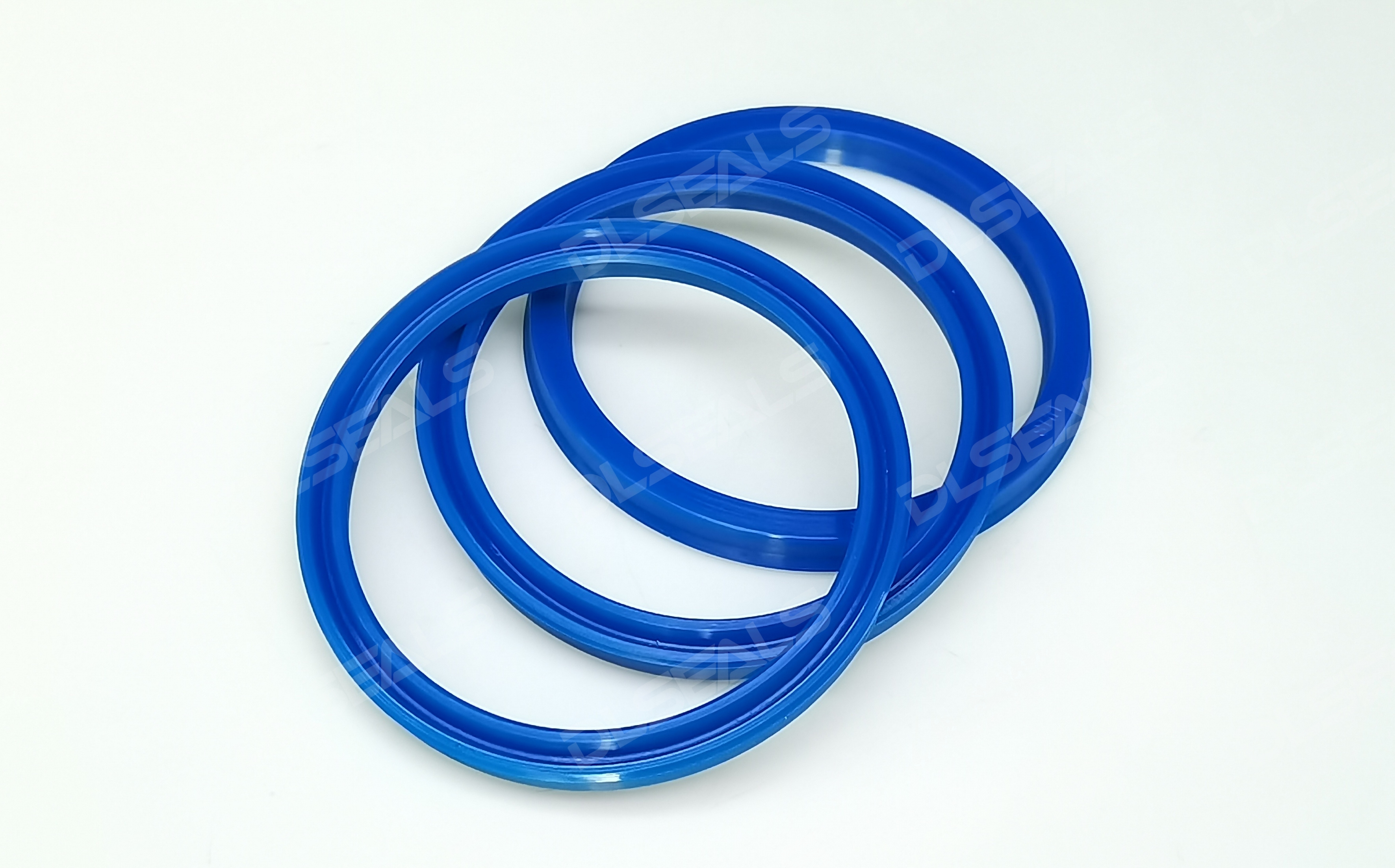
In industrial equipment, automobiles, construction machinery, and precision instruments, the dust seal, though a seemingly minor component, plays a crucial role as a “sentry.” Its core mission is to prevent external contaminants (such as dust, mud, moisture, and other particulates) from infiltrating the system’s interior, protecting the primary seals (like oil seals or guide rings) and moving parts. This significantly extends equipment lifespan and ensures system reliability and precision.
I. Core Structural Design of Dust Seals
The design of dust seals varies widely to meet different operational challenges, but its basic principle revolves around “effectively scraping and expelling contaminants.”
1. Classification by Installation and Function:
- Radial Dust Seals: The most common type, installed on the outside of a shaft or the inside of a bore, forming a radial interference fit with the moving shaft. Its main lip maintains tight contact with the shaft surface, scraping contaminants outward as the shaft reciprocates or rotates.
- Axial Dust Seals: Used to prevent contaminants from entering along the axial direction, typically mating with an end face.
- Combined Dust/Seal Rings: Integrate dust protection with the primary sealing function (e.g., the sealing lip of a rubber oil seal) into a single unit. They are compact and can simultaneously provide dust exclusion and retain oil/grease.
2. Key Structural Features:
- Main Scraping Lip: The core of the structure, usually designed with a sharp edge (scraper lip) to efficiently remove contaminants with minimal contact stress and friction. The lip angle and shape (e.g., sharp, rounded, multi-lip) are optimized based on the nature of the contaminants and dry/wet operating conditions.
- Exclusion/Expulsion Grooves: Spiral grooves, straight grooves, or spaces located on the outer side of the main scraping lip. They collect and channel away the scraped-off contaminants, preventing buildup at the lip which could lead to re-ingress or shaft wear.
- Spring Loading (for certain types): Some high-end or heavy-duty dust seals incorporate a spring at the base of the main lip to provide a constant radial force. This compensates for lip wear, ensuring consistent scraping performance throughout its service life.
- Static Sealing Outer Diameter: The outer circumference of the dust seal is often designed with barbs, knurls, or a metal outer case to ensure a secure static seal with the housing bore, preventing contaminant ingress from the backside.
II. Material Characteristics of Dust Seals
Material selection directly determines the dust seal’s suitability for the environment, durability, and performance.
- Polyurethane: One of the most widely used materials. Known for its exceptional abrasion resistance, high mechanical strength, and good tear resistance. Suitable for heavy loads, high pressure, high contamination (e.g., construction, agricultural machinery), and dry running conditions. Its high-temperature resistance is generally inferior to premium rubbers.
- Nitrile Rubber: Offers good oil resistance, elasticity, and cost-effectiveness. Suitable for most industrial environments with lubricating oils or greases. Its elasticity provides good followability, accommodating minor shaft eccentricity.
- Fluorocarbon Rubber: Excels in extreme environments, possessing excellent high-temperature resistance (up to 200°C+), chemical resistance, and weather resistance. Used in demanding applications like high-temperature engines and chemical processing equipment, but at a higher cost.
- Thermoplastic Elastomers / Engineering Plastics: Materials like polyoxymethylene (POM) or modified PTFE offer low friction coefficients, self-lubrication, and excellent chemical compatibility. Often used in precision equipment with strict friction requirements or clean environments like food, pharmaceutical, and medical industries.
III. Working Principle and Performance Characteristics
A dust seal doesn’t just “block”; it dynamically “scrapes” and “channels.”
- Scraping Effect: As the shaft retracts or rotates, the sharp main scraping lip shears off solid contaminants adhering to the shaft surface against the direction of potential ingress.
- Pumping Effect (for certain designs): Specially designed lip geometries (e.g., reverse helices) can create a slight pumping action during shaft movement, actively expelling tiny particles or moisture that may have penetrated.
- Summary of Key Performance Characteristics:
- Excellent Contaminant Exclusion: Core performance, protecting the internal system.
- Low Friction and High Wear Resistance: Effectively removes dust while minimizing shaft wear and system energy consumption.
- Good Followability: Material elasticity allows it to adapt to dynamic shaft movements like eccentricity and runout.
- Environmental Adaptability: Material selection enables resistance to temperature, media, UV exposure, and other external factors.
- Ease of Installation and Reliability: Designs often incorporate fool-proofing features for correct installation, ensuring long-term reliability.
IV. Applications and Selection Considerations
Dust seals are widely used in hydraulic cylinder piston rods/plungers, guide rods, linear bearings, rotating shaft ends, automotive shock absorbers, slide rails, and any other reciprocating or rotating components requiring protection of internal cleanliness.
Selection requires comprehensive consideration of:
- Contaminant Type: Dry dust, wet slurry, metal chips, etc.
- Motion Type and Speed: Reciprocating, rotating, oscillating; high or low speed.
- Environmental Conditions: Temperature range, exposure to high-pressure washdown, chemical media.
- Shaft Condition: Surface hardness, finish, eccentricity, and runout.
- Space Constraints: The size of the installation groove determines the dust seal’s cross-sectional shape.
Conclusion
The dust seal is the first line of defense for industrial equipment against external invasion. Its ingenious structural design and diverse material characteristics combine to form a reliable microscopic barrier. Behind the stable operation of everything from giant tunnel boring machines to precision semiconductor manufacturing equipment lies the unsung work of these “cleaning guardians.” Correct selection and application are key to maximizing their effectiveness and optimizing the total lifecycle cost of equipment.
Post time: Mar-02-2026