
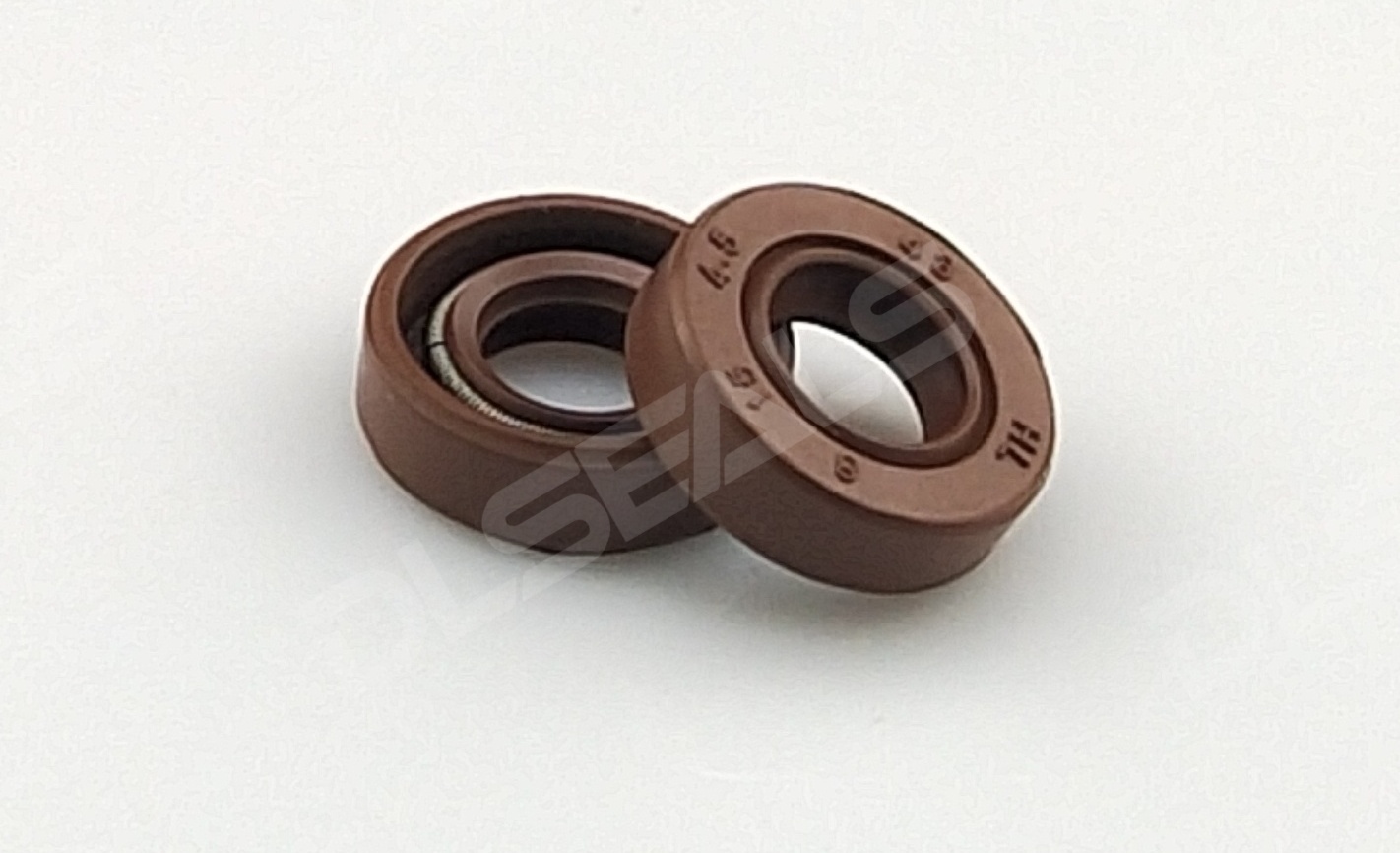
Skeleton oil seal, also known as radial shaft seal or lip seal, is a widely used sealing element in mechanical equipment. It is primarily designed to prevent lubricant leakage and ingress of external contaminants into rotating shaft systems. Composed of a rubber sealing body, metal skeleton, and garter spring, it features a simple structure, reliable sealing performance, and good wear resistance. It plays a key role in automobiles, construction machinery, pumps, valves, and other fields. The production process of skeleton oil seals involves multidisciplinary knowledge including materials science, mechanical processing, and chemical engineering. The core lies in ensuring strong bonding between rubber and metal skeleton, precise lip forming, and overall sealing stability. This article focuses on the production process and flow of skeleton oil seals, detailing the main sections, technical points, and quality control measures, aiming to provide a technical reference for relevant practitioners.
The production flow of skeleton oil seals is generally divided into six main sections: rubber compound preparation, mold preparation, skeleton preparation, spring preparation, product vulcanization molding, and post-processing & assembly. These sections are interconnected, forming a complete closed-loop production system to ensure controllable quality from raw materials to finished products.
Rubber Compound Preparation Section
Rubber preparation is the foundational section in skeleton oil seal production, directly affecting the elasticity, oil resistance, and temperature resistance of the seal. Main processes include: raw material incoming inspection, compounding, mixing, filtering, addition of vulcanizing agents, compound inspection, and preforming.
First, raw materials (such as nitrile rubber, fluororubber, silicone rubber, as well as fillers, plasticizers, and antioxidants) undergo strict inspection to ensure purity, particle size, and chemical composition meet standards. Qualified materials enter the compounding stage, where ingredients are weighed and mixed according to the formula. Mixing is performed using open mills or internal mixers to uniformly disperse the materials and form the rubber base. To prevent scorching, a two-stage mixing method is commonly used: main ingredients are mixed and filtered first, followed by the addition of vulcanizing agents (such as sulfur or peroxides). The filtering process uses extruders or strainer machines to remove foreign matter and improve compound purity.
Compound inspection is a critical control point, including hardness, tensile strength, compression set, and oil resistance tests, conducted with vulcanameters, hardness testers, etc. Only qualified compound proceeds to preforming. Traditionally, preforming involves sheeting on open mills and cutting; modern processes use precision preforming machines (injection or extrusion type) to directly produce semi-finished products with precise shape and weight, controlling weight variation within ±0.5% and avoiding manual errors. The entire section emphasizes environmental control, such as temperature 20–25°C and humidity below 60%, to prevent aging.
Mold Preparation Section
The mold serves as the “blueprint” for skeleton oil seal forming and directly determines lip geometry and sealing effectiveness. This section involves mold design, machining, and surface treatment.
Mold materials are typically high-carbon steel or alloy steel blanks, first forged to eliminate internal stress, then quenched and tempered to improve hardness and toughness. Depending on seal specifications, mold cavities require precision turning and milling, with tolerances controlled within ±0.01 mm. Complex molds (e.g., multi-lip designs) may require CNC machining or EDM. Surface treatments include nitriding or hard chrome plating to enhance wear resistance and demolding performance. Nitriding layer thickness is generally 0.3–0.5 mm, extending mold life beyond 100,000 cycles.
Mold preparation also considers thermal expansion coefficient matching to ensure dimensional stability during vulcanization. Modern factories use CAD/CAM software for design support and rapid iteration.
Skeleton Preparation Section
The metal skeleton provides rigidity and mounting support for the oil seal. This section includes stamping and surface treatment.
Skeleton stamping uses cold stamping with presses and dies to form ring-shaped structures from steel sheets (cold-rolled steel or stainless steel). Simple inner skeletons can be formed in one step, while outer or combined skeletons require multi-stage operations including drawing, flanging, and fine blanking. Post-stamping deburring and dimensional inspection are performed, with tolerances within ±0.05 mm.
Surface treatment aims to enhance rubber-to-metal bonding strength. Common methods include: (1) alkaline degreasing followed by dry sandblasting, cleaning, drying, and adhesive coating; (2) wet sandblasting followed by cleaning, drying, and coating; (3) degreasing, acid pickling, phosphating, then adhesive coating. Phosphating layer thickness is 5–10 μm, providing micro-rough surface for improved adhesion. Adhesives (e.g., Chemlok series) are uniformly applied and dried at 80–120°C. Many manufacturers adopt continuous lines for automated sandblasting and phosphating to reduce human contamination. Wastewater from this section requires environmental compliance, such as neutralization of phosphating solutions.
Spring Preparation Section
The garter spring provides radial force to the sealing lip for dynamic sealing. This section includes spring coiling, butt joining, cutting, and inspection.
Raw material is stainless steel or carbon steel wire (0.2–0.5 mm diameter). Automatic spring coiling machines form helical shapes with controlled turns and pitch. After coiling, laser or resistance welding joins the ends to ensure smooth, protrusion-free joints. Then, springs are cut to specified lengths (matching seal circumference). Inspection includes tensile testing (spring constant k value) and fatigue testing to ensure no failure after 10⁶ cycles. Springs may be zinc-plated or oiled for rust prevention.
Product Vulcanization Molding Section
Vulcanization molding is the core section that integrates rubber, skeleton, and mold to achieve rubber crosslinking and bonding to the skeleton.
Equipment includes conventional plate vulcanizers, vacuum automatic vulcanizers, or rubber injection molding machines. Process parameters vary by compound type: temperature 150–180°C, pressure 10–20 MPa, time 3–10 minutes. Vacuum machines remove air bubbles for higher density. Injection machines suit high-volume production, injecting compound into mold cavities before heating. High-temperature short-time vulcanization (e.g., 180°C/3 min) is pursued to improve efficiency and reduce energy consumption. After molding, rapid cooling sets the shape and prevents lip deformation.
Post-Processing and Assembly Section
Post-processing ensures perfect appearance and function, including trimming, assembly, inspection, and packaging.
Lip flash is removed using specialized knives or laser cutting. Outer skeletons are crimped if needed. Springs are assembled evenly into lip grooves. Inspection covers appearance (no cracks or bubbles), dimensions (lip diameter tolerance ±0.1 mm), hardness (Shore A 70–90), and sealing performance (leakage rate <0.1 ml/h). Qualified products are dust-proof packaged and stored.
Quality Control and Technical Key Points
Full-process quality control follows ISO/TS 16949 standards, including process capability index (CpK > 1.33) and online monitoring. Key technical points: (1) bonding strength test (peel force >5 N/cm); (2) selection of environmentally friendly materials (low-VOC compounds); (3) automation integration, such as robotic arms for assembly, improving consistency. Common issues like scorching or bonding failure can be addressed by optimizing formulas and parameters.
Conclusion
The production process of skeleton oil seals embodies the essence of precision manufacturing. Strict control is required at every stage from raw materials to finished products. With the advancement of Industry 4.0, digital monitoring and intelligent equipment will further enhance production efficiency and product quality. In the future, development of new materials (such as HNBR) and green processes will become industry trends, driving skeleton oil seals toward higher performance and longer service life.
Post time: Jan-23-2026