
1. Product Overview
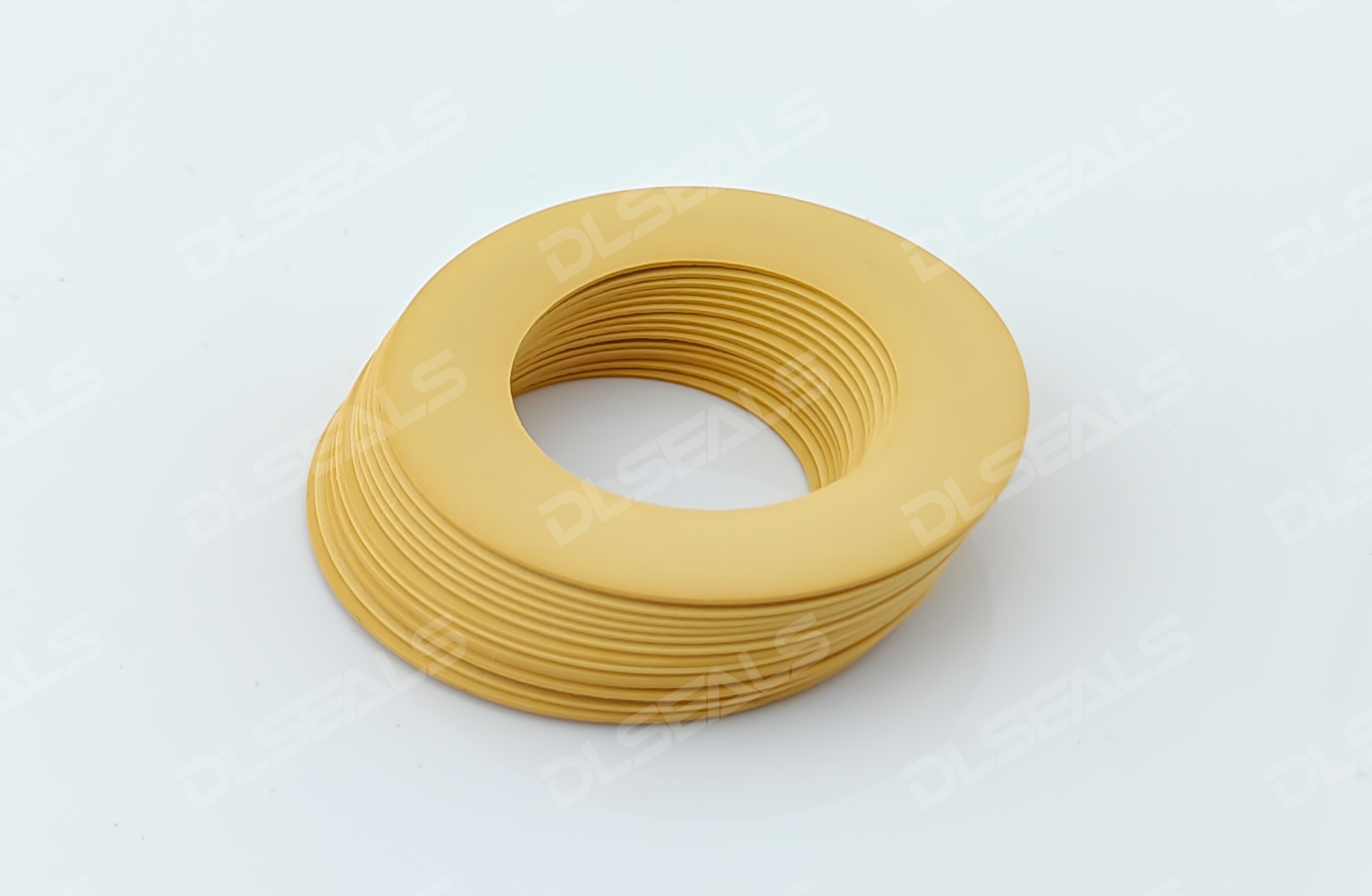
A PTFE cup seal is a lip-type sealing component manufactured primarily from polytetrafluoroethylene (PTFE). It is named after its cup-shaped cross-sectional profile. Its structure typically consists of a cup-shaped body and sealing lips that contact the mating surfaces to provide sealing against liquids or gases.
Compared with conventional rubber cup seals, PTFE cup seals offer excellent chemical resistance, a low coefficient of friction, and a wide operating temperature range. They are particularly suitable for corrosive media, limited lubrication conditions, and high- or low-temperature applications where conventional rubber materials may not meet performance requirements.
Depending on equipment requirements and operating conditions, PTFE cup seals can be manufactured from virgin PTFE or modified PTFE compounds. The lip geometry, wall thickness, and overall structure can also be customized to accommodate different pressure levels, motion types, and installation spaces.
2. Structural Design and Sealing Principle
A PTFE cup seal generally consists of a cup-shaped body and sealing lips. After installation, the sealing lips contact the mating surface of a shaft, piston, or sealing cavity, establishing the initial sealing condition.
When system pressure is applied, the medium acts on the internal or rear pressure-exposed area of the cup seal, causing the sealing lips to deform accordingly and increasing their contact pressure against the mating surface. This mechanism, in which system pressure helps enhance sealing performance, is commonly referred to as pressure-energized sealing.
For reciprocating applications, the sealing lips must maintain stable contact during movement while minimizing friction and wear. In static sealing applications, sealing performance mainly depends on installation compression, structural conformity, and the deformation characteristics of the material.
It is important to note that PTFE has significantly lower elastic recovery than rubber. Therefore, a PTFE cup seal cannot rely entirely on its own elasticity to maintain long-term sealing performance. Its design must take into account lip preload, structural support, compression deformation, and operating pressure. For low-pressure applications or conditions requiring stable long-term contact pressure, spring energization or other auxiliary loading structures may be incorporated where appropriate. However, not all PTFE cup seals require a spring.
3. Material Selection: Virgin PTFE and Modified PTFE
The performance of a PTFE cup seal is closely related to its material formulation. Different fillers influence wear resistance, deformation resistance, friction characteristics, and mechanical strength.
Virgin PTFE
Virgin PTFE features an extremely low coefficient of friction, excellent chemical resistance, and a wide operating temperature range. It is suitable for applications requiring high chemical stability and media purity. However, its mechanical strength is relatively limited. Under continuous pressure or long-term compression, it may experience cold flow or creep, potentially resulting in reduced sealing contact pressure.
Filled and Modified PTFE
To improve the mechanical and wear properties of virgin PTFE, various fillers are commonly incorporated into modified PTFE compounds, including:
- Glass fiber-filled PTFE: Improves stiffness, resistance to compressive deformation, and wear resistance. It is suitable for certain medium- and high-load sealing applications.
- Carbon fiber-filled PTFE: Enhances mechanical strength, creep resistance, and wear performance, making it suitable for applications involving mechanical loads and relative movement.
- Graphite-filled PTFE: Helps improve friction and wear characteristics and can be used in specific sliding sealing applications.
- Bronze-filled PTFE: Improves load-bearing capacity, thermal conductivity, and wear resistance. However, compatibility with the operating medium and corrosion conditions must be considered.
Filled PTFE does not necessarily provide improvements in every performance aspect. Different formulations have varying friction characteristics, counterface wear behavior, chemical compatibility, and low-temperature performance. Material selection should therefore be based on actual operating conditions.
4. Main Advantages and Applications
PTFE cup seals combine the chemical stability of PTFE with the pressure-sealing characteristics of a lip-type structure. Their main advantages include:
- Excellent chemical resistance: Compatible with a wide range of acids, alkalis, solvents, and chemical media, depending on temperature, concentration, and material formulation.
- Low friction: PTFE’s low coefficient of friction helps reduce frictional resistance and wear during reciprocating movement.
- Wide temperature capability: PTFE can operate over a wider temperature range than many conventional rubber materials. Actual limits must be determined according to pressure, structural design, and filler formulation.
- Good media compatibility: Suitable for sealing environments with limited lubrication or demanding chemical stability requirements.
- Customizable structure: Cup height, lip angle, wall thickness, and material formulation can be tailored to specific equipment requirements.
PTFE cup seals are commonly used in hydraulic equipment, chemical pumps and valves, pneumatic actuators, reciprocating mechanisms, chemical fluid transfer equipment, and systems handling special media. They are particularly valuable in applications involving corrosive fluids, high cleanliness requirements, or insufficient service life of conventional rubber seals.
5. Design, Selection and Installation Considerations
Although PTFE cup seals offer excellent material properties, sealing performance depends on more than the PTFE itself. Structural design, mating clearance, surface finish, and installation methods all have a direct impact on service life.
The following factors should be considered during selection:
- Operating pressure: Confirm system pressure and pressure fluctuations, and evaluate the load-bearing and extrusion resistance of the sealing lip structure.
- Type of movement: Determine whether the seal is used for reciprocating motion, rotary motion, or static sealing. Different motion types require different lip geometries and material properties.
- Operating temperature: Select virgin PTFE or a modified PTFE compound according to the actual temperature range.
- Operating medium: Verify the chemical composition, concentration, and temperature of the medium to ensure material compatibility.
- Mating clearance: Properly design the clearance between the seal and mating components to prevent material extrusion under high pressure.
- Installation structure: Pay attention to lip orientation, installation compression, and lead-in chamfers to avoid scratching or turning over the sealing lips during installation.
For high-pressure, low-speed reciprocating, or long-term compression applications, special attention should be paid to PTFE cold flow and creep. Where necessary, filled PTFE compounds, optimized lip geometries, or additional support structures can be used to improve sealing stability.
6. Conclusion
A PTFE cup seal is a lip-type sealing component that combines excellent chemical resistance, low friction, and a wide temperature operating range. Through appropriate material modification and structural design, it can meet various sealing requirements in hydraulic systems, chemical equipment, pumps, valves, and specialized fluid-handling applications.
In practical applications, material and structural selection should be based on the operating medium, pressure, temperature, motion type, and installation conditions rather than relying solely on the chemical resistance of PTFE. Only by combining suitable material properties with an appropriate sealing structure can the full performance potential of PTFE cup seals be achieved.
Post time: Nov-13-2026


