
1. Introduction
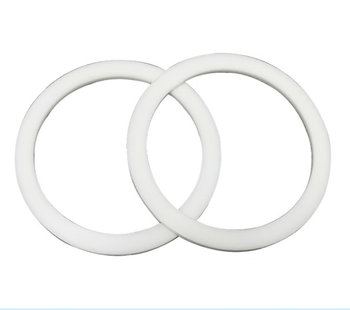
In modern industrial sealing systems, gaskets play a critical role not only in sealing performance but also in ensuring overall operational safety and system reliability. Under demanding conditions involving strong corrosion, high temperatures, and high-purity media, traditional rubber or non-metallic gaskets often fail to provide long-term stability. PTFE (Polytetrafluoroethylene) gaskets, commonly known as PTFE gaskets or Teflon gaskets, have become an essential sealing solution in industries such as chemical processing, pharmaceuticals, food production, electronics, and semiconductors due to their outstanding chemical resistance, wide operating temperature range, and excellent stability.
The highly stable carbon-fluorine molecular structure of PTFE gives it exceptional resistance to chemical reactions, making it one of the most reliable sealing materials for aggressive environments.
2. Performance Characteristics of PTFE Gaskets
One of the most significant advantages of PTFE gaskets is their exceptional chemical resistance. PTFE can withstand almost all strong acids, alkalis, organic solvents, and oxidizing agents, making it highly suitable for corrosive applications such as sulfuric acid systems, hydrochloric acid pipelines, alkaline equipment, and chemical reactors.
PTFE also offers an extremely wide operating temperature range, typically from -200°C to +260°C, while maintaining stable physical and chemical properties under both high and low temperatures. This makes PTFE gaskets ideal for systems exposed to frequent thermal cycling.
Another important feature is the material’s very low friction coefficient and self-lubricating properties, which help reduce flange wear during installation and maintenance. In addition, PTFE is non-toxic, contamination-free, and resistant to particle release, making it especially suitable for food processing, pharmaceutical systems, and ultra-pure fluid handling applications.
PTFE also demonstrates excellent aging resistance against UV radiation, ozone, oxidation, and moisture, ensuring long-term durability even in harsh outdoor environments.
3. Main Types and Applications of PTFE Gaskets
PTFE gaskets are available in several structural forms to meet different industrial requirements.
Pure PTFE gaskets are manufactured entirely from virgin PTFE and provide maximum chemical resistance. They are suitable for low-pressure corrosive environments but may experience creep and cold flow under high-pressure conditions.
To improve mechanical performance, modified PTFE gaskets are widely used. By adding fillers such as glass fiber, graphite, or carbon fiber, these gaskets achieve higher compressive strength, improved wear resistance, and reduced creep, making them suitable for medium- and high-pressure applications.
Expanded PTFE (ePTFE) gaskets feature a flexible fibrous structure produced through a special expansion process. They offer excellent resilience and sealing performance, especially on uneven flange surfaces and in low bolt-load conditions.
PTFE envelope gaskets combine a PTFE outer layer with a rubber, metal, or other core material, providing both corrosion resistance and enhanced mechanical strength for more demanding environments.
Today, PTFE gaskets are extensively used in chemical reactors, piping systems, pumps, valves, pharmaceutical equipment, food processing machinery, and semiconductor ultra-pure fluid systems. In the oil and gas industry, modified PTFE gaskets are also increasingly used for corrosive media applications.
4. Limitations and Selection Considerations
Despite their outstanding properties, PTFE gaskets also have certain limitations. Pure PTFE tends to deform under long-term high-pressure conditions due to cold flow and creep, and its mechanical strength is lower than that of metal gaskets.
Therefore, gasket selection should consider factors such as operating temperature, pressure, media compatibility, flange design, and sealing requirements. For high-pressure systems, modified PTFE, expanded PTFE, or metal-reinforced designs are generally recommended to improve stability and service life.
In highly corrosive environments, chemical compatibility is the primary concern, while applications requiring frequent maintenance should prioritize resilience and creep resistance.
5. Conclusion
With their exceptional corrosion resistance, broad temperature capability, and clean sealing performance, PTFE gaskets have become an indispensable part of modern industrial sealing technology. Particularly in chemical, pharmaceutical, food, and electronic industries, PTFE sealing solutions provide reliable and efficient performance under demanding operating conditions.
As industrial systems continue evolving toward higher purity, greater corrosion resistance, and longer service life, modified and composite PTFE gasket technologies are expected to play an even more important role in advanced sealing applications.
Post time: May-22-2026


