
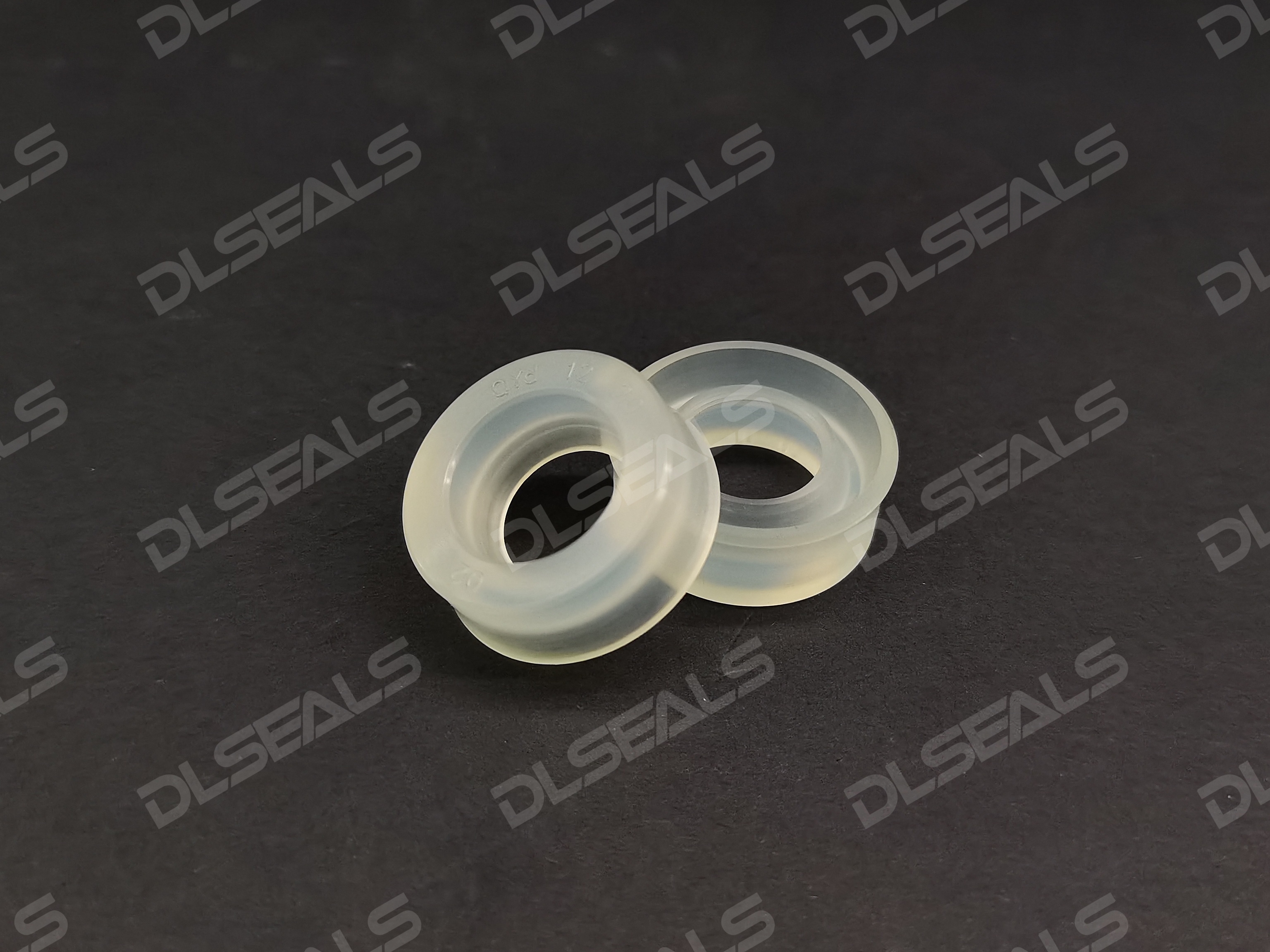
In the power core of modern industrial equipment—hydraulic and pneumatic systems—the reliability of sealing components directly determines the overall system’s performance, efficiency, and service life. Among numerous sealing solutions, the PU U-Cup Seal stands out due to its unique material advantages and ingenious structural design, making it one of the preferred sealing elements for handling high-pressure, high-frequency, and harsh operating conditions. It is not merely a simple part but a “loyal guardian” ensuring the persistent and stable operation of equipment.
I. Decoding the Name: What is a PU U-Cup Seal?
As the name implies, it precisely summarizes its core features:
- PU: Stands for Polyurethane. This is a synthetic high-performance elastomer renowned as the “King of Wear Resistance.”
- U-Cup (U-shaped): Refers to its cross-sectional shape, which is U-shaped or lip-shaped. This forms the physical basis for its dynamic sealing action.
- Seal: Defines its core mission—to seal in lubricating oil and lock out external contaminants.
In short, a PU U-Cup Seal is a critical component for reciprocating motion sealing, made from ultra-wear-resistant polyurethane material and featuring a U-shaped cross-section.
II. Material is King: The Superior Properties of Polyurethane
Choosing PU means opting for performance that surpasses ordinary rubber (like Nitrile Rubber/NBR), forming its core competitive edge:
- Exceptional Wear Resistance: In conditions with contaminants or frequent reciprocating motion, its wear life can be 5-10 times greater than that of ordinary rubber, significantly extending maintenance intervals and reducing equipment downtime.
- Outstanding High-Pressure and Extrusion Resistance: Polyurethane material boasts high mechanical strength and hardness, maintaining shape stability under high system pressure and resisting extrusion into component clearances, ensuring reliable sealing in high-pressure environments.
- Good Fluid Compatibility: Exhibits excellent resistance to commonly used industrial fluids like mineral oils, hydraulic oils (including zinc-based formulations), and lubricating oils. Note: Its resistance to strong acids, bases, and some polar solvents (e.g., esters, ketones) is weaker.
- Broad Temperature Range: Typically operates stably within a temperature range of -30°C to +110°C, covering the vast majority of industrial applications.
Direct Comparison with NBR Seals:
- Advantageous Scenarios: More suitable for harsh conditions involving high pressure, high speed, significant side loads, and the presence of abrasive particles.
- Trade-offs: Usually higher cost, slightly less elasticity at low temperatures, and selective fluid compatibility.
III. Ingenious Design: The Wisdom of the U-Shaped Structure
Its superior performance stems not only from the material but also from its clever structural design. A typical PU U-Cup seal cross-section consists of a primary sealing lip and a groove that houses an elastic element (often a built-in or separate O-ring).
Its sealing principle embodies the wisdom of “using pressure to contain pressure”:
- Initial Preload: Upon installation, the seal lip creates initial contact pressure via interference fit with the moving rod/cylinder, providing static or low-pressure sealing.
- Pressure-Activated Sealing: As system pressure increases, the pressure medium enters the U-cavity, acting like an “invisible hand” to push the sealing lip more tightly against the sealing surface. Higher pressure results in tighter sealing force, achieving reliable sealing in dynamic conditions. This self-energizing sealing effect is the foundation of its high reliability.
IV. In Action: Core Application Areas
PU U-Cup Seals are the “standard” sealing solution for many heavy-duty, continuous-operation machines:
- Construction Machinery: Hydraulic cylinders for the arms, sticks, and outriggers of excavators, loaders, and cranes.
- Industrial Production Lines: High-pressure hydraulic cylinders in injection molding machines, presses, and machine tools.
- Agricultural and Special Vehicles: Tractor hydraulic lifting systems, dump truck cylinders.
- Critical Positions: Can be used as a piston seal to prevent internal leakage across the piston, but is more commonly used as a rod seal—serving as the final and most critical line of defense against fluid leakage and ingress of dirt.
V. Key to Success: Installation and Usage Specifications
“Three parts quality, seven parts installation” holds especially true for precision seals:
- Protect the Lip: The shaft end or bore edge where the seal passes during installation must have a smooth chamfer (deburred) and be fitted with a guide sleeve to prevent sharp edges from cutting the seal lip.
- Proper Tools: Always use dedicated installation tools or sleeves to ensure the seal is pushed into the housing groove smoothly, evenly, and without twisting.
- Adequate Lubrication: Before installation, apply the system’s operating fluid evenly on the seal lip, O-ring (if applicable), and contact surfaces for initial lubrication.
- Clean Environment: Ensure the work area, components, and tools are clean. Minute particles are the enemy of any sealing system.
- Surface Requirements: The mating piston rod/cylinder surface should have appropriate hardness and finish (a surface roughness of Ra 0.2-0.8 μm is ideal).
VI. Scientific Selection: The Right Match for Excellence
Correct selection is the starting point for successful application. Define the following parameters clearly:
- Dimensions: Shaft diameter, bore diameter, groove width.
- Operating Conditions: Working pressure, reciprocating speed, operating temperature.
- Fluid Compatibility: Confirm compatibility with the intended hydraulic/lubricating oil.
- Mating Part Information: Understand the material and surface treatment of the counterface.
Recommendation: Preferentially refer to product selection guides from leading seal manufacturers (such as Parker, Trelleborg, NOK) or consult with technical professionals for guidance.
Conclusion
In today’s world, where industrial equipment strives for higher efficiency, longer life, and lower maintenance costs, the PU U-Cup Seal provides a reliable solution for dynamic sealing challenges through the perfect marriage of its material and design. It is not merely a physical barrier containing fluid but a crucial cornerstone bearing the reliability and productivity of equipment. Understanding it, selecting it correctly, and applying it properly is a key lesson for every equipment designer, maintenance professional, and manager aiming to enhance system reliability.
Post time: Jan-04-2026