
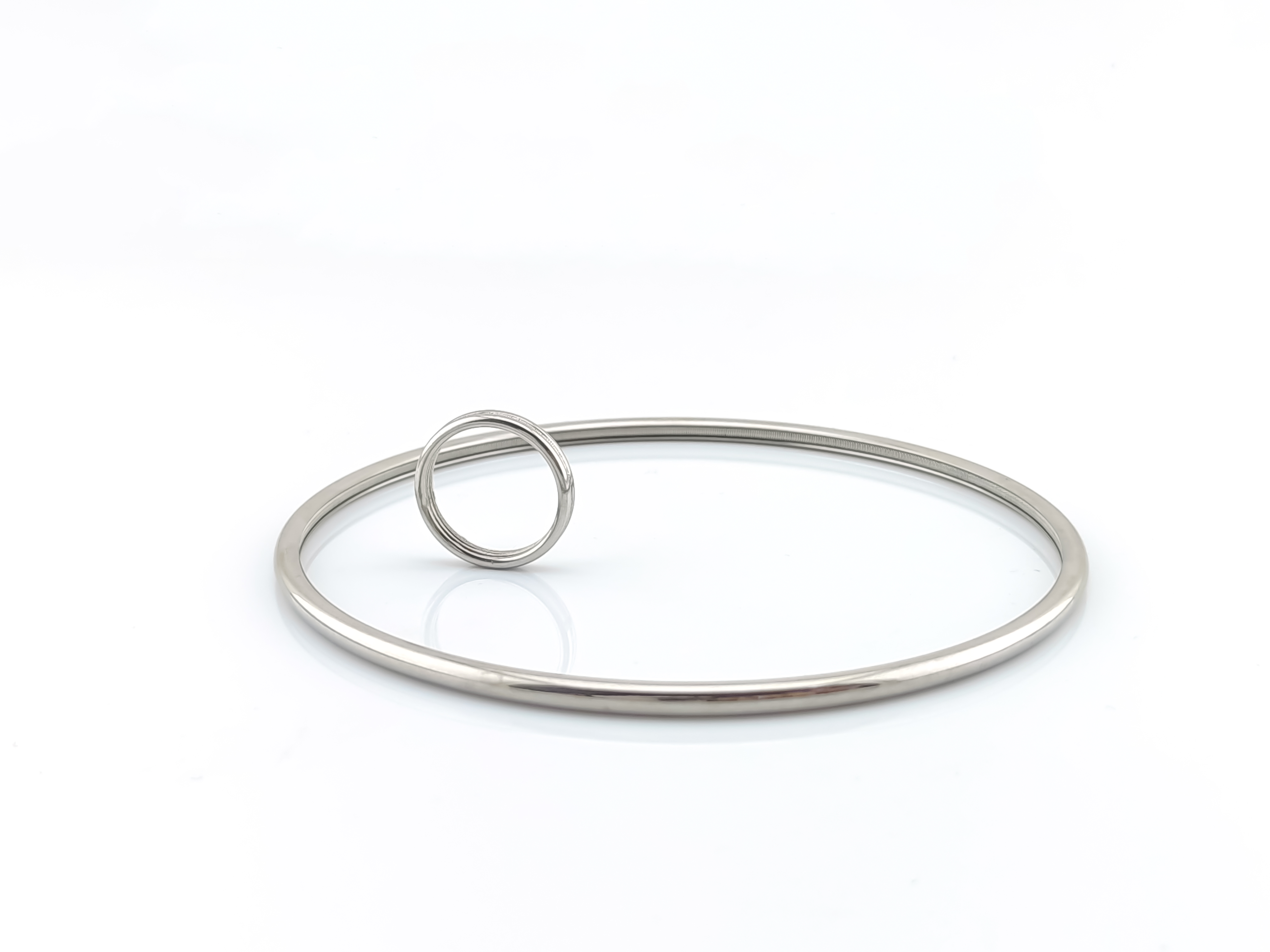
The deep sea is one of the most severe engineering environments on Earth. Hydrostatic pressure increases by approximately 1 atmosphere for every 10 meters of depth. At 4,000 meters, the pressure reaches about 40 MPa; at the bottom of the Mariana Trench, it approaches 110 MPa. This is accompanied by low temperatures (typically 0–4°C), high-salinity corrosion, corrosive media such as hydrogen sulfide, and dynamic alternating stresses from ocean currents and equipment vibration. In this environment, sealing rings—though small and inconspicuous—directly determine the reliability and safety of submersibles, ROVs (remotely operated vehicles), deep-sea hydraulic systems, watertight connectors, Christmas trees, BOPs (blowout preventers), and other equipment. Seal failure can lead to water ingress and equipment scrap at best, or mission failure and even personnel safety risks at worst.
The “Triple Challenge” of Deep-Sea Sealing
The core challenges of deep-sea sealing can be summarized as high-pressure extrusion, low-temperature hardening, and corrosion-induced aging.
Under high pressure, conventional rubber materials are prone to extrusion—where the material is forced into the mating clearance by high-pressure fluid, causing permanent deformation or tearing. Studies show that ordinary nitrile rubber (NBR) is susceptible to “shoulder extrusion” under high pressure, and insufficient hardness sharply reduces the safety margin. Finite element analysis indicates that within a radial compression ratio of 17%–26%, material hardness often has a greater influence on initial contact pressure than the compression ratio itself. A polyurethane O-ring with Shore hardness of 90 HA, at an initial compression ratio of 22%, can provide a sealing safety margin of approximately 10 MPa, meeting the requirements for 6,000-meter deep-sea applications.
Low temperatures significantly reduce the elastic modulus of rubber, diminishing elastic recovery and increasing the risk of seal failure. Additionally, rubber undergoes volume shrinkage under high pressure (e.g., NBR shrinks by about 4.7% at 110 MPa). If mating components deform inconsistently, the compression amount may further decrease. Chloride ions, sulfates, and microbial metabolic products in seawater also accelerate material aging, swelling, or desulfurization.
Under dynamic conditions, equipment vibration combined with current impact can cause conventional NBR to experience fatigue at specific frequencies, while carbon-fiber-reinforced fluoroelastomer (FKM) can extend fatigue life to more than 3,000 hours.
Mainstream Material Systems and Selection Logic
Deep-sea sealing materials have evolved from single elastomers to multi-system approaches combining elastomers, composites, and metals.
Elastomeric materials remain the mainstream:
- Hydrogenated nitrile rubber (HNBR): After nanocomposite modification, compressive strength increases by about 30%, with a sealing pressure threshold reaching 70 MPa, balancing oil and seawater resistance.
- Fluoroelastomer (FKM) and perfluoroelastomer (FFKM): Excellent chemical corrosion and high-temperature resistance. FFKM operates from –25°C to 327°C and resists strong acids, hydrogen sulfide, and other extreme media. Although costly, FFKM significantly reduces downtime losses over the full life cycle in deep-sea oil and gas projects.
- Polyurethane: Wide hardness range (Shore 10 HA to 80 HD), retaining good elasticity and elongation even at high hardness, particularly suitable for high-pressure static seals.
- Ethylene propylene diene monomer (EPDM): Outstanding ozone and weather resistance, suitable for long-term exposure scenarios.
Specialty engineering plastics and composites:
- Polytetrafluoroethylene (PTFE) and its filled modifications (carbon fiber, graphite, bronze, nano-ceramics, etc.): Extremely low friction coefficient, exceptional chemical inertness, and wide temperature range (–200°C to over 260°C). After filling, creep and wear resistance improve dramatically. Often combined with springs or elastomers to form spring-energized seals (“V-seals” or similar), capable of long-term stable operation above 45 MPa and significantly extended service life.
- Specialty engineering plastics such as polyetheretherketone (PEEK) are also beginning to be used in critical locations.
Metal seals: When pressure and temperature exceed polymer limits, titanium alloys, nickel-based alloys (e.g., Inconel 718), and shape-memory alloys become preferred. Metal-to-metal seals offer superior durability, temperature resistance, and wear resistance, and have been applied in deep-sea submersibles and probes. Some designs utilize external water pressure for “pressure self-energizing”—the higher the water pressure, the greater the sealing force—particularly suitable for 10,000-meter ultra-deep-sea applications.
Actual selection must comprehensively consider medium compatibility, operating temperature, maximum pressure, dynamic/static conditions, maintainability, and cost. In seawater, priority should be given to corrosion- and hydrolysis-resistant materials, while avoiding direct contact of dissimilar metals to prevent electrochemical corrosion.
Design Essentials and Engineering Practice
O-rings are the most commonly used structure. Research shows that initial contact pressure forms the foundation of sealing safety, primarily determined by material hardness and installation compression ratio. Proper groove design, surface roughness control, and anti-extrusion backup rings effectively suppress high-pressure extrusion. Face seals are generally superior to radial seals because of smaller mating clearances and better anti-extrusion capability.
For dynamic seals, multi-stage structures or spring-energized PTFE seals are often employed to reduce friction and extend life. Deep-sea hydraulic systems must also address the effects of stress relaxation and sudden clearance changes on sealing force.
Engineering cases demonstrate that a 4,500-meter-class ROV suffered water ingress due to excessive PTFE seal clearance, resulting in losses exceeding tens of millions of yuan. Switching to higher-hardness HNBR extended service life several times. On deep-sea drilling platforms, nano-enhanced PTFE spring-energized seals on mud pumps achieved continuous operation for over 10,000 hours in abrasive media with no significant wear.
Application Scenarios and Future Directions
Deep-sea seals are widely applied in:
- Manned/unmanned submersibles and ROV compartments, thrusters, and manipulators;
- Deep-sea hydraulic systems and watertight connectors;
- Wellhead equipment, valves, and Christmas trees for deepwater oil and gas production;
- Oceanographic instruments and pressure-retaining samplers.
Future trends include further enhancement of gas tightness and compressive strength through nanofillers; shape-memory alloys enabling “rubber-like” metal seals; intelligent monitoring seals (with embedded sensors for real-time leakage and aging feedback); and higher-performance material systems for 10,000-meter depths and H₂S-containing acidic environments.
Every breakthrough in deep-sea sealing technology expands the boundaries of human exploration and ocean development. From material innovation to structural design, from laboratory simulation to real-sea verification, sealing rings—with their “small size, great responsibility”—safeguard the reliable operation of deep-sea equipment under extreme conditions. With the rapid development of China’s deep-sea science and technology, high-performance, long-life, and domestically producible deep-sea sealing solutions will become indispensable key support for building a maritime power.
Post time: Sep-22-2026


