
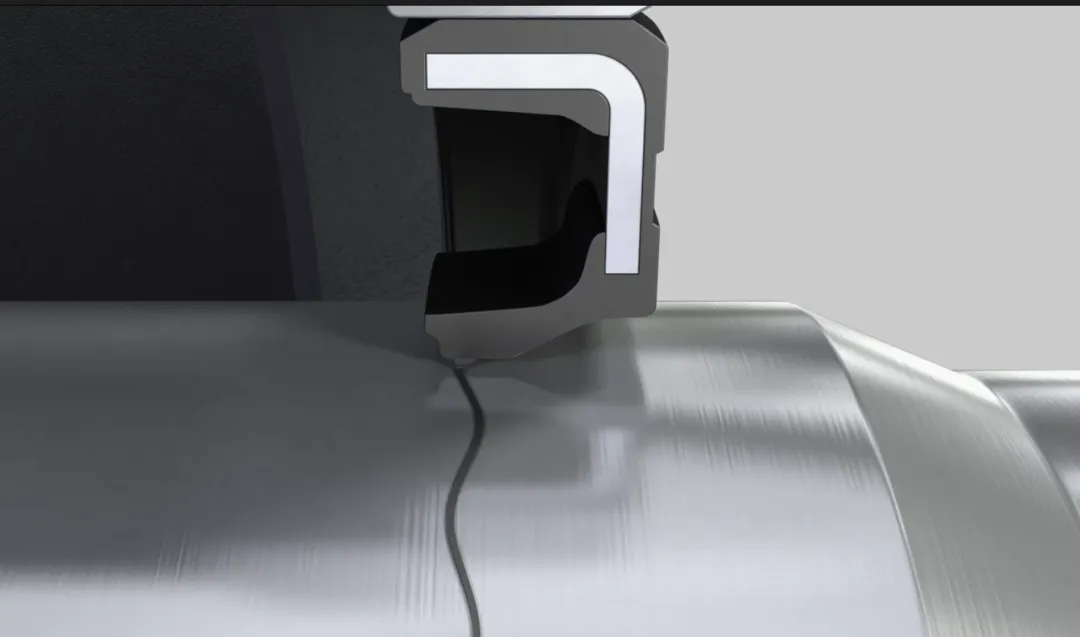
In industrial drive systems, fluid sealing at the high-speed input end is a core link to ensure stable equipment operation and extend service life. When the drive device operates at high speed, the sealing system must withstand multiple challenges such as high speed, high friction, temperature fluctuations, and internal pollutant erosion. Traditional sealing solutions often have pain points such as rapid wear, high friction loss, easy shaft damage, and cumbersome replacement, which seriously affect equipment operation and maintenance efficiency and overall reliability. To address this industry pain point, a high-quality sinusoidal seal has been designed. With its unique sinusoidal sealing lip design, it achieves a leapfrog improvement in the performance of the sealing system, providing a new solution for fluid sealing at the high-speed input end of drive devices.
1. Technical Background: Core Pain Points and Industry Demands of High-Speed Drive Sealing
The sealing system at the high-speed input end of the drive device undertakes the key role of blocking fluid leakage and protecting the shaft and internal components. In actual working conditions, the lip design of traditional seals is mostly a conventional straight or simple arc structure, which has three core pain points: first, the contact area is limited, and the local pressure between the lip and the shaft is concentrated during high-speed operation, leading to rapid wear of the sealing edge and shortening the service life of the sealing system; second, the friction resistance is large, and a lot of heat generated by high-speed friction is transmitted to the shaft, which not only increases system power loss but also may cause overheating and deformation of the shaft, further increasing the risk of seal failure; third, pollutants are easy to accumulate, and particle impurities generated by gear and bearing wear are easy to remain in the sealing gap, forming deposits, accelerating the wear of the sealing lip and the shaft, and at the same time, the shaft needs to be repositioned when replacing the seal, increasing operation and maintenance costs and downtime.
With the development of industrial equipment towards high speed, high efficiency, and long service life, the market has put forward higher requirements for the reliability, wear resistance, and low friction of the sealing system. Aiming at the core pain points of high-speed drive sealing, breaking through the limitations of traditional design, a high-quality sinusoidal seal with a revolutionary structure has been developed to accurately meet the needs of industry upgrading.
2. Design Innovation: Core Technical Advantages of the Sinusoidal Sealing Lip
The core innovation of the seal lies in its unique sinusoidal sealing lip design, which is different from the conventional lip structure of traditional seals. This design fundamentally solves many drawbacks of traditional seals, and its technical advantages are mainly reflected in the following three aspects.
(1) Optimized Flexible Structure, Expanded Contact Area, and Reduced Local Wear
The sealing lip adopts a flexible design combined with a sinusoidal contour, so that a larger effective contact area is formed when the sealing edge is in contact with the shaft. Compared with traditional seals, the contact method of the sinusoidal sealing lip is transformed from “point contact” and “line contact” to “surface contact”, which effectively disperses the local pressure during high-speed operation and avoids rapid wear of the sealing edge caused by pressure concentration. At the same time, the flexible structure has good adaptability, which can dynamically adjust according to the slight vibration and eccentricity of the shaft, always maintaining a stable contact state, further reducing the wear of the sealing edge, and greatly extending the service life of the sealing system —— tested and verified, its service life can be more than doubled compared with the traditional sealing system.
(2) Low-Friction Design, Reduced Power Loss and Heat Input
The contour design of the sinusoidal sealing lip is precisely optimized based on fluid mechanics and tribology. On the premise of ensuring sealing performance, it minimizes the friction resistance between the sealing lip and the shaft. On the one hand, the larger contact area makes the friction stress evenly distributed, avoiding local friction overheating; on the other hand, the sinusoidal contour can reduce the resistance of the lubricating medium between the sealing lip and the shaft, promote the rapid exchange of high-temperature oil at the sealing edge with low-temperature oil in the oil sump, effectively reduce the heat input to the shaft, and avoid deformation or damage of the shaft due to overheating. In addition, the low-friction design can also significantly reduce system power loss and improve the overall operating efficiency of the drive device.
(3) Active Anti-Pollution and Convenient Maintenance, Improving System Reliability and Operation Efficiency
The twisted structure of the sinusoidal sealing lip has an active anti-pollution function. It can actively discharge internal pollutants such as particles generated by gear and bearing wear out of the sealing gap through the diversion channel formed by the sinusoidal twist, avoiding the accumulation of pollutants to form deposits, thereby preventing excessive wear of the sealing edge and protecting the sealing system and the shaft from pollution and erosion. At the same time, the design of the seal realizes the “no repositioning” function —— when replacing the radial shaft seal, there is no need to find a new installation position on the shaft, and maintenance can be completed by direct replacement, which greatly shortens the shutdown maintenance time and reduces operation and maintenance costs.
3. Core Value: Empowering Efficient, Reliable, and Long-Life Operation of Drive Devices
The launch of the sinusoidal seal is not only an innovation in sealing technology but also fundamentally solves the core pain points of the sealing system of high-speed drive devices, bringing multiple core values to the industry.
First, extend the service life of equipment and reduce replacement costs. The service life of the sealing system is doubled, which greatly reduces the replacement frequency of seals, and at the same time avoids shaft damage caused by seal failure, reducing the overall maintenance cost of equipment; second, improve system operation efficiency and save energy consumption. The low-friction design reduces power loss and energy consumption, which is in line with the development trend of high efficiency and energy saving of industrial equipment; third, enhance sealing reliability and reduce failure risks. The active anti-pollution function and stable sealing performance effectively avoid fluid leakage and internal pollution, reduce the probability of drive device failure and shutdown, and improve equipment operation stability; fourth, simplify the operation and maintenance process and improve operation and maintenance efficiency. The no-repositioning design shortens maintenance time, reduces the work intensity of operation and maintenance personnel, and improves equipment availability.
4. Conclusion
Today, with the continuous upgrading of industrial drive technology, the performance of the sealing system directly determines the reliability and economy of the equipment. This high-quality seal with an innovative sinusoidal sealing lip design breaks through the limitations of traditional sealing technology, achieves multiple breakthroughs in wear resistance, low friction, anti-pollution, and convenient maintenance, and provides an efficient and reliable solution for sealing at the high-speed input end of drive devices.
In the future, the field of sealing technology will continue to deepen, relying on profound technical accumulation and innovation capabilities, develop more high-performance sealing products for the personalized needs of different industries, help industrial equipment develop in a more efficient, reliable, and energy-saving direction, and inject new momentum into the high-quality development of the industry.
Post time: Mar-16-2026