
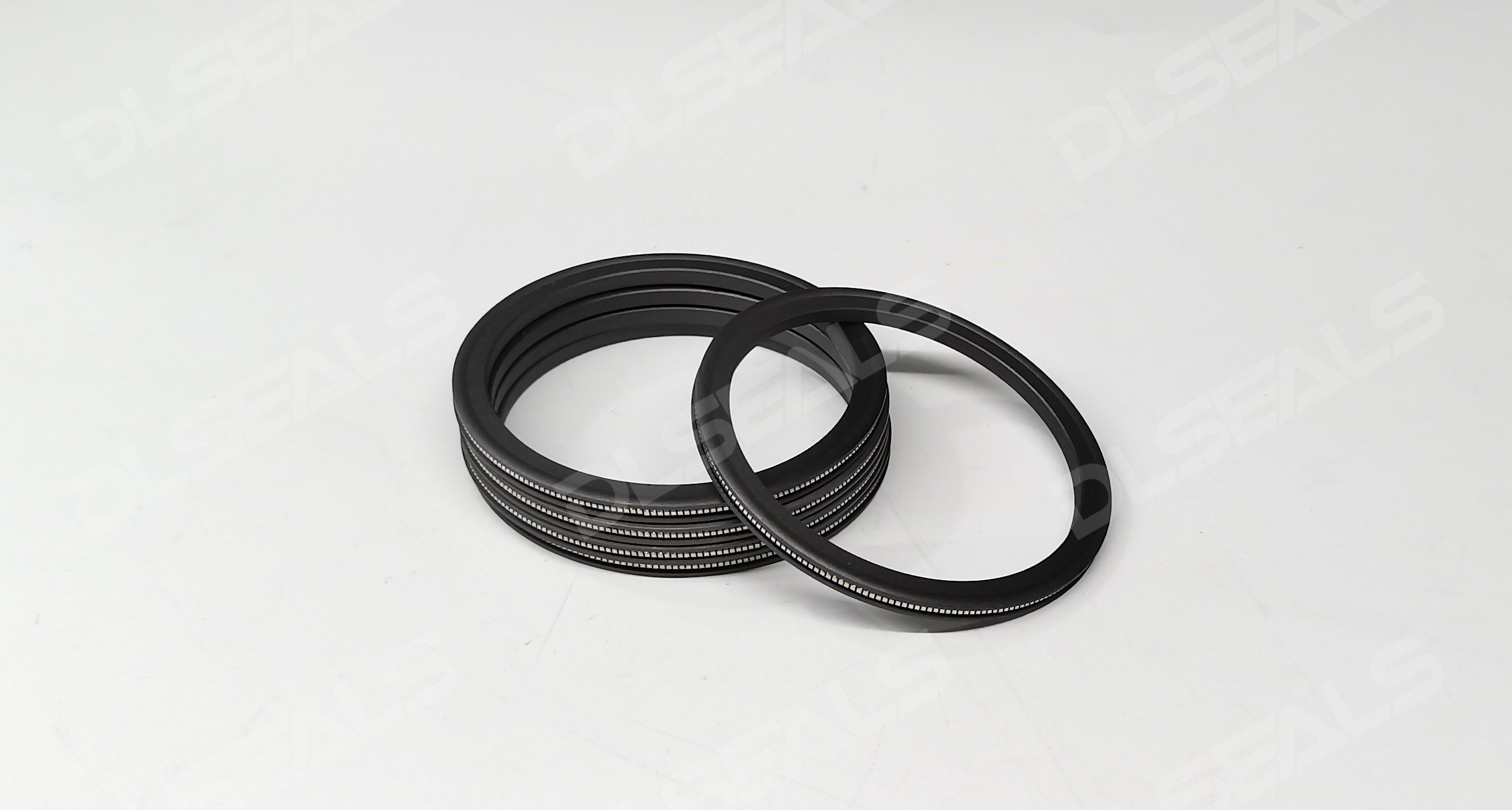
In harsh industrial environments where conventional O-rings fail due to chemical attack, extreme temperatures, or high-pressure friction, Spring Energized Seals serve as the ultimate line of defense. The performance of these seals is not determined by a single factor, but by the synergy between the polymer jacket and the metallic energizing spring.
I. Jacket Materials: Balancing Chemical Inertness and Mechanical Strength
The jacket is the primary body of the seal, in direct contact with the media and subject to friction. Most jackets are based on PTFE (Polytetrafluoroethylene), modified with fillers to enhance specific properties.
1. Modified PTFE Filler Series
-
PTFE + Glass Fiber: Increases wear resistance and reduces cold flow; ideal for general chemical applications.
-
PTFE + Carbon Fiber: Offers excellent load-carrying capacity and thermal conductivity; preferred for high-pressure hydraulic systems or water media.
-
PTFE + Graphite: Provides an extremely low coefficient of friction; best for high-speed reciprocating or rotary motion.
-
PTFE + Bronze: Delivers high compressive strength and maximum wear resistance; used in heavy-duty hydraulic cylinders (not for corrosive environments).
2. Specialized Engineering Plastics
-
PEEK (Polyetheretherketone): Known for exceptional mechanical strength and heat resistance (up to +260℃ ); used in high-pressure valve seats.
-
UPE (UHMW-PE): Features extreme impact resistance and low-temperature toughness; ideal for cryogenic engineering and food/pharma (FDA compliant).
II. Energizing Springs: The Power Behind Constant Sealing Pressure
Since PTFE lacks elasticity, a metal spring is required to provide continuous radial force.
-
V-Spring (Cantilever): Linear load, easy to clean; used for general reciprocating motion.
-
Helical Spring: High load, narrow deflection; ideal for static seals in high vacuum or cryogenic states.
-
Slanted Coil Spring: Constant load over a wide deflection range; the top choice for sensitive instruments and rotary applications.
III. Core Performance Advantages
-
Extreme Temperature Range: Operates from -200 ℃ to +300 ℃ , far exceeding the limits of rubber.
-
No Stick-Slip: The low friction of PTFE eliminates “crawling” in low-speed operations, ensuring smooth movement.
-
Chemical Universality: Resistant to almost all industrial chemicals and solvents.
Post time: Apr-09-2026