
A high-temperature superconducting stellarator is an advanced fusion device that uses a specially configured magnetic field to confine high-temperature plasma. Its operation involves complex vacuum systems, superconducting magnet systems, cryogenic systems, and auxiliary equipment, placing demanding requirements on the sealing reliability of critical connections.
In a stellarator, the vacuum system must maintain a stable low-pressure environment while minimizing gas leakage, material outgassing, and the ingress of external contaminants. Meanwhile, equipment may experience temperature variations, structural deformation, and repeated thermal cycling during manufacturing, assembly, evacuation, bake-out, and operation. Under certain critical vacuum conditions, conventional elastomer seals may not provide the long-term stability required.
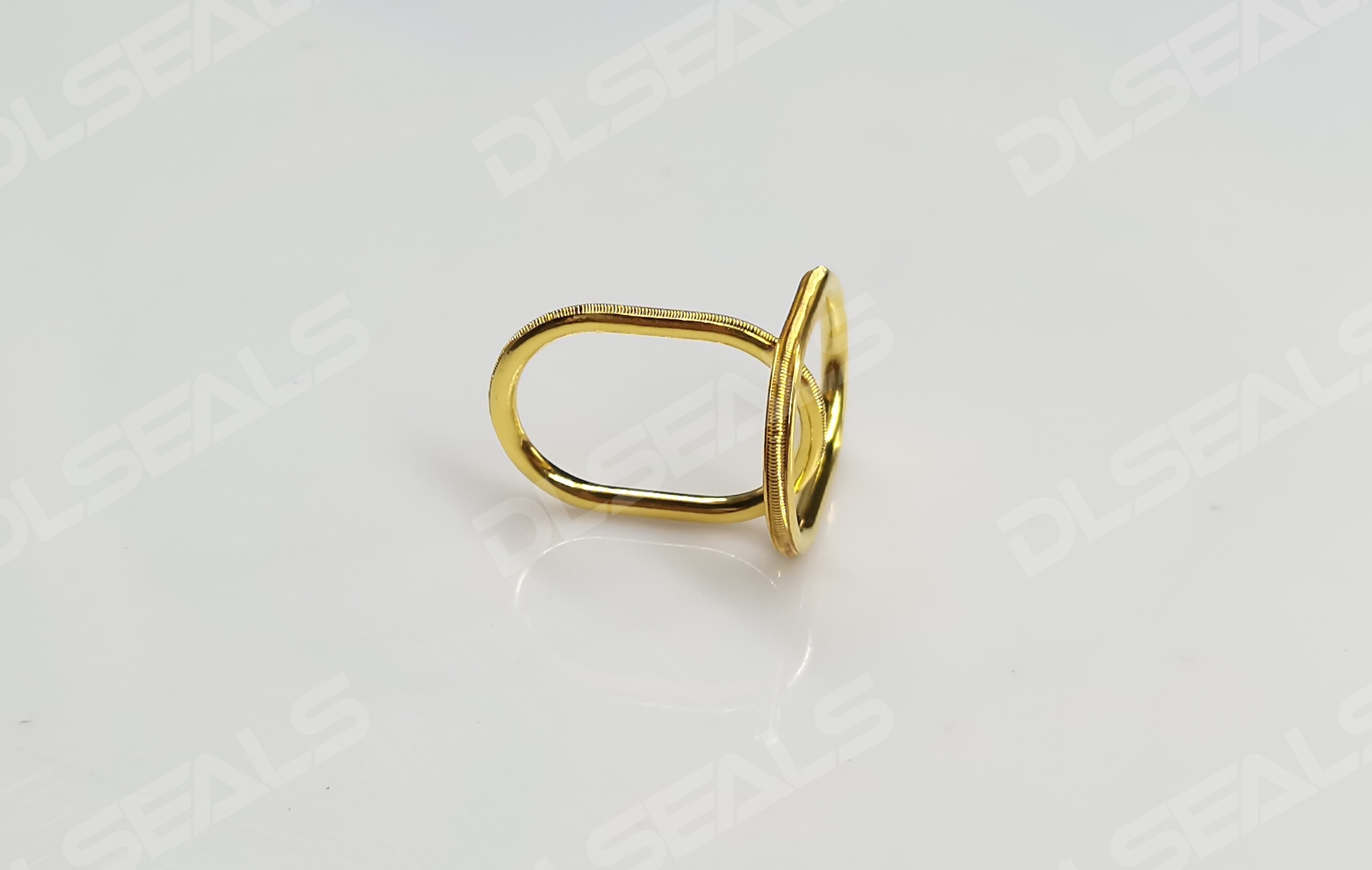
A Spring-Reinforced Metal C-Seal is a metal sealing solution that combines a C-shaped metal cross-section with an internal elastic support element. It relies on elastic deformation of the metal to establish sealing contact, while the internal spring provides additional support and recovery capability. This design is suitable for specialized equipment connections requiring reliable vacuum sealing, temperature adaptability, and long-term performance.
1. Sealing Requirements of Stellarator Vacuum Systems
The vacuum system of a stellarator typically includes the vacuum vessel, pipelines, flanges, viewing windows, pumping ports, and other auxiliary connections. Although operating pressure, temperature, and structural conditions vary between locations, critical vacuum boundaries generally share several common requirements.
1. Low Leakage Rate and High-Vacuum Performance
The vacuum system must control the ingress of external gases and prevent internal media from leaking. In high-vacuum and ultra-high-vacuum applications, seals must provide a sufficiently low leakage rate while minimizing material outgassing to avoid affecting pumping efficiency and vacuum stability.
2. Adaptability to Temperature Variations and Thermal Cycling
Superconducting magnet systems and associated cryogenic equipment may operate at extremely low temperatures, while the vacuum vessel and its connections may undergo bake-out, cooling, and temperature fluctuations. Differences in thermal expansion coefficients between materials can cause changes in flange gaps, seal compression, and contact stress during repeated thermal cycles.
3. Stable Sealing Contact Pressure Over Time
Large vacuum systems often need to maintain stable operation over extended periods. Significant stress relaxation, plastic deformation, or loss of contact pressure in a seal can increase the risk of leakage. Therefore, the sealing structure should provide an appropriate degree of elastic compensation.
4. Material Cleanliness and Media Compatibility
Vacuum environments are sensitive to material outgassing, surface contamination, and volatile substances. Sealing materials must be selected according to the vacuum level, bake-out temperature, operating media, and radiation conditions to prevent released gases or contaminants from affecting system performance.
2. Structural Features of Spring-Reinforced Metal C-Seals
A spring-reinforced metal C-seal generally consists of a C-shaped metal outer shell and an internal elastic support element. The cross-sectional dimensions, metal materials, and spring configurations may vary and should be confirmed against the actual design drawings.
1. C-Shaped Metal Outer Shell
The C-shaped metal shell is the primary load-bearing sealing component. During installation, the seal is compressed between the flanges or sealing surfaces. The C-shaped cross-section undergoes elastic deformation, generating continuous circumferential contact pressure along the sealing region.
The shell material must provide an appropriate balance of elasticity, strength, corrosion resistance, and temperature capability. Potential material options include stainless steel, nickel-based alloys, and other metals suitable for specific vacuum and temperature conditions.
2. Internal Metal Spring
The internal spring is an important feature that distinguishes this design from a conventional metal C-seal. It provides additional elastic support to the outer shell, helping the seal maintain its recovery capability after compression.
When the equipment experiences temperature changes, slight flange movement, or minor deformation of the connected structures, the internal spring can provide compensation within its designed operating range, helping maintain the sealing contact condition.
It is important to note that the internal spring cannot eliminate plastic deformation or stress relaxation in metal materials. Its compensation capability depends on the spring configuration, material, preload, and overall seal design.
3. Working Principle of Spring-Reinforced Metal C-Seals
This sealing structure relies on the combined effects of elastic deformation of the metal shell and the supporting force of the internal spring.
During installation, the flanges gradually close and compress the C-shaped metal shell in the axial direction. The sealing lips come into contact with the flange sealing surfaces. As compression increases, sufficient local contact stress is generated in the sealing region, blocking potential gas leakage paths through the interface.
The internal spring deforms elastically during compression and provides continuous supporting force to the outer shell. When the compression level changes due to temperature variations or slight structural movement, the spring provides a certain degree of elastic compensation within its designed working range, helping reduce fluctuations in sealing contact pressure.
Compared with a conventional metal C-seal, the spring-reinforced design can improve overall recovery characteristics through the internal elastic element. However, this does not mean that sealing contact pressure remains constant under all conditions, nor can the spring alone compensate for flange deformation, surface defects, or installation misalignment.
In vacuum systems, sealing performance also depends on the quality of the sealing surfaces, surface roughness, flange stiffness, installation compression, and manufacturing accuracy of the seal itself.
4. Why Are Spring-Reinforced Metal C-Seals Suitable for Stellarator Vacuum Systems?
The structural characteristics of spring-reinforced metal C-seals make them a potential solution for certain demanding vacuum connections.
1. A Metal Sealing Solution for Low-Outgassing Requirements
The metal outer shell avoids some of the evaporation, permeation, and outgassing issues that conventional rubber sealing materials may present in vacuum environments. For high-vacuum equipment, appropriate material selection and surface treatment can help reduce the impact of the sealing component on the vacuum environment.
However, metal seals should not be considered completely free of outgassing. Adsorbed gases on the surface, cleaning residues, and trapped gases within the internal structure must still be controlled through appropriate manufacturing and cleaning processes.
2. Improved Adaptability to Temperature Changes
Different systems within a stellarator may operate at significantly different temperatures, and some connections may experience repeated heating and cooling cycles. The elastic compensation provided by the internal spring helps accommodate a certain range of changes in seal compression, reducing the risk of leakage caused by insufficient contact pressure.
For cryogenic applications, particular attention must also be paid to the low-temperature toughness of the metal materials, changes in spring elastic modulus, and differences in thermal contraction between dissimilar materials.
3. Reduced Risk of Long-Term Sealing Failure
During long-term vacuum operation, sealing structures may be affected by thermal cycling, minor flange deformation, and sustained compressive loads. The internal spring provides additional elastic support, allowing the sealing structure to retain a certain degree of recovery within its designed operating range and helping improve long-term sealing stability.
4. Suitable for High-Reliability Metal-Sealed Connections
Spring-reinforced metal C-seals can be considered for vacuum vessel interfaces, cryogenic system vacuum boundaries, pipeline flanges, and other specialized connections. Their suitability must be evaluated according to the temperature, leakage requirements, and available installation space at each connection.
5. Key Factors in Material Selection and Structural Design
The sealing design for a high-temperature superconducting stellarator vacuum system should not be based solely on operating temperature or vacuum level. Material properties, structural dimensions, and actual operating conditions must be considered together.
| Design Factor | Key Considerations |
|---|---|
| Metal shell material | Elasticity, low-temperature toughness, corrosion resistance, thermal expansion coefficient, and outgassing characteristics |
| Spring material | Elastic recovery, fatigue resistance, temperature adaptability, and long-term stability |
| Seal cross-section | C-opening orientation, wall thickness, cross-sectional dimensions, and effective compression travel |
| Installation compression | Initial contact pressure, maximum compression, and final flange closure dimensions |
| Flange sealing surface | Surface roughness, flatness, hardness, and machining accuracy |
| Vacuum performance | Allowable leakage rate, material outgassing, and helium mass spectrometer leak-testing requirements |
| Environmental conditions | Operating temperature, bake-out temperature, number of thermal cycles, radiation, and media compatibility |
In terms of materials, stainless steel offers good machinability and corrosion resistance, while nickel-based alloys can provide different high-temperature properties and elastic characteristics depending on the specific grade. For extremely low-temperature environments, low-temperature toughness and spring performance must be verified. Room-temperature mechanical properties alone are not sufficient to determine the final material selection.
In addition, the opening orientation of the C-seal, internal spring configuration, and direction of pressure loading must be determined according to the actual structure. Different designs may use different pressure-assisted sealing arrangements, so no single opening orientation should be regarded as a universal rule for all C-seals.
6. Manufacturing, Installation, and Inspection Requirements
Spring-reinforced metal C-seals are precision metal sealing components. Their performance depends not only on the design but also on manufacturing and installation quality.
During manufacturing, control is required over the cross-sectional dimensions, wall thickness uniformity, forming accuracy, and welding quality of the metal shell. For the internal spring, particular attention should be paid to material properties, consistency of elastic performance, installation position, and preload condition to prevent insufficient local support or uneven loading.
During installation, the flange sealing surfaces must be clean and flat, without scratches, residual particles, or local protrusions. Flange closure should follow the specified compression and tightening requirements. Insufficient compression may cause leakage, while excessive compression may result in permanent deformation of the metal structure.
For high-vacuum and ultra-high-vacuum systems, helium mass spectrometer leak testing is recommended to verify sealing performance. Necessary thermal cycling tests should also be conducted under representative operating temperatures. For critical sealing locations, repeat sealing performance after multiple assembly cycles should be evaluated.
Conclusion
High-temperature superconducting stellarators impose demanding requirements on vacuum sealing reliability, material cleanliness, and long-term operational stability. By combining a metal outer shell with an internal elastic support element, spring-reinforced metal C-seals retain the characteristics of metal sealing while providing additional elastic compensation.
This structure has potential applications in vacuum vessel connections, cryogenic system vacuum boundaries, and other high-reliability sealing locations. However, final selection must be validated against the actual temperature range, vacuum requirements, flange design, thermal cycling conditions, and allowable leakage rate.
DLSEALS provides structural design and customized manufacturing solutions for metal C-seals and spring-reinforced metal sealing components based on equipment configuration, installation dimensions, operating temperature, and vacuum sealing requirements.
Post time: Nov-20-2026


