
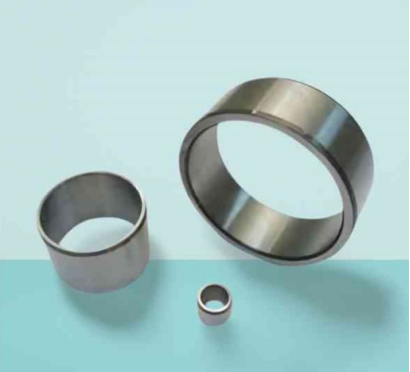
In the lexicon of precision mechanical engineering, a Shaft Sleeve is far more than a simple cylindrical tube. It is a critical functional component that integrates material science with geometric mechanics to manage friction, axial protection, and fluid sealing. Acting as a “sacrificial” barrier between rotating components and stationary supports, it plays an irreplaceable role in extending machinery lifespan and enhancing maintenance economy.
I. Core Functions: From Protection to Regulation
The design of a shaft sleeve typically encompasses four primary strategic functions:
-
Friction Pair Transformation and Mitigation:
The fundamental role of a sleeve is to convert direct “shaft-to-housing” friction into “sleeve-to-shaft/housing” friction. By utilizing materials with a friction coefficient significantly lower than that of the shaft itself, the sleeve reduces energy consumption and heat generation, preventing the shaft journal from annealing or scoring due to thermal buildup.
-
Sacrificial Protection:
In the lifecycle of machinery, the sleeve is intentionally designed as a wear part. Its hardness is precisely calibrated to ensure it wears out before the more expensive and complex main shaft, allowing for cost-effective replacement.
-
Carrier for Sealing Interfaces:
In pumps and agitation equipment, sleeves often serve as the rotational surface for dynamic seals (such as mechanical seals or packing). They protect the shaft from corrosive media and provide the ideal surface roughness—often requiring a finish of $Ra\ 0.4$ or better—to optimize seal performance.
-
Structural Positioning and Load Distribution:
Sleeves can act as axial spacers or shoulders to ensure the precise alignment of gears, bearings, and other transmission parts. Additionally, they increase the contact surface area for radial loads, thereby reducing the unit area pressure (compressive stress).
II. Material Engineering: Tailored Solutions for Harsh Environments
The performance ceiling of a shaft sleeve is dictated by its physical and chemical properties. Depending on the operating conditions, material selection generally falls into three categories:
1. Metallic Alloys
-
Copper-based Alloys (Bronze/Brass): Known for excellent thermal conductivity and anti-seize properties, these are ideal for medium-to-low speed, heavy-load applications like marine propulsion shafts.
-
Stainless and Hardened Steels: Often quenched or nitrided to achieve high surface hardness and erosion resistance, making them suitable for pump shaft protection.
-
Babbitt Metal: Used as a lining for sliding bearings, offering superior embeddability and conformability.
2. Engineering Plastics and Composites
-
PTFE (Polytetrafluoroethylene): Features an extremely low friction coefficient and chemical inertness, ideal for oil-free or highly corrosive environments.
-
PEEK (Polyetheretherketone): Combines high mechanical strength with high-temperature resistance, often selected for high-end semiconductor or medical equipment.
3. Ceramics and Hard Alloys
-
Silicon Carbide / Alumina: Used to combat highly abrasive media (e.g., slurry pumps with solid particles). Their hardness far exceeds metals, though they are more brittle.
III. Critical Design Parameters and Manufacturing Processes
To achieve high-reliability operation, shaft sleeve design must strictly adhere to several technical parameters:
-
Fit and Tolerance: The inner diameter fit between the sleeve and the shaft is usually a clearance fit (e.g., $H7/f7$ or $G7$) to ensure easy installation and removal under thermal expansion.
-
Surface Roughness: Friction and sealing surfaces must undergo precision grinding. For fluid-sealing sleeves, a lower $Ra$ value directly correlates to a longer lifespan for the sealing components.
-
Geometric Tolerances: Concentricity and Cylindricity are vital. Any uneven wall thickness or misalignment can lead to centrifugal imbalance, inducing high-frequency vibrations.
-
Surface Treatment: Common techniques include hard chrome plating, HVOF (High-Velocity Oxy-Fuel) thermal spraying of tungsten carbide, or PVD (Physical Vapor Deposition). These ensure the sleeve remains tough while achieving a surface hardness exceeding $HRC\ 60$.
IV. Typical Application Scenarios
-
Centrifugal Pumps: Protecting the pump shaft from corrosive fluids and the abrasive wear of packing or mechanical seals.
-
Internal Combustion Engines: Piston pin bushings and camshaft sleeves that endure high-frequency explosive pressures.
-
Heavy-Duty Hydraulic Cylinders: Serving as guide sleeves to support the lateral forces of the piston rod during linear motion.
V. Conclusion
While the shaft sleeve may appear to be a modest “metal ring,” it is a perfect embodiment of the “sacrifice for the whole” logic in mechanical engineering. By absorbing wear and tear, it ensures the long-term stability of the entire system. In an era demanding higher rotational speeds and lower maintenance costs, every incremental advancement in sleeve material and surface modification technology pushes the boundaries of industrial efficiency further.
Post time: Apr-03-2026