
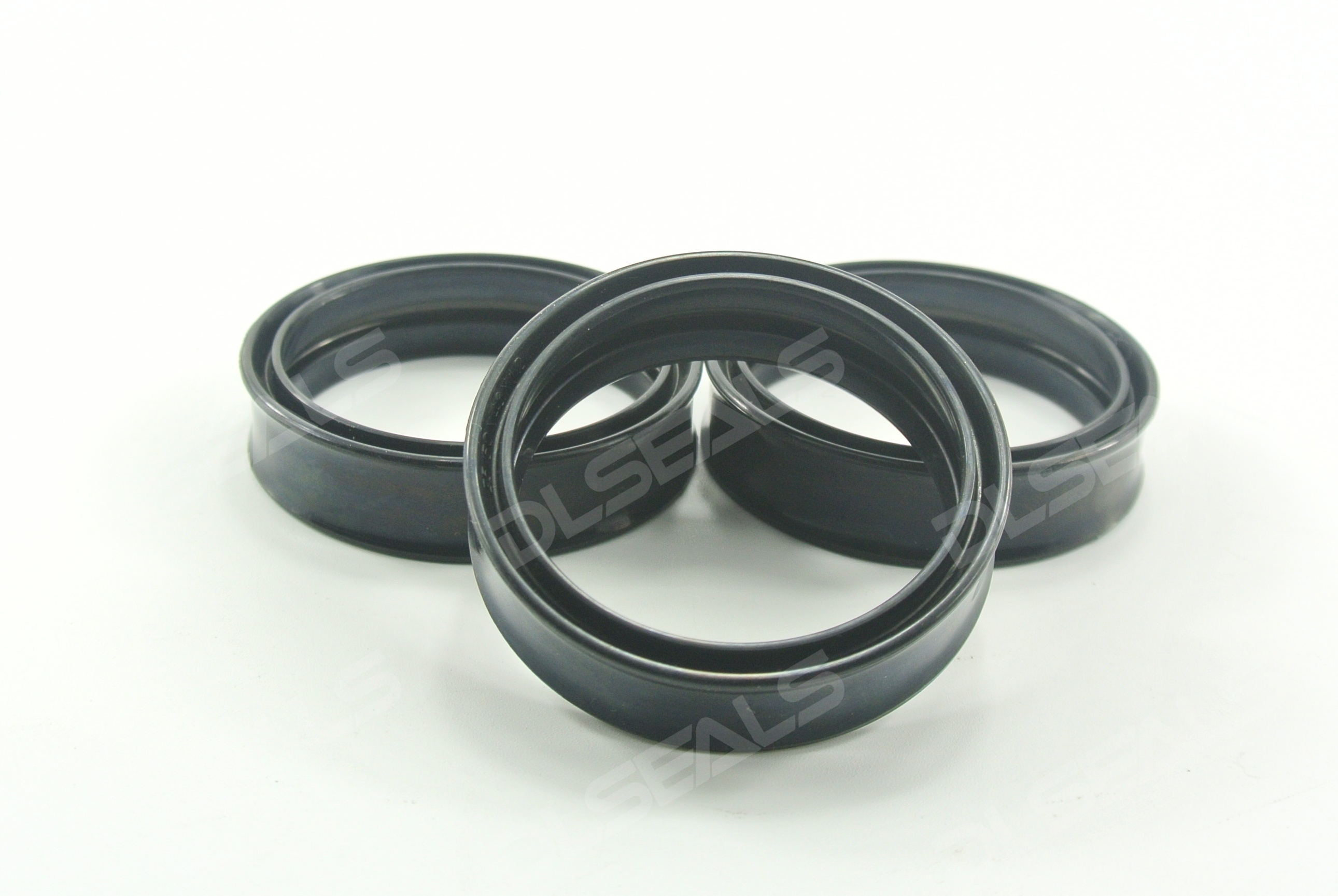
Gas seals are critical components in modern industrial equipment, designed to prevent the leakage of gas media. Their most representative and widely used form is the dry gas seal (DGS), which has become a core technology in high-speed rotating machinery such as centrifugal compressors, screw compressors, and expanders.
Why are gas seals so important?
In industries like petrochemicals, natural gas transmission, coal chemicals, air separation, and power generation, compressors often handle toxic, flammable, explosive, high-pressure, or valuable gases (e.g., hydrogen, ethylene, propylene, natural gas, syngas). Traditional oil-lubricated mechanical seals or labyrinth seals suffer from:
- Risk of process gas contamination by liquid lubricants
- High leakage rates, failing to meet environmental standards
- Severe wear under high speed and high pressure differences
- Frequent maintenance and costly downtime
Dry gas seals address these issues through non-contact operation, making them the dominant high-end shaft-end sealing solution today.
Core working principle of dry gas seals
The key innovation lies in creating a stable micron-level gas film between the seal faces using hydrodynamic effects, achieving true “zero contact, zero wear, and low leakage.”
Typical structure (single-face spiral groove dry gas seal):
- Rotating ring – Mounted on the shaft, rotates at high speed, with micron-deep spiral grooves (or other groove patterns like T-grooves, stepped grooves) on the face
- Stationary ring – Fixed to the housing, lightly pressed by springs
- Secondary O-rings – Provide sealing between stationary ring/housing and rotating ring/shaft
- Seal gas – Clean nitrogen or filtered process gas, supplied at controlled pressure
Operation process:
- When the equipment is stopped → Springs keep the faces lightly closed for zero leakage
- When rotation starts → Spiral grooves “pump” gas inward → High-pressure zone forms at groove roots → Opening force is generated
- Opening force > spring force + process pressure → Faces separate → A 2–5 μm gas film forms
- The gas film provides lubrication, cooling, and load-bearing functions
- The inner “dam” (un-grooved land) creates a throttling effect, drastically reducing leakage
In this “gas-floating” state, there is no solid contact between faces, and wear is theoretically near zero.
Common types of dry gas seals
| Type | Structural Features | Pressure Range | Typical Applications | Safety Level |
|---|---|---|---|---|
| Single-face | One set of sealing faces | Low to medium | Air, nitrogen, low-risk process gases | ★☆☆☆☆ |
| Double-face (back-to-back) | Two opposing face pairs, buffer gas in between | Medium to high | Strict zero-leakage cases (e.g., hydrogen) | ★★★★☆ |
| Tandem (most common) | Primary seal + secondary (safety) seal | Medium to ultra-high | Petrochemical, natural gas pipeline compressors | ★★★★★ |
| Multi-stage tandem | Three or more face pairs | Extremely high | Ultra-high-pressure ammonia, urea plants | ★★★★★ |
Today, over 80% of new process compressors worldwide are equipped with tandem dry gas seals as the preferred choice.
Main application areas
- Centrifugal and screw process gas compressors
- Natural gas pipeline compressors
- Refining units (FCC, hydrocracking, delayed coking, etc.)
- Main air and booster compressors in air separation plants
- Refrigeration compressors in LNG plants
- Syngas compressors in coal-to-chemicals (methanol, MTO, ammonia)
- Hydrogen recycle and tail gas recovery compressors
Core value of dry gas seals
- Extremely low leakage (typically < 1–5 Nm³/h, often lower)
- No oil lubrication → No risk of oil contamination
- Ultra-long service life (3–8 years, sometimes 10+ years)
- Significant reduction in maintenance costs and unplanned downtime
- Compliance with strict environmental regulations (VOCs, methane emissions)
- Suitable for extreme conditions (speed >30,000 rpm, pressure diff. >20 MPa, temp. -100°C, gas with particles/droplets)
Although dry gas seals and their support systems have higher initial costs, they are usually the most cost-effective choice over the full life cycle, especially in continuous operation, high-value gas, and environmentally sensitive applications.
In one sentence: Using gas as the medium, a gas film as the lubricant, and non-contact operation as the core principle — dry gas seals have become the “gold standard” for shaft-end sealing in contemporary process industry rotating machinery.
Post time: Jan-19-2026