
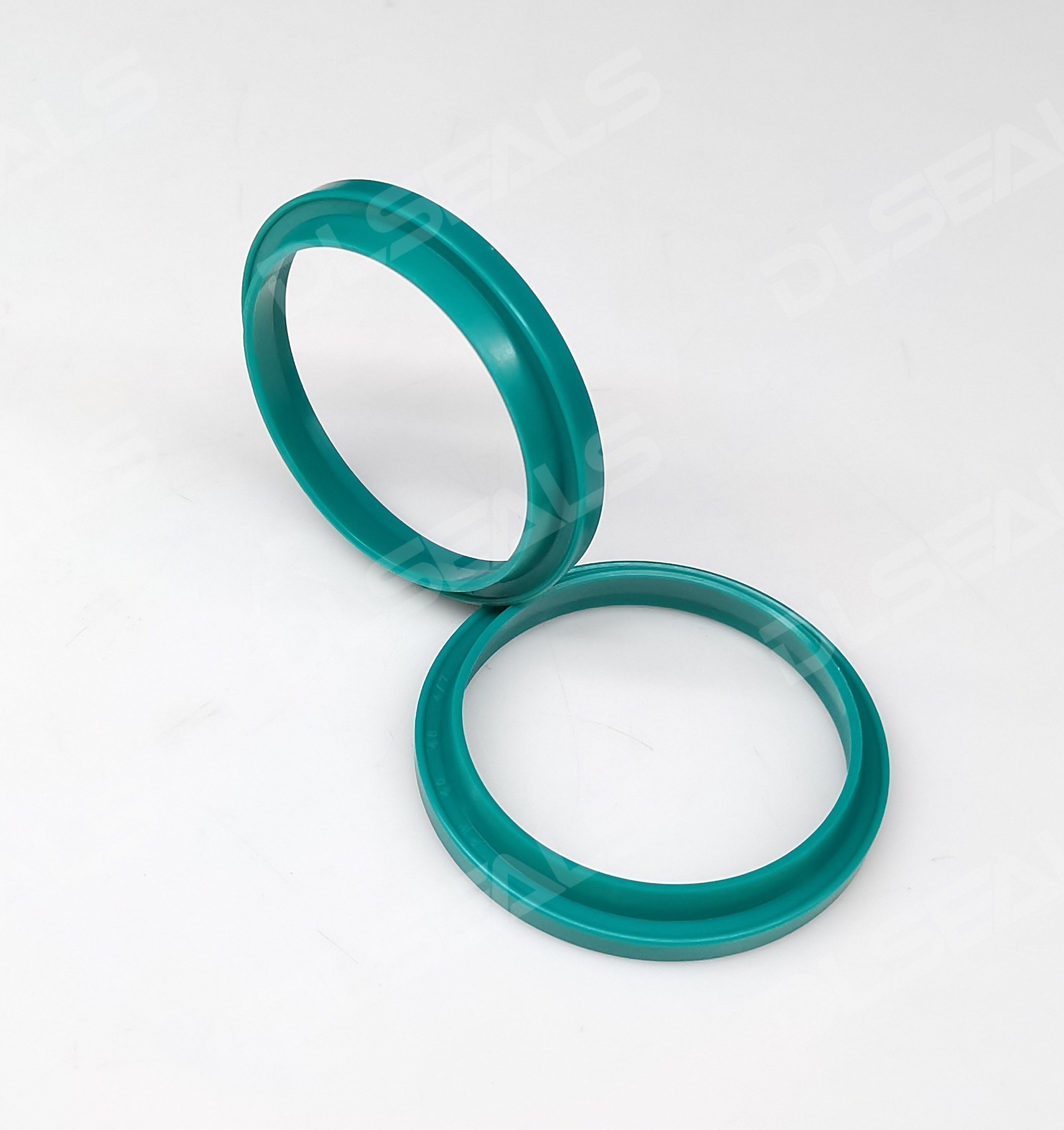
Within modern industrial systems, hydraulic technology functions as an invisible “river of power,” driving behemoths from massive tunnel boring machines to precision injection molding equipment. At every critical juncture of this power river stands a vital, silent guardian—the hydraulic seal. Though inconspicuous, these components maintain system pressures of hundreds or even thousands of atmospheres through millimeter-precise contact, preventing catastrophic energy “breaches” and the “invasion” of contaminants. They are the cornerstone for the efficient, reliable, and long-lasting operation of hydraulic systems. Should this line of defense fail, the consequences range from minor leaks and efficiency loss to complete system failure and safety incidents. This article delves into the core technical principles, classification, application, failure mechanisms, and future directions of hydraulic seals.
I. Sealing Principles and Technical Classification: The Science of Building Pressure Boundaries
The essence of hydraulic sealing is to establish a controlled barrier between two adjacent spaces with a pressure differential. The core mechanisms include:
- Contact Sealing: Relies on the elastic or plastic deformation of the sealing material under assembly preload and system pressure to create tight contact with the coupling surface, blocking leakage paths. Higher pressure typically increases contact stress, enhancing the seal (self-energizing sealing).
- Clearance Sealing: Achieved through precise fits, forming an extremely narrow and uniform micron-level gap between moving parts. It utilizes the high flow resistance (viscous shear) of fluid in the narrow passage to effect sealing. This method offers low friction but demands extremely high manufacturing precision and operational stability.
Based on installation location and motion state, hydraulic seals are primarily categorized as follows:
- Static Seals: Used for fixed interfaces, such as between flanges, pipe fittings, and cylinder end caps. Representative elements include O-rings, various gaskets, and sealants. Their technical core lies in controlling the material’s compression set and rational groove design.
- Dynamic Seals: Used for interfaces with relative motion, representing the area with the highest technical challenges and greatest variety. Further subdivided into:
- Reciprocating Seals: For hydraulic cylinder piston and piston rod sealing. Common elements include U-rings, Y-rings, Step seals, Glyd rings, and guide/support ring combinations. They must contain high pressure while coping with friction, wear, extrusion risk, and lubrication issues from frequent direction changes.
- Rotary Seals: For rotating shafts, must seal fluid and exclude external contaminants. Rotary shaft seals are typical, where lip design, spring load, and material temperature/wear resistance are critical.
- Rotary Oscillating Seals: For limited-angle oscillating motion, performance requirements lie between reciprocating and rotary seals.
II. Material Evolution and Engineering Challenges: Seeking Balance Under Extreme Conditions
Sealing materials are the physical foundation of sealing technology. Evolving from early leather and rubber to today’s synthetic rubbers, polyurethanes, PTFE, engineering plastics, and composites, the progression consistently seeks the optimal performance balance under harsh conditions:
- Nitrile Rubber: Excellent oil resistance, low cost, the most widely used general-purpose material, but limited in high-temperature and certain chemical media resistance.
- Polyurethane: Extremely high mechanical strength, wear resistance, and anti-extrusion capability, especially suitable for high-pressure reciprocating seals, but susceptible to hydrolysis at elevated temperatures.
- Fluorocarbon Rubber: Exceptional high-temperature, oil, and chemical resistance, suitable for high-temperature, high-pressure, and special fluid environments, but has poor low-temperature elasticity and high cost.
- Polytetrafluoroethylene: Very low friction coefficient, excellent chemical resistance, but lacks elasticity. Often used as a modified filler or in spring-energized PTFE composite seals to achieve low friction and long life.
The core engineering challenge lies in resolving the “sealing paradox”: how to perfectly unify “zero leakage” with “low friction” and “long life.” Common failure modes include: loss of sealing force due to permanent set, dimensional failure from wear, material hardening or decomposition from high temperatures, loss of elasticity at low temperatures, swelling or corrosion from fluid incompatibility, and initial damage from improper installation.
III. Innovative Design and Intelligent Frontiers
To meet increasingly demanding conditions, hydraulic sealing technology is advancing towards refined design, intelligent monitoring, and active adaptation:
- Structural Innovation: Modern seal design goes beyond simple cross-sectional shapes. Integrated composite seals combine elastomers and wear rings for complementary advantages. Biomimetic surface texturing creates micro-pits or grooves on sealing surfaces to improve lubricant film distribution and reduce friction/wear. Tools like Finite Element Analysis enable optimized design of contact stress distribution, preventing early failure from stress concentration.
- Material Composites: New materials like filled PTFE, modified polyurethane, and ceramic-metal composite coatings continually push the limits of temperature, pressure, and friction performance. Nanomaterial additives offer new pathways to enhance mechanical properties and wear resistance.
- Condition Monitoring & Intelligent Seals: This represents the most forward-looking direction. Embedding micro-sensors into or near the seal body to monitor contact stress, temperature, wear state, and even fluid contamination in real-time. Combined with IoT and big data analytics, this enables predictive maintenance, issuing warnings before failure occurs, shifting from “scheduled replacement” to “condition-based maintenance,” greatly enhancing system reliability and economy.
IV. Future Outlook
Future hydraulic systems will demand higher pressures, greater efficiency, more environmentally friendly media, and longer maintenance-free periods. This drives hydraulic sealing technology towards:
- Ultra-High Pressure & Extreme Environment Adaptation: Developing seals capable of withstanding ultra-high pressure, wide temperature ranges, and strong radiation for applications like deep-sea equipment and aerospace.
- Low Friction & Energy Efficiency: Further reducing dynamic seal friction through material and structural innovation to decrease system energy consumption, supporting carbon goals.
- Intelligence & Integration: Intelligent seals will move from labs into more practical applications, becoming essential sensing terminals for smart hydraulic systems. Sealing systems will also become more integrated and modular for faster replacement and maintenance.
Conclusion
The hydraulic seal, this “silent guardian,” encompasses far more than a simple rubber ring. It is the crystallization of interdisciplinary knowledge from materials science, precision mechanics, fluid dynamics, and surface engineering. As Industry 4.0 and advanced manufacturing progress, demands for hydraulic system reliability, efficiency, and intelligence will only increase. Deepening the understanding of sealing mechanisms and accelerating innovation in new materials, structures, and intelligent technologies is not only essential for improving individual component performance but also a key link in advancing the entire fluid power industry and ensuring the autonomy and controllability of major equipment. Only by steadfastly guarding this millimeter-precise line of defense can we fully unleash the immense power of hydraulic technology and drive the steady advancement of modern industry.
Post time: Jan-27-2026