
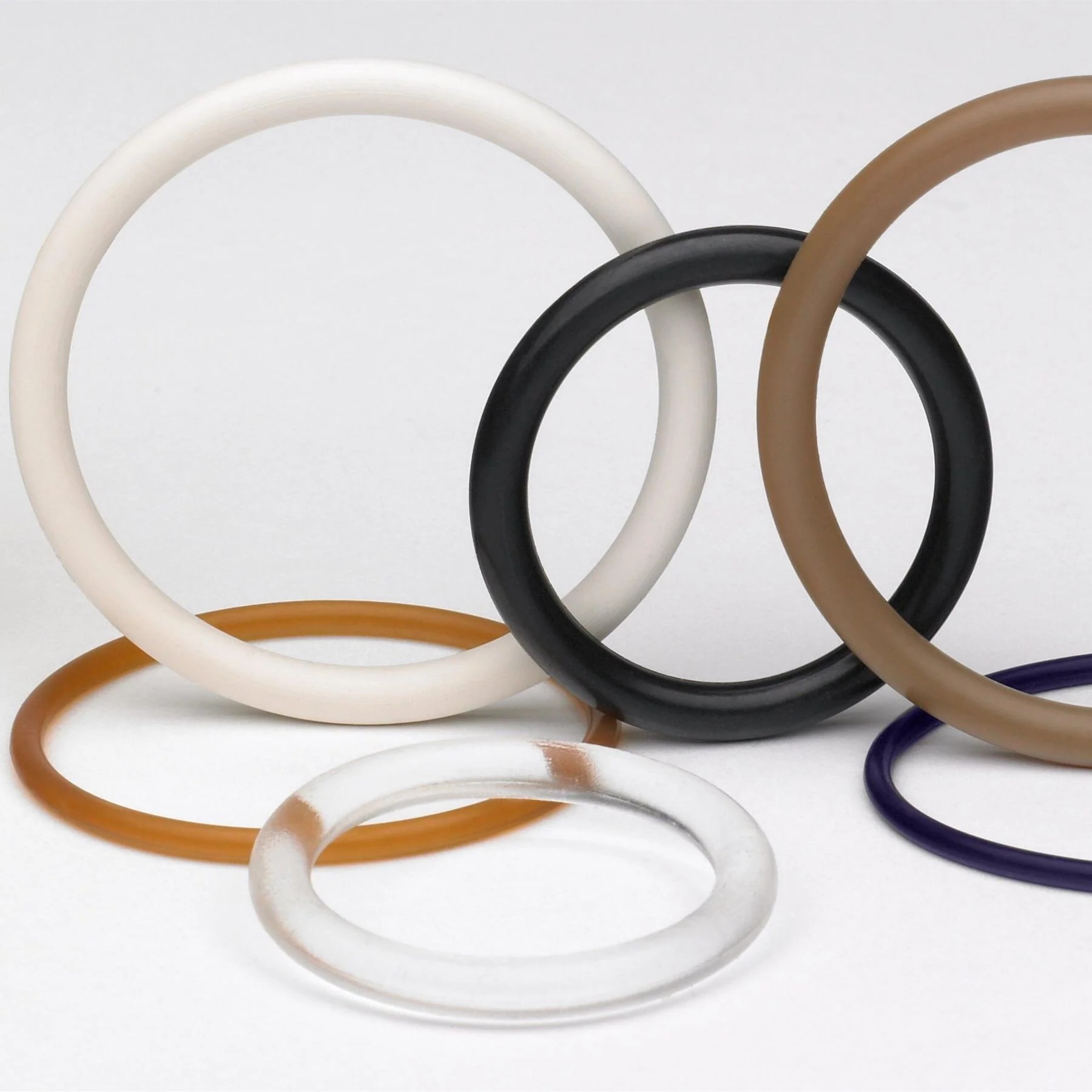
In oil and gas wells thousands of meters deep, corrosive fluids surge under extreme heat and pressure. In the cleanrooms of semiconductor fabs, etching gases must be absolutely contained, allowing not even ppm-level leaks. In the fuel systems of Mars rovers, brutal temperatures and radiation rage. On these extreme battlefields of human industry, a seemingly insignificant component—the sealing ring—plays the decisive role of the “gatekeeper.” Among them, the perfluoroelastomer (FFKM) seal, hailed as the “jewel in the crown of sealing elements,” defends the most advanced industrial lifelines with its staggering price (tens or even hundreds of times that of common rubber seals) and near-legendary performance.
I. Core Value: Why is it the Irreplaceable “Ultimate Line of Defense”?
The value of the FFKM seal stems from its absolute mastery over extreme operating conditions. In cutting-edge fields like chemical processing, aerospace, semiconductors, and new energy, sealing failure is never a simple “drip or leak”; it means:
- Leaks of highly toxic or hazardous chemicals, potentially causing major accidents, environmental disasters, and loss of life.
- Contamination of ultra-high-purity media; in semiconductor manufacturing, a single leak can destroy an entire production line worth hundreds of millions of dollars.
- Critical system failure, such as spacecraft propellant leaks or deep-sea equipment decompression, leading to complete mission loss.
Perfluoroelastomer rubber steps in precisely where traditional fluoroelastomers (FKM) or even polytetrafluoroethylene (PTFE) “wave the white flag,” serving as the final and most reliable barrier. Its value lies not in its own weight, but in the thousands or tens of thousands of times greater value of the systems and safety margins it protects.
II. Deconstructing the “Sky-High” Price: The Hard Logic Behind the Cost
Why is a tiny sealing ring so expensive? The cost permeates every stage, from its molecular structure to the final product.
- “Noble” Raw Materials and Complex Synthesis: The backbone of FFKM rubber is formed by replacing all hydrogen atoms on the carbon-carbon chain with fluorine atoms and introducing ether linkages (-C-O-C-). This perfluorinated structure requires complex, multi-step synthesis (e.g., starting from hexafluoropropylene) involving advanced processes like photo-oxidation and telomerization, which are intricate, have stringent yield control, and incur extremely high material and manufacturing costs.
- Pinnacle of Performance, Rooted in Molecular Structure:
- Absolute Inertness: The strong carbon-fluorine bonds and perfluorinated structure grant it incomparable resistance to virtually all chemicals (strong oxidizers like oleum/nitric acid, strong bases, organic solvents, rocket propellants, etc.)—its core asset.
- Ultra-Wide Temperature Range: Continuous service from approximately -25°C to +325°C, with short-term tolerance for even higher temperatures, far exceeding standard FKM.
- Ultimate Cleanliness: Extremely low levels of extractables, preventing contamination of ultra-pure process fluids.
- Exceptional Durability: Outstanding compression set resistance and aging resistance in extreme environments, far surpassing other elastomers.
- “Alchemy”-Level Manufacturing and Processing:
- Precious Raw Material: The base polymer itself commands a very high price.
- Processing Challenges: The raw elastomer is highly sticky, making mixing, shaping (molding, injection) difficult and requiring stringent equipment and process control.
- Critical Post-Processing: Must undergo high-temperature post-curing to remove decomposition by-products and optimize properties—an energy-intensive and lengthy process.
- Rigorous QC: From raw material to finished product, it undergoes non-destructive testing and performance validation (in real or simulated media) far beyond that for standard seals, ensuring absolute reliability.
- High Technical Barriers and an Oligopoly Market: Only a handful of global chemical giants like Chemours can produce high-quality FFKM raw polymer at volume, creating significant technological and market barriers.
III. The Performance King: A Comprehensive Parameter Overview
To appreciate its “kingly” status, see the comparison with common sealing materials:
| Performance Dimension | Perfluoroelastomer (FFKM) | Standard Fluoroelastomer (FKM) | Silicone Rubber (VMQ) | Polytetrafluoroethylene (PTFE) |
|---|---|---|---|---|
| Chemical Resistance | Best, nearly universal | Excellent for most oils, acids | Fair | Excellent, but high creep, poor elasticity |
| Continuous Temp. Range | -25°C ~ +325°C | -20°C ~ +230°C | -60°C ~ +230°C | -200°C ~ +260°C |
| Compression Set Resistance | Exceptional (even at high temp) | Good (degrades at high temp) | Poor | Not Applicable (non-elastomer) |
| Cleanliness / Low Extractables | Best | Good | Poor | Excellent |
| Elasticity / Sealing Force Retention | Excellent | Excellent | Excellent | Poor |
| Relative Cost | Extremely High | Moderate | Low | Low to Moderate |
IV. Fields of Duty: Guarding Core Battlegrounds of Cutting-Edge Industry
Precisely because of these properties, FFKM seals are deployed in areas demanding “zero compromise” on reliability and safety:
- Semiconductor & Flat Panel Display Fabrication: In dry etch, chemical vapor deposition (CVD) tools, sealing against plasma, corrosive gases (e.g., Cl₂, NF₃, WF₆), ensuring ultra-high purity and zero leakage.
- High-End Chemical & Energy Processing: Sealing highly corrosive chemicals (e.g., 98% H₂SO₄, fuming HNO₃), polymerization reactors, and downhole tools/blowout preventers in deep-sea oil/gas extraction, handling high-temperature, high-pressure, sour environments.
- Aerospace & Defense: Used in engine fuel systems, oxygen systems, and missile propellant (e.g., N₂O₄, MMH) line seals, withstanding extreme temperatures and media.
- Supercritical Fluid Technology: Providing reliable sealing in supercritical CO₂ extraction, power generation, and other systems.
- Life Sciences & Pharmaceuticals: Used in equipment handling high-purity, high-potency active pharmaceutical ingredients or requiring frequent autoclave sterilization.
Conclusion
Perfluoroelastomer seals, the “jewel in the crown” of sealing technology, command a price forged by advanced materials science, extreme engineering, and relentless quality control. They are not designed for ordinary service, but to challenge the most demanding industrial frontiers. In applications where leakage spells catastrophe, contamination guarantees failure, and malfunction incurs colossal cost, the perfluoroelastomer seal stands as the ultimate and most robust line of defense. Its value transcends the cost of the material itself, representing a critical investment in system integrity, process purity, and the safeguarding of both human and environmental safety. Choosing a perfluoroelastomer seal is, in essence, procuring the definitive insurance against the unacceptable price of failure.
Post time: Dec-29-2025