
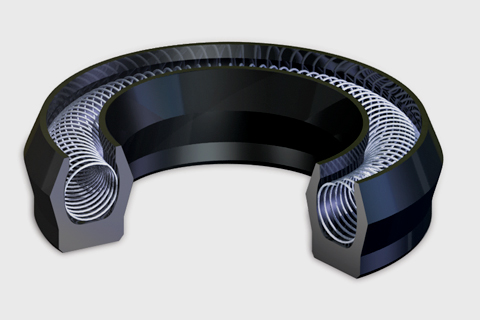
In the petrochemical and energy industries, equipment operates under extreme conditions such as high pressure, high temperature, cryogenic temperatures, highly corrosive media, and frequent start-stop cycles. These conditions place stringent demands on sealing reliability and durability. Traditional rubber seals often fail due to material aging, swelling, or low-temperature embrittlement. In contrast, spring energized seals (also known as spring-loaded seals, PTFE spring seals, or Variseals) have become the preferred solution for critical equipment such as valves, pumps, compressors, dry gas seals, and LNG systems, thanks to their unique spring preloading and pressure-assisted sealing mechanism.
1. Core Characteristics of Spring Energized Seals
Spring energized seals consist of a high-performance polymer jacket (such as PTFE, PEEK, or UHMWPE) and an internal metal spring (stainless steel, Inconel, etc.). The spring provides constant preload force, ensuring the sealing lip maintains tight contact with the mating surface even under zero or low pressure. System pressure further enhances the sealing force, creating a self-tightening effect. Additionally, the spring compensates for wear, thermal expansion/contraction, and hardware eccentricity, maintaining long-term stable sealing performance.
Key performance features include:
- Wide temperature range: -200°C to +260°C (or higher), perfectly suited for cryogenic LNG and high-temperature chemical environments.
- Excellent chemical resistance: PTFE and similar materials resist virtually all chemical media.
- Low friction: Extremely low coefficient of friction, reduced energy consumption, and support for dry running.
- High-pressure capability: Reliable performance from vacuum to ultra-high pressure conditions.
2. Specific Applications in Petrochemical and Energy Equipment
1. Valves
Petrochemical valves (ball valves, gate valves, control valves) must withstand high differential pressure and corrosive media. Spring energized seals are commonly used for stem seals and seat seals, especially in slab gate valves and cryogenic valves.
Advantages: The spring compensates for wear and thermal deformation during stem reciprocating motion, preventing leakage. In cryogenic conditions, they do not embrittle, ensuring zero-leakage safety for LNG valves. Compared with traditional packing, they offer lower friction, reduced operating torque, and smoother opening/closing.
2. Pumps
Chemical and oil & gas transfer pumps often handle corrosive and particle-laden media. Spring energized seals are used in mechanical seal auxiliary sealing or as dynamic seals.
Advantages: Superior wear and corrosion resistance significantly extend seal life and reduce downtime for maintenance. Low friction lowers shaft power consumption and improves pump efficiency. They maintain reliable sealing even under high pressure and abrasive conditions.
3. Compressors
Compressors are core equipment in natural gas, refrigeration, and LNG processes. Spring energized seals are widely applied in piston rod seals, shaft seals, and especially as auxiliary seals in dry gas seal systems.
Advantages: They provide stable sealing under high-speed rotation and pressure fluctuations. In dry gas seals, they ensure floating and tracking performance of the push ring, reducing leakage and power consumption while supporting reliable operation of large LNG compressors.
4. Dry Gas Seals (DGS)
Dry gas seals are the mainstream shaft-end sealing technology for LNG and natural gas compressors. Spring energized seals are often used as secondary auxiliary seals or push-ring seals.
Advantages: Excellent resistance to rapid gas decompression (RGD) and high PV values (pressure × velocity). They serve as reliable backup seals during non-contact operation, preventing process gas leakage and enhancing system safety.
5. LNG Equipment
LNG production, storage, transportation, and loading/unloading involve ultra-low temperatures around -162°C. Spring energized seals are the ideal choice for LNG loading arms, cryogenic valves, pumps, and pipe joints.
Advantages: They maintain elasticity and sealing force at extremely low temperatures without the glass transition issues of traditional elastomers. They resist LNG and liquid nitrogen media, preventing leakage-related safety incidents. Their performance has been widely validated in LNG fueling nozzles and loading arms.
3. Overall Application Advantages
- Enhanced Safety: Near-zero leakage reduces risks of flammable and explosive media leaks, complying with strict standards such as API and ISO.
- Economic Benefits: Service life several times longer than traditional seals, lower maintenance costs, and reduced energy consumption, significantly lowering total lifecycle expenses.
- Strong Adaptability: Suitable for rotary, reciprocating, static, and oscillating motions; materials and spring types can be customized for specific conditions.
- Environmental Contribution: Reduced media leakage supports clean energy development and “dual carbon” goals.
4. Development Trends and Selection Recommendations
With the advancement of LNG, hydrogen energy, and deep-sea oil & gas development, spring energized seals are evolving toward higher pressure ratings, even lower friction, and intelligent monitoring. When selecting seals, comprehensively consider medium composition, temperature/pressure range, motion speed, and hardware clearance. It is recommended to collaborate with professional manufacturers (such as Bal Seal) for customized design and finite element simulation verification.
Conclusion
In the petrochemical and energy sectors, spring energized seals safeguard major safety with their compact size. With superior adaptability to extreme environments and long-term reliability, they have become a core technology for improving equipment performance and ensuring production continuity. In the future, as industries upgrade, their applications will deepen further, providing strong support for China’s energy security and green transformation. Proper selection and optimization of spring energized seals will deliver significant safety and economic benefits to enterprises.
Post time: Jun-08-2026


