
In the grand narrative of modern industry and engineering machinery, people often marvel at the tremendous power of giant hydraulic arms or the precise efficiency of automated production lines. However, deep inside these massive machines, maintaining their power and ensuring seamless operation are often incredibly small yet vital components.
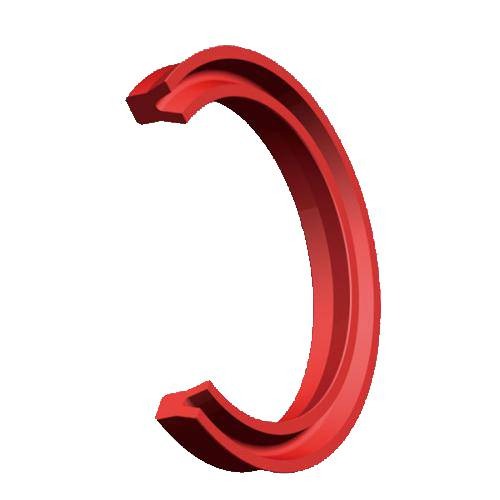
The Y-ring (Y-shaped seal) is a core representative of these hidden guardians. Named after its cross-section that resembles the English letter “Y,” it is not only a “timeless classic” in fluid power systems but also the critical core link that guarantees the safe and efficient operation of industrial equipment.
1. The Unique Aesthetics of Structure: Why the “Y” Shape?
The ingenuity of the Y-ring lies entirely in its unique cross-sectional design. A standard Y-ring typically consists of the sealing lips (inner/outer lips) and the base (heel).
-
Dual-Lip Structure: This design naturally gives the seal directionality. The two lips press tightly against the shaft surface (inner lip) and the bore surface (outer lip), forming an initial sealing barrier.
-
Self-Energizing Sealing Principle: This is the ultimate trump card of the Y-ring. When the system is filled with media (such as hydraulic oil or air) and generates pressure, the medium flows into the Y-shaped groove. Instead of destroying the seal, the pressure pushes the lips outward, forcing them tighter against the sealing surfaces.
Core Mechanism: The higher the medium pressure, the tighter the lips adhere to the surface, and the better the sealing effect. This “work with the force” self-energizing characteristic is something standard O-rings lack.
2. Core Classifications and Selection Guide
To adapt to different working environments, the Y-ring family has evolved into several variants. Based on the cross-sectional proportions and application scenarios, they are mainly divided into three categories:
| Seal Type | Structural Characteristics | Core Application Scenarios |
| Wide-Section Y-Ring | Wide cross-section, robust base. | Mainly used in reciprocating systems with low or medium pressure, offering strong resistance to twisting. |
| Narrow-Section Y-Ring | Narrow cross-section, often paired with an anti-extrusion back-up ring. | Specially designed for high-pressure, high-speed environments, mostly used in heavy-duty hydraulic cylinders. |
| Asymmetric Lip Y-Ring | For shaft (shorter inner lip) or for bore (shorter outer lip). | Highly targeted. Bore seals focus on outer lip sealing, while shaft seals focus on inner lip sealing, offering low friction and longer life. |
Core Material Selection
Material determines the lifespan of a seal.
-
Polyurethane (PU): High mechanical strength, extremely wear-resistant, and high-pressure resistant. It is the premier core material for hydraulic systems.
-
Nitrile Rubber (NBR): Excellent oil resistance, moderate cost, widely used in general industry and pneumatic systems.
-
Fluororubber (FKM/Viton): Specializes in extreme environments with high temperatures and corrosive media.
3. Four Core Advantages of Y-Rings
Why do Y-rings maintain a dominant position in reciprocating hydraulic and pneumatic cylinders?
-
Extremely Low Frictional Resistance: At low or zero pressure, the Y-ring relies only on the elasticity of the lips to provide a tiny contact force. It increases gripping force only when pressure rises during operation, significantly reducing frictional power consumption during machine startup and operation.
-
Excellent Seal Adaptability: Although it only seals in one direction, by utilizing “back-to-back” or “face-to-face” dual combinations, it perfectly solves the challenge of bidirectional alternating pressures.
-
Natural Wear Compensation: Even if the lips experience slight wear during long-term operation, the internal system pressure continues to push the lips outward, automatically compensating for the wear gap and extending service life.
-
Strong Anti-Rolling Capability: Compared to O-rings, which are prone to twisting and failing within the groove, the base design of the Y-ring allows it to remain rock-solid during reciprocating movements.
4. Core Installation and Maintenance: Details Determine Success
No matter how perfect a seal is, if installation and maintenance are neglected, it will become the main culprit behind system leakage. In maintenance centered around Y-rings, three rules must be strictly followed:
-
The Direction Can Never Be Reversed: During installation, the Y-shaped groove (the open side of the lips) must face the pressure side. If installed backward, the medium will not only fail to provide self-energizing force but will also flip the lips open, leading to complete failure.
-
Beware of Sharp Edges and Scratches: The lead-in chamfer of the cylinder or piston rod must be smooth. When installing across threads or keyways, specialized protective sleeves must be used, as even microscopic scratches can become oil leakage paths later on.
-
Watch Out for “Base Extrusion”: In high-pressure environments (e.g., greater than 16MPa), the base of the Y-ring can easily be squeezed into mechanical clearances, causing tearing. In such cases, an anti-extrusion back-up ring (like a PTFE ring) must be installed at its base.
Conclusion
In the gears of modern industrial civilization, the Y-ring may lack an eye-catching appearance, but with its unique “Y” shape, it withstands tons or even hundreds of tons of fluid pressure, guarding the power core of the entire machine. From every scoop of an excavator to every press in an automated factory, it is the countless Y-rings hidden at the core that, with their reliability and self-energizing wisdom, support the grand structure of modern fluid power transmission. Understanding it, choosing it wisely, and using it correctly is the core secret to mastering efficient and stable equipment operation.
Post time: Jun-24-2026


