
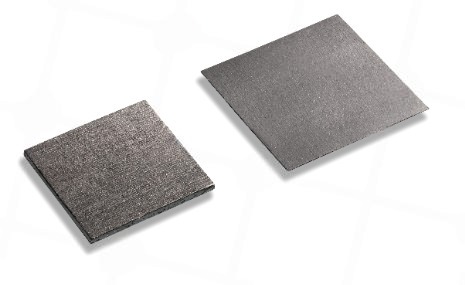
In today’s highly electronic era, electronic devices face multiple challenges including electromagnetic interference (EMI), environmental pollution, and mechanical stress. Conductive rubber sealing rings, an innovative material that combines both sealing and conductivity functions, have become an indispensable core component in high-end electronic equipment, aerospace, automotive electronics, and communication base stations. They not only effectively block dust, moisture, and harmful gases but also provide reliable electromagnetic shielding and grounding paths, ensuring stable equipment operation.
What are Conductive Rubber Sealing Rings?
Conductive rubber sealing rings are composite materials made by uniformly dispersing conductive fillers (such as silver powder, nickel powder, carbon black, silver-plated glass beads, etc.) into high-performance elastomer matrices like silicone rubber, fluororubber, or EPDM. Unlike ordinary rubber seals, they possess both excellent elastic sealing properties and stable electrical conductivity.
Their working principle is based on “percolation theory”: when the amount of conductive filler reaches a certain threshold, the filler particles form a continuous conductive network within the rubber matrix, transforming the material from an insulator to a conductor. Meanwhile, the superelasticity of rubber ensures that the sealing ring tightly conforms to contact surfaces under compression, achieving IP67 or higher waterproof and dustproof protection.
Main Features and Advantages
- Excellent Conductivity: Volume resistivity as low as 0.01Ω·cm, with shielding effectiveness of 60-120dB (10MHz-10GHz).
- Reliable Sealing Performance: Temperature range from -60°C to +200°C, resistant to oil, solvents, and aging.
- Low Compression Set: Maintains good resilience after long-term use.
- Electromagnetic Compatibility (EMC): Effectively suppresses electromagnetic radiation and external interference.
- Easy Installation: Customizable cross-sections (O-type, D-type, rectangular, irregular, etc.), supporting compression molding and extrusion.
Compared with traditional metal shielding gaskets, conductive rubber sealing rings are lighter, more flexible to install, have lower requirements for contact surface flatness, and can achieve both sealing and conductivity simultaneously, significantly reducing design complexity.
Wide Range of Applications
- 5G/6G Communication Equipment: Electromagnetic sealing for base station filters, RF modules, and outdoor cabinets.
- New Energy Vehicles: Waterproof conductive sealing for battery packs, motor controllers, and high-voltage connectors.
- Aerospace: Harsh environment protection for radar systems, satellite electronic cabins, and airborne equipment.
- Medical Devices: MRI equipment and precision analyzers to prevent EMI from affecting measurement accuracy.
- Defense and Military: Electronic warfare equipment and command systems to counter strong electromagnetic pulse (EMP) threats.
- Consumer Electronics: Waterproof and EMI-proof sealing for high-end smartphones, tablets, and smart wearables.
Technological Development Trends
As electronic devices evolve toward miniaturization, high frequency, and high integration, conductive rubber sealing rings are advancing in the following directions:
- Ultra-low resistivity and high shielding effectiveness;
- Application of nanoscale conductive fillers (such as graphene and carbon nanotubes) to reduce filler usage and improve flexibility;
- Intelligentization: Integration of sensors for real-time monitoring of sealing status;
- Eco-friendly formulations: Halogen-free, low-smoke, low-toxicity, compliant with RoHS and REACH standards.
Conclusion
Though small in size, conductive rubber sealing rings play a critical role in ensuring the safe and reliable operation of modern electronic systems. They represent a perfect integration of materials science, electromagnetic compatibility engineering, and mechanical sealing technology. With the explosive growth of the Internet of Things, artificial intelligence, and new energy industries, this technology will continue to demonstrate tremendous potential, providing a solid and reliable “protective shield” for electronic devices.
Post time: May-28-2026


