
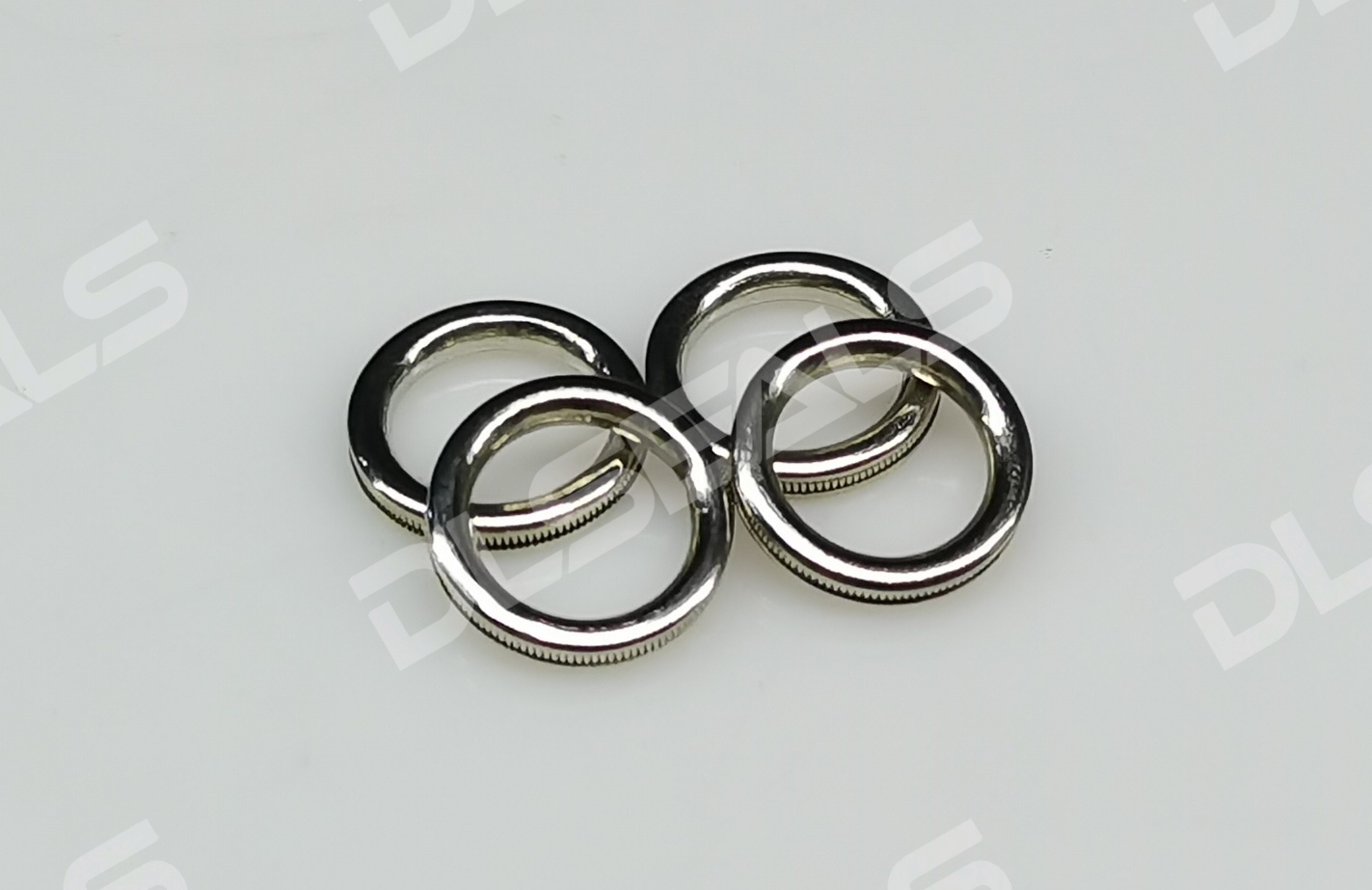
Sealing components used in nuclear power, radiation equipment, nuclear fuel processing, medical equipment, aerospace, and high-energy physics may be exposed to ionizing radiation while also operating under high temperature, pressure, vacuum, or corrosive media. Radiation can change the molecular structure of sealing materials, causing hardening, embrittlement, cracking, loss of elasticity, and reduced sealing performance.
Therefore, material selection for radiation environments should consider not only temperature and chemical compatibility, but also radiation type, total absorbed dose, dose rate, temperature, pressure, medium, and sealing movement.
Material Selection for Radiation Applications
Common radiation types include alpha, beta, gamma, X-ray, and neutron radiation. Their penetration characteristics and effects on materials are different. For polymer seals, radiation may cause either cross-linking or molecular-chain scission, resulting in changes in hardness, strength, elasticity, and compression set.
Rubber materials such as NBR, EPDM, and FKM can be used in selected radiation environments, but their radiation resistance varies significantly with formulation and operating conditions. NBR is mainly selected for oil resistance, EPDM for water and steam, and FKM for high-temperature, oil, and chemical resistance. For higher radiation levels, specially formulated and radiation-tested compounds should be used instead of relying only on the material name.
PTFE offers excellent chemical resistance, low friction, and a wide temperature range, making it attractive for dynamic seals in special environments. However, high radiation doses can cause molecular-chain degradation and embrittlement. Modified or filled PTFE can improve wear resistance, creep resistance, and mechanical strength, but the actual radiation resistance still needs to be verified under the intended conditions.
For applications involving high radiation, high temperature, high vacuum, or extremely long service life, metallic seals may provide a more reliable solution. Stainless steel, nickel-based alloys, and other high-performance alloys can be used for metal O-rings, C-rings, E-rings, bellows seals, and other sealing structures. Compared with polymer seals, metal seals generally provide much better radiation and high-temperature stability.
Design and Performance Considerations
Material selection alone is not sufficient. Seal geometry and installation conditions also have a major influence on reliability.
For polymer seals, radiation exposure can gradually reduce elasticity and sealing force. Where possible, the seal can be positioned in a lower-radiation area or protected by shielding structures to reduce the actual absorbed dose.
For metal seals, key factors include surface finish, compression, contact stress, material springback, thermal expansion, and flange design. High-temperature systems require special attention to the difference in thermal expansion between the seal and mating components.
Radiation resistance should also not be evaluated using a single “maximum radiation dose” value. Actual performance depends on total dose, dose rate, temperature, atmosphere, radiation type, mechanical stress, and exposure time.
For critical applications, material selection should therefore be supported by radiation testing, thermal aging, chemical compatibility, and sealing performance testing. Dynamic seals should also undergo friction and wear testing under representative operating conditions.
Conclusion
Selecting sealing materials for radiation environments is a comprehensive engineering task involving radiation, temperature, pressure, chemical media, mechanical load, and sealing structure.
For relatively low radiation levels, specially formulated rubber materials may be suitable. For low-friction dynamic sealing, PTFE or modified PTFE can be considered. For high radiation combined with high temperature, high vacuum, or extremely demanding reliability requirements, metal seals are often the preferred solution.
The key point is that high-temperature resistance, chemical resistance, and radiation resistance are different material properties. A material that performs well against heat and chemicals does not necessarily provide long-term stability under high radiation.
A reliable radiation sealing solution should therefore be based on the actual radiation dose, dose rate, temperature, pressure, medium, movement, and required service life, followed by appropriate testing and validation.
Post time: Aug-27-2026


