
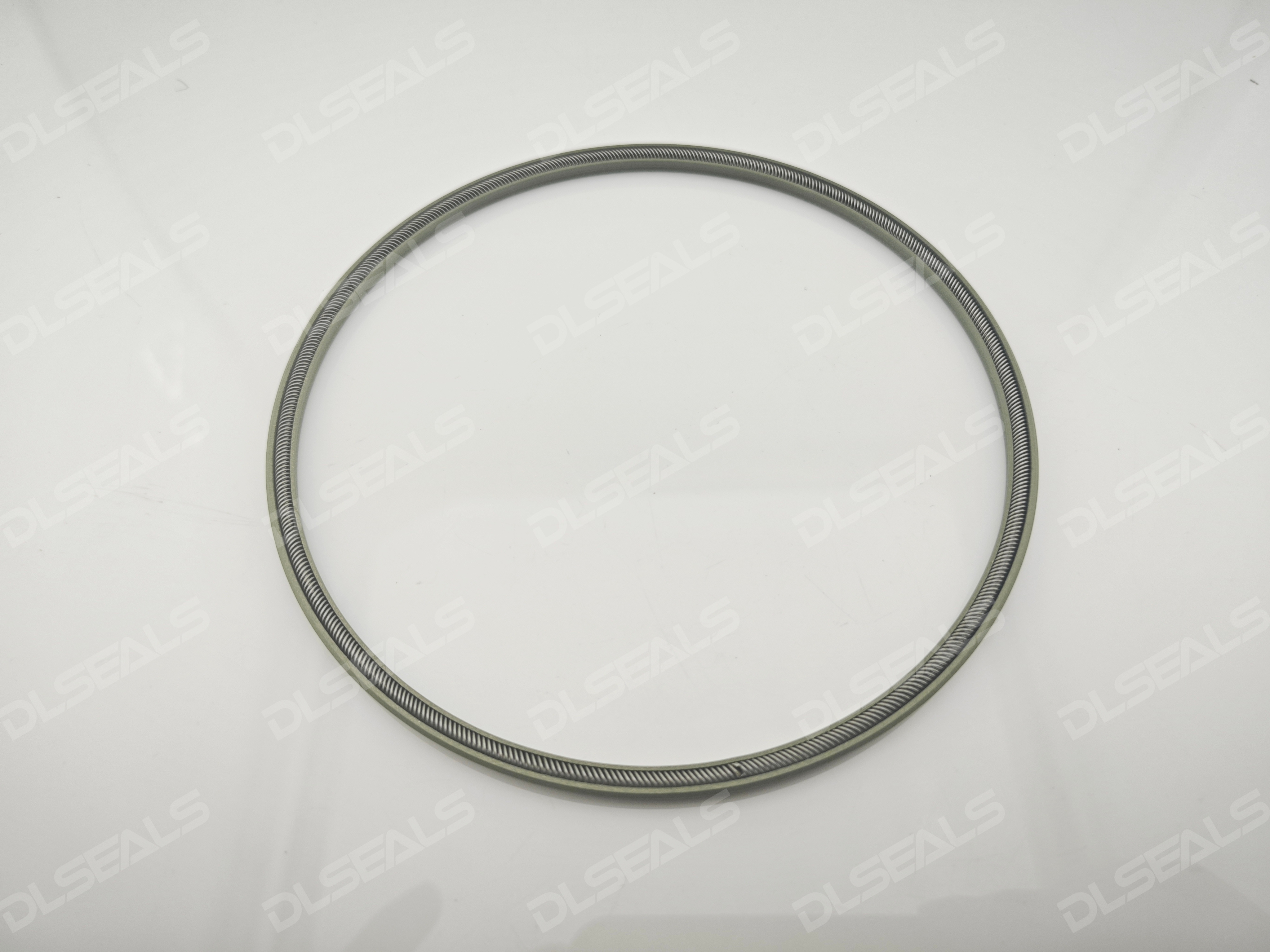
1. Comparison of Core Basic Material Properties
1.1 UPE (Ultra-High Molecular Weight Polyethylene)
- Density: 0.93–0.95 g/cm³
- Long-term temperature resistance: -200°C to +80°C (short-term peak 100°C; softens and deforms beyond this temperature)
- Friction coefficient: 0.1–0.2 (dry state, excellent self-lubrication)
- Wear resistance: 6–7 times that of carbon steel, 5–10 times that of pure PTFE, ranking first among engineering plastics
- Chemical stability: Resists weak acids, weak bases, salt solutions, most organic solvents and oils; not resistant to concentrated nitric acid, concentrated sulfuric acid, or strong oxidizing agents (e.g., potassium permanganate)
- Hardness: Shore D 60–65, relatively soft, average creep resistance
1.2 PTFE (Polytetrafluoroethylene)
- Density: 2.1–2.2 g/cm³ (approximately 2.3 times that of UPE)
- Long-term temperature resistance: -200°C to +260°C (short-term peak 300°C, excellent high-temperature stability)
- Friction coefficient: 0.02–0.04 (dry state, the lowest among solid materials)
- Wear resistance: Poor for pure PTFE; requires filling with carbon fiber/glass fiber for improvement (after filling, only 1/2–1/5 of UPE)
- Chemical stability: Resists strong acids and alkalis at pH 0–14, most organic solvents, oils, and gases; only attacked by molten alkali metals and high-temperature fluorine gas
- Hardness: Shore D 50–55, relatively tough; creep resistance significantly improved after filling
2. Detailed Analysis of Advantages and Disadvantages of UPE Spring Energized Seals
Advantages
-
Superior wear resistance, extremely long service life in high-wear conditions
The wear resistance of UPE is 5–10 times that of pure PTFE and 6–7 times that of carbon steel. In high-wear scenarios containing solid particles and rough contact surfaces, such as mining machinery, cement equipment, and coal conveying systems, the service life of UPE spring energized seals is 3–8 times that of PTFE ones, greatly reducing replacement frequency and equipment downtime. For example, UPE seals excel in resisting particle cutting and abrasive wear for hydraulic cylinder piston rod seals (dust environments), sewage pump shaft seals, and sand conveying valve seals.
-
Excellent self-lubrication, low friction without “stick-slip”
With a friction coefficient of 0.1–0.2, close to filled PTFE, UPE has good self-lubrication and little difference between static and dynamic friction coefficients, completely eliminating “crawling (stick-slip)” during low-speed operation, ensuring stable equipment operation and low energy consumption. It is suitable for hydraulic reciprocating motion, low-speed rotary seals, and food machinery conveying parts, maintaining low friction without additional lubrication and avoiding lubricant contamination.
-
Strong impact and fatigue resistance, stable performance in dynamic conditions
UPE retains high impact strength even at low temperatures (-200°C), withstands reciprocating impact, shaft eccentric vibration, and pressure fluctuation shocks without cracking or brittle fracture, and delivers good dynamic sealing followability. Compared with PTFE (high brittleness, poor impact resistance), UPE spring energized seals offer higher reliability under vibration and impact conditions.
-
Non-toxic and clean, suitable for food and pharmaceutical applications
UPE has zero water absorption, is non-toxic and odorless, complies with FDA 21 CFR Part 177 and USP Class VI certifications, and does not contaminate media. It can directly contact food, pharmaceuticals, and drinking water, making it the preferred choice for food processing machinery, pharmaceutical equipment, water treatment valves, and LNG cryogenic storage tank seals.
-
Low density, light weight, and lower cost
UPE’s density is only 43% of PTFE’s, so seals of the same size are lighter and easier to install. Raw material prices are lower than PTFE, and processing is simpler (CNC cutting available without sintering), resulting in a 20%–40% lower mass production cost than PTFE spring energized seals, with outstanding cost performance.
-
Good water resistance and wet-state stability
UPE is non-absorbent and non-swelling, with stable dimensions and performance in aqueous media and humid environments without softening or deformation, making it ideal for water hydraulic systems, sewage treatment equipment, and seawater sealing applications.
Disadvantages
-
Poor temperature resistance, limited in high-temperature conditions
UPE has a long-term service temperature ≤80°C and a short-term limit of 100°C. Beyond this temperature, it rapidly softens, creeps, and plastically deforms, leading to seal failure. It must not be used in high-temperature media, steam, or hot oil conditions above 100°C, such as high-temperature hydraulic oil (120°C+), high-temperature chemical reactors, and steam valves.
-
Weak creep resistance, prone to deformation and leakage under high pressure
UPE is relatively soft and prone to creep (slow plastic deformation) under long-term high pressure (>20MPa), reducing the fit of the sealing lip and causing leakage. Its extrusion resistance is lower than filled PTFE in high-pressure dynamic conditions, requiring additional backup rings and increasing design complexity.
-
Limited corrosion resistance, unsuitable for highly corrosive environments
UPE is not resistant to concentrated nitric acid, concentrated sulfuric acid, high-temperature strong alkalis, or strong oxidizing agents (e.g., sodium hypochlorite, potassium permanganate). It swells, degrades, and cracks in extreme acid-base environments (pH <2 or pH >12) and strong oxidizing media, resulting in seal failure. Its chemical compatibility is significantly inferior to PTFE.
-
Poor weather and UV resistance, prone to aging in long-term outdoor use
Although UPE molecular chains have no double bonds, long-term outdoor exposure (UV radiation) causes degradation, embrittlement, and reduced strength, shortening service life. In contrast, PTFE is UV and aging resistant and can be used outdoors long-term with almost no degradation.
3. Detailed Analysis of Advantages and Disadvantages of PTFE Spring Energized Seals
Advantages
-
Extreme chemical inertness, universally adaptable to highly corrosive conditions
The fully fluorine-encapsulated molecular chain and high C-F bond energy allow PTFE to resist strong acids, alkalis, most organic solvents, oils, and gases at pH 0–14, only attacked by molten alkali metals and high-temperature fluorine gas. It is ideal for acid-base pumps, reactors, pesticide and pharmaceutical equipment, electroplating equipment, and corrosive media valves, having no alternative in highly corrosive conditions.
-
Ultra-wide temperature range, stable performance under extreme high and low temperatures
PTFE withstands long-term temperatures from -200°C to +260°C and short-term peaks of 300°C, without brittle fracture at low temperatures or softening at high temperatures, maintaining stable sealing performance. It covers extreme temperature scenarios such as cryogenic (LNG, liquid oxygen), high-temperature steam, hot oil, and high-temperature chemical media, with temperature adaptability far exceeding UPE.
-
Ultra-low friction coefficient, preferred for high-speed dynamic sealing
Pure PTFE has a friction coefficient of 0.02–0.04, and 0.05–0.1 after carbon/glass fiber filling, the lowest among solid materials, with minimal static-dynamic friction difference and no stick-slip. It suits high-speed reciprocating (≤15m/s) and high-speed rotary seals, such as high-speed hydraulic motors, turbine pumps, and precision instrument rotary shaft seals, with low friction resistance, energy consumption, and wear.
-
Excellent creep resistance, reliable high-pressure sealing
Filled PTFE (20% carbon fiber) has a compression set <5%, strong creep and extrusion resistance, and can withstand high pressure up to 45MPa. The sealing lip fits tightly under high pressure with a low leakage rate (<1×10⁻⁶ Pa·m³/s), suitable for high-pressure hydraulic systems, high-pressure valves, and pressure vessel seals.
-
Strong aging and weather resistance, long-term maintenance-free
PTFE has stable molecular chains, is non-oxidizing, non-degrading, UV and radiation resistant, with no performance attenuation during long-term storage (unlimited shelf life) or outdoor use. It requires no frequent replacement and has low maintenance costs.
-
High non-stickiness, low fouling tendency and easy cleaning
PTFE has extremely low surface energy, is non-stick to media, resistant to fouling and carbon deposition, and easy to clean. It suits seals for fouling-prone media (e.g., syrup, adhesives, salt solutions), reducing cleaning downtime.
Disadvantages
-
Poor wear resistance of pure PTFE, short service life in high-wear conditions
Pure PTFE has weak wear resistance and poor resistance to abrasive wear and cutting, easily wearing and scratching in environments with solid particles and rough surfaces, leading to rapid seal failure. Filling with carbon/glass fiber improves wear resistance, but it still only reaches 1/5–1/2 of UPE, with much shorter service life than UPE in high-wear scenarios.
-
Weak impact resistance, relatively brittle
PTFE (especially pure grade) is brittle with poor impact and vibration resistance, prone to cracking and chipping under impact loads, shaft eccentric vibration, and severe pressure fluctuations, with lower dynamic sealing reliability than UPE.
-
High density, heavy weight, and high cost
PTFE has a density of 2.1–2.2 g/cm³, making seals of the same size 2.3 times heavier than UPE and less convenient to install. Raw material costs are high, and processing requires compression sintering (pure grade) or precision cutting (filled grade), with complex processes. Mass production costs are 1.5–2 times those of UPE spring energized seals, creating a high price threshold.
-
High cleanliness but risk of contamination from some fillers
Pure PTFE is FDA compliant, but carbon/glass fiber filled PTFE may shed tiny filler particles after wear in food and pharmaceutical applications, risking media contamination. Pure PTFE or UPE is preferred for food and pharmaceutical use.
4. Summary Table of Core Differences Between UPE and PTFE Spring Energized Seals
| Comparison Item | UPE Spring Energized Seals | PTFE Spring Energized Seals (Filled Type) |
|---|---|---|
| Wear Resistance | ★★★★★ (6–7× carbon steel, 5–10× PTFE) | ★★★☆☆ (Poor pure grade; 1/5–1/2 of UPE after filling) |
| Temperature Range | -200°C ~ +80°C (short-term 100°C) | -200°C ~ +260°C (short-term 300°C) |
| Corrosion Resistance | Resists weak acids/bases and oils; not resistant to concentrated strong acids/oxidizers | Resists pH 0–14 acids/bases and most organics; only vulnerable to molten alkali metals |
| Friction Coefficient | 0.1–0.2 (good self-lubrication) | 0.05–0.1 (lowest among solids) |
| Creep Resistance | Weak (prone to deformation >20MPa) | Strong (stable at 45MPa high pressure) |
| Impact/Vibration Resistance | ★★★★★ (High low-temp impact resistance, no cracking) | ★★★☆☆ (Brittle, prone to cracking under impact) |
| Food/Pharma Suitability | ★★★★★ (Non-toxic, FDA certified) | ★★★★☆ (Pure grade suitable; filled grade has contamination risk) |
| Cost | Low (cost-effective) | High (1.5–2× UPE price) |
| Typical Applications | Mining, cement, food machinery, water hydraulics, low-temp non-corrosive conditions | Chemical corrosion, high temp/pressure, high-speed dynamics, extreme temp conditions |
5. Working Condition Selection Recommendations
-
Preferred scenarios for UPE spring energized seals
- High-wear conditions: Solid particles, dust, rough contact surfaces (mining, cement, coal, sand media);
- Food/pharmaceutical/clean applications: Direct contact with food, pharmaceuticals, drinking water requiring non-toxic cleanliness;
- Low-temperature (≤80°C) non-corrosive conditions: Water hydraulics, sewage treatment, LNG cryogenic tanks, general hydraulic systems;
- Cost-sensitive, cost-effective medium-low pressure conditions.
-
Preferred scenarios for PTFE spring energized seals
- Highly corrosive conditions: Acids, alkalis, organic solvents, corrosive gases (chemical, electroplating, pesticide equipment);
- High-temperature (>100°C) or cryogenic (-200°C) conditions: High-temperature steam, hot oil, LNG, liquid oxygen;
- High-pressure (>20MPa), high-speed (>5m/s) dynamic conditions: High-pressure hydraulic systems, high-speed rotary shaft seals, precision instruments;
- Long-term outdoor, maintenance-free, aging-resistant conditions.
6. Conclusion
Post time: Apr-23-2026


