
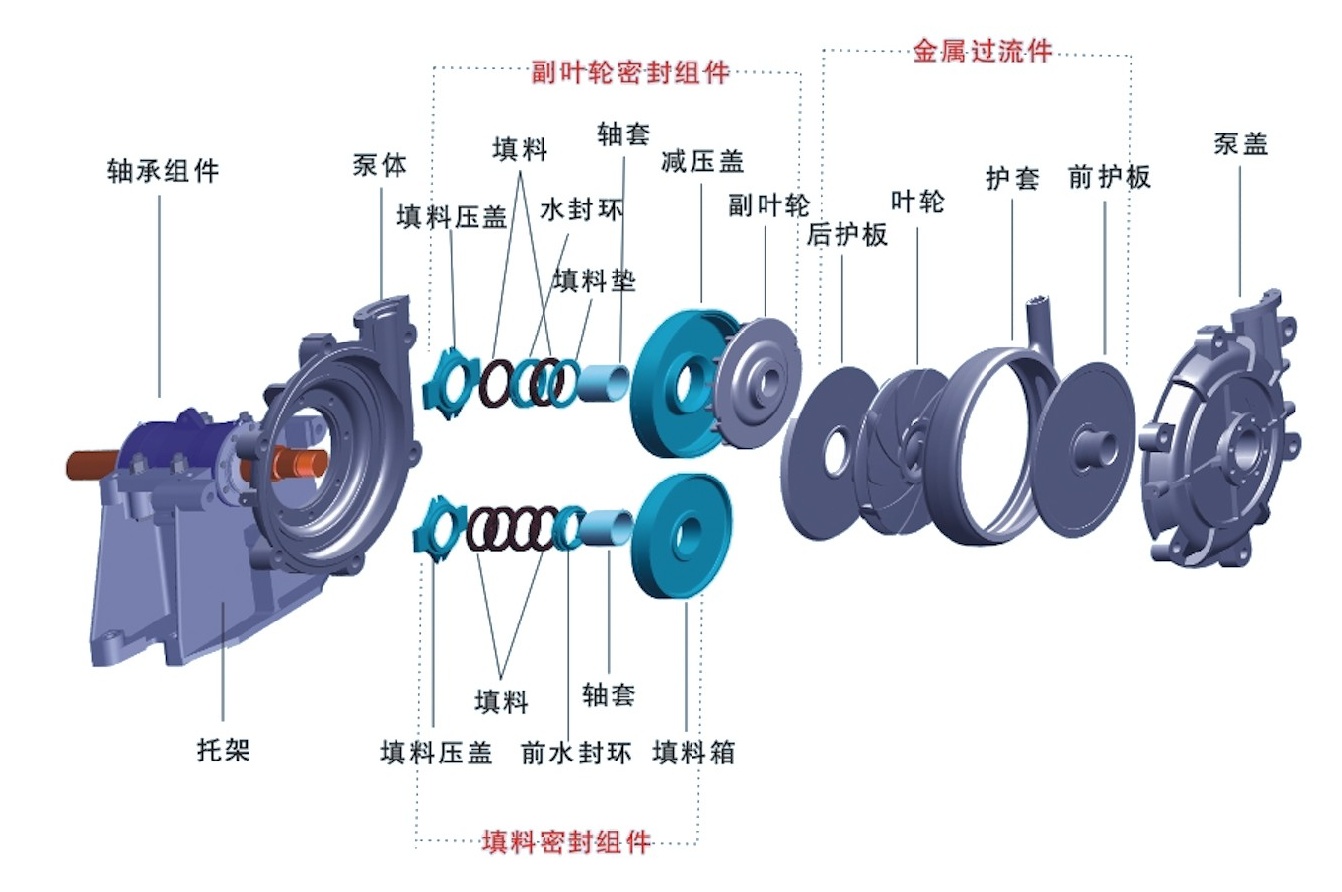
In industries such as mining, metallurgy, power generation, dredging, and chemical processing, large slurry pumps and heavy-duty pumps play a critical role in transporting high-density and highly abrasive media. Due to harsh operating conditions and heavy workloads, these pumps require extremely durable structures and high-performance components. Among them, the seal ring is a vital part that directly affects pump efficiency, service life, and maintenance costs.
1. Characteristics of Large Slurry Pumps and Heavy-Duty Pumps
Large slurry pumps are specifically designed to handle fluids containing solid particles, such as ore slurry, tailings, and coal slurry. Their key characteristics include:
- High resistance to abrasion
- Robust structural design
- Capability for continuous operation
- Adaptability to highly erosive and corrosive environments
Heavy-duty pumps, on the other hand, are engineered for extreme conditions involving high pressure, large flow rates, and heavy loads. They are widely used in critical industrial processes where reliability is essential.
In such demanding environments, failure of any component can lead to costly downtime, making high-quality parts indispensable.
2. Functions of Seal Rings in Pumps
Seal rings are installed in the pump casing or around the impeller and serve several essential functions:
2.1 Leakage Control
Seal rings are designed with precise clearances to minimize internal recirculation from high-pressure zones to low-pressure zones, thereby improving volumetric efficiency.
2.2 Wear Protection
During operation, seal rings often act as sacrificial components, protecting critical parts such as the impeller and casing from direct wear, thus extending the overall service life of the pump.
2.3 Operational Stability
Effective sealing helps maintain internal pressure balance, reduces vibration, and minimizes energy loss, contributing to smoother and more stable pump operation.
3. Common Types and Materials of Seal Rings
Depending on application requirements, seal rings are available in various designs and materials:
3.1 Types
- Axial seal rings
- Radial seal rings
- Floating seal rings
- Combined sealing structures
3.2 Materials
- High-chrome cast iron: excellent wear resistance for abrasive conditions
- Stainless steel: superior corrosion resistance
- Engineering plastics (such as PEEK): lightweight, high-temperature and chemical resistant
- Cemented carbide: ideal for extreme wear environments
Proper material selection is crucial for maximizing performance and service life.
4. Design and Selection Considerations
When designing and selecting seal rings for large slurry and heavy-duty pumps, several factors must be carefully evaluated:
- Clearance design: Excessive clearance reduces efficiency, while insufficient clearance may cause friction or seizure
- Wear resistance: Must match the hardness and concentration of the transported medium
- Temperature and corrosion resistance: Essential for adapting to various operating environments
- Installation precision: Ensures alignment and operational stability
With the advancement of industrial technology, more manufacturers are adopting high-performance materials and optimized designs to improve sealing effectiveness.
5. Importance in Maintenance
Seal rings are wear parts, and their condition directly impacts pump performance. In practical applications, it is recommended to:
- Conduct regular inspections for wear
- Replace seal rings based on operating hours or performance decline
- Avoid prolonged operation with worn components
- Use original or high-quality replacement parts
Proper maintenance can significantly reduce failure rates and operating costs.
6. Future Development Trends
As industrial equipment evolves toward larger scale and higher efficiency, seal ring technology is also advancing:
- Application of new wear-resistant materials
- Improved precision manufacturing processes
- Modular and standardized designs
- Integration with intelligent monitoring and predictive maintenance systems
In the future, seal rings will play an even more critical role in enhancing overall pump system performance.
Conclusion
Although seal rings are classified as components, their role in large slurry pumps and heavy-duty pumps is indispensable. Proper design, high-quality materials, and standardized maintenance practices are key to ensuring efficient operation and long service life. For enterprises, paying close attention to the selection and management of seal rings is essential for achieving stable production and cost efficiency.
Post time: May-05-2026


