
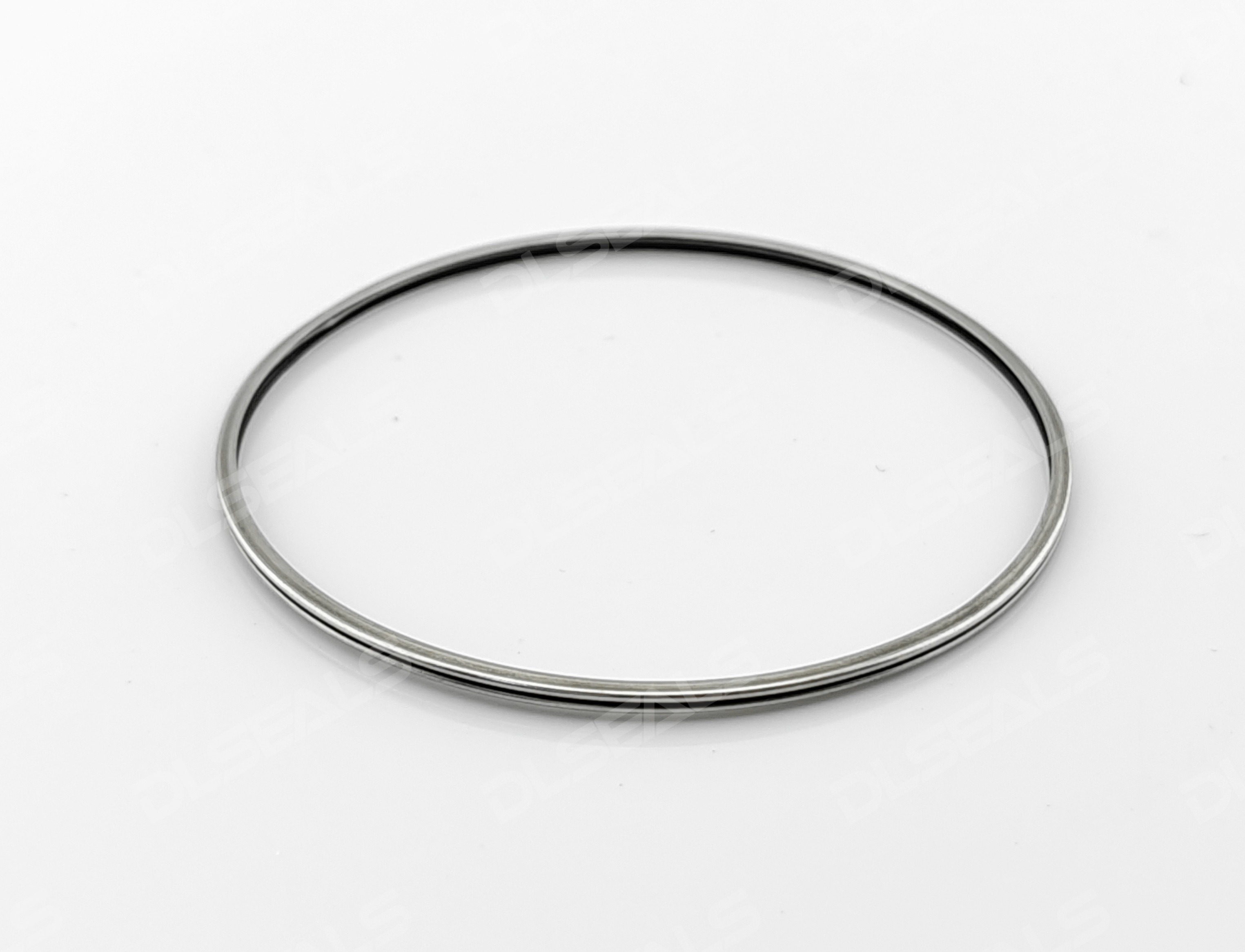
In high-temperature, high-pressure, vacuum, and corrosive environments, traditional rubber seals often struggle to maintain long-term reliability. Metal seals, on the other hand, offer superior resistance to temperature, pressure, and corrosion, making them essential in high-end industrial applications. Among them, the Metal E-Ring is widely used in aerospace, semiconductor, nuclear, and hydrogen energy industries due to its excellent elastic recovery and ultra-low leakage performance.
What Is a Metal E-Ring?
A Metal E-Ring is a metallic sealing ring with an “E”-shaped cross-section. Its multi-cavity internal structure allows the seal to generate strong elastic rebound after compression, ensuring reliable sealing performance.
Compared with conventional metal O-rings or C-rings, Metal E-Rings provide:
- Better elastic compensation
- Lower sealing load requirements
- Higher sealing stability
- Improved cycling performance
These advantages make them ideal for applications requiring extremely low leakage rates.
Working Principle of Metal E-Rings
After installation, the E-Ring deforms elastically under flange compression, creating a sealing contact surface. As internal system pressure increases, the media pressure further pushes the sealing lips against the mating surface, enhancing the sealing effect.
This “self-energizing” characteristic allows Metal E-Rings to maintain stable sealing performance under both high-pressure and vacuum conditions.
Common Materials and Surface Treatments
Depending on the operating environment, Metal E-Rings are commonly manufactured from the following materials:
| Material | Features |
|---|---|
| 304 / 316L Stainless Steel | General corrosion resistance |
| Inconel 718 / X-750 | High-temperature and high-strength performance |
| Hastelloy | Excellent chemical corrosion resistance |
| Monel | Superior seawater resistance |
| Titanium Alloy | Lightweight and corrosion resistant |
To improve sealing performance and reduce leakage, surface treatments may include:
- Silver plating
- Gold plating
- Nickel plating
- PTFE coating
Among these, silver plating is the most commonly used.
Main Advantages of Metal E-Rings
1. Excellent High- and Low-Temperature Resistance
Suitable for cryogenic liquid hydrogen environments as well as temperatures above 600°C.
2. Ultra-Low Leakage Rate
Ideal for vacuum systems, semiconductor equipment, and ultra-clean applications.
3. High Pressure Resistance
Capable of handling high pressure, pulsating pressure, and pressure cycling conditions.
4. Outstanding Corrosion Resistance
Suitable for chemical processing, marine environments, and acidic media.
5. Long Service Life
Offers greater durability and stability compared with conventional elastomer seals.
Typical Applications
Metal E-Rings are widely used in:
- Aircraft engines and rocket systems
- Semiconductor vacuum equipment
- LNG and hydrogen energy systems
- High-pressure valves and flanges
- Nuclear power and energy systems
Especially in the hydrogen energy sector, Metal E-Rings are becoming a key sealing solution due to their low leakage and hydrogen embrittlement resistance.
Selection Considerations
When selecting a Metal E-Ring, the following factors should be considered:
- Operating temperature
- Working pressure
- Media compatibility
- Flange surface finish
- Compression ratio
Since metal seals require high machining precision, groove and flange design are also critical.
Conclusion
Metal E-Rings combine the strength of metallic materials with the flexibility of elastic sealing structures, providing reliable sealing performance under extreme operating conditions. As industries such as aerospace, semiconductors, and new energy continue to develop, Metal E-Rings are expected to play an increasingly important role in advanced sealing applications.
Post time: May-08-2026


