
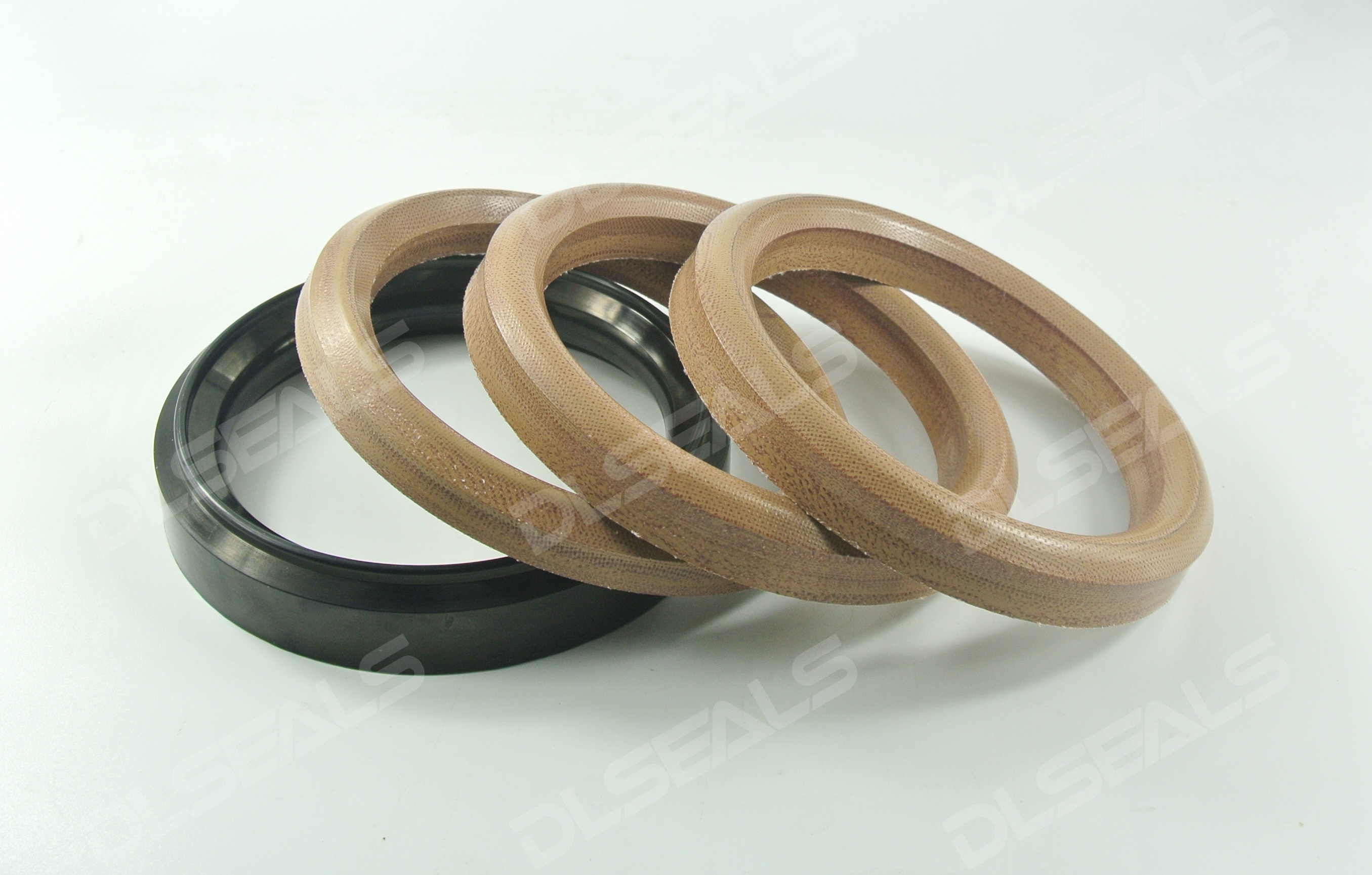
In the oil and gas industry, preventing high-pressure leakage in valves is a top priority for production safety and environmental protection. V-Packing Sets, as a high-performance dynamic sealing solution, have become the core component of valve stem sealing thanks to their unique self-sealing mechanism.
1. Core Structure and Self-Sealing Principle
V-Packing sets typically consist of three primary components: the Female Adaptor (support ring), several V-Rings (sealing elements), and the Male Adaptor (pressure ring).
-
Self-Sealing Mechanism: When the assembly is subjected to axial compression or media pressure, the lips of the V-Rings expand radially. The higher the pressure, the tighter the contact between the lips, the valve stem, and the stuffing box wall.
-
Multi-Stage Protection: Stacking multiple V-Rings creates multiple sealing barriers, effectively extending the leak path for the media.
2. Material Science for Harsh Environments
-
PTFE: Provides excellent chemical stability and a low friction coefficient to prevent valve stem “chatter.”
-
Reinforced PTFE (Glass/Carbon Fiber filled): Enhances creep resistance and wear resistance for high-cycle applications.
-
PEEK: Often used for the female adaptor to prevent material extrusion under extreme high pressure.
-
FFKM: Used for extreme temperatures (exceeding 300°C) and highly aggressive chemical media.
3. Key Technical Advantages
-
Extreme Pressure Resistance: Capable of withstanding pressures up to 10,000 psi (70MPa) or higher.
-
Dynamic Response: Better compensation for valve stem radial runout compared to traditional braided packing.
-
Adjustability: Preload can be adjusted via the packing gland to re-expand the lips, allowing for “online maintenance.”
Post time: Apr-27-2026


