
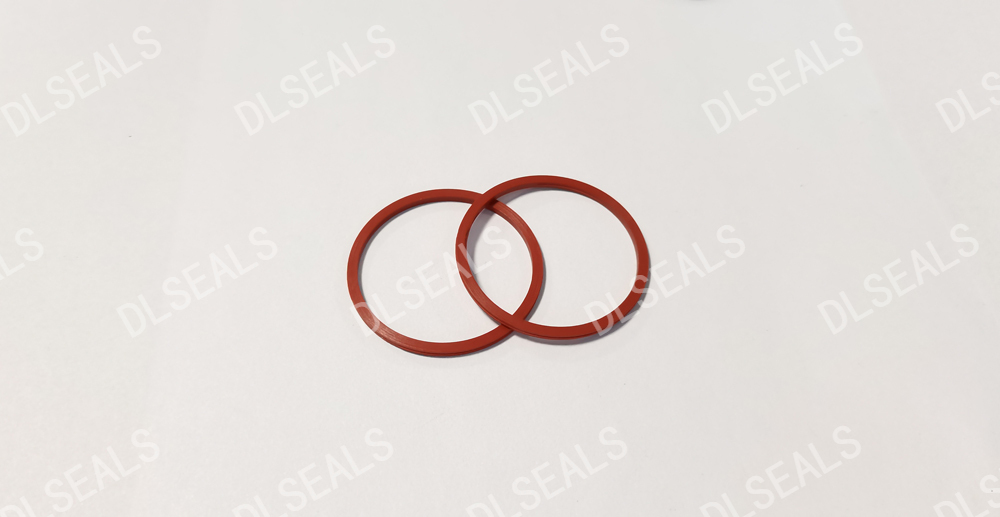
PTFE gaskets (Polytetrafluoroethylene gaskets) are widely used in chemical processing, oil and gas, pharmaceuticals, food production, semiconductor manufacturing, and water treatment systems. Their exceptional chemical resistance, broad temperature capability, and clean sealing performance make them one of the most reliable non-metallic gasket materials for industrial flange connections and static sealing applications.
Key Material Advantages
PTFE is chemically inert and resistant to almost all industrial chemicals, including strong acids, alkalis, solvents, oxidizing agents, and high-purity process media. It also offers a wide operating temperature range and extremely low friction.
| Property | PTFE Gasket |
|---|---|
| Operating temperature | -200°C to +260°C |
| Chemical resistance | Excellent |
| Friction coefficient | Very low |
| Water absorption | Nearly zero |
| Electrical insulation | Excellent |
| Contamination risk | Extremely low |
Because PTFE contains no plasticizers or curing agents, it is ideal for high-purity and contamination-sensitive environments.
Common PTFE Gasket Types
Different PTFE gasket structures are designed for different pressure and service conditions:
- Virgin PTFE Gasket – Maximum chemical resistance and purity.
- Expanded PTFE (ePTFE) Gasket – Excellent compressibility and recovery, ideal for low bolt loads and irregular flange surfaces.
- Filled PTFE Gasket – Reinforced with glass fiber, graphite, carbon fiber, or bronze to improve creep resistance, compressive strength, and wear performance.
- Metal-Reinforced PTFE Gasket – Used in higher-pressure flange systems requiring enhanced dimensional stability.
Typical Applications
PTFE gaskets are commonly used in:
- Chemical processing plants
- Petrochemical and refining systems
- Pharmaceutical and biotechnology equipment
- Food and beverage processing
- Semiconductor wet processing systems
- Ultra-pure water and gas distribution
- Pumps, valves, reactors, and pipeline flanges
Selection Considerations
Proper gasket selection should consider:
- Chemical compatibility
- Operating temperature
- System pressure
- Flange type and surface finish
- Bolt load and sealing requirements
For high-pressure or cyclic loading conditions, filled PTFE or metal-reinforced PTFE gaskets are generally recommended to minimize creep and stress relaxation.
Conclusion
PTFE gaskets combine outstanding corrosion resistance, a wide operating temperature range, low friction, and exceptional cleanliness, making them one of the most versatile sealing materials in modern industry. When properly selected and installed, they provide long service life, low leakage rates, and reliable sealing performance in demanding industrial environments.
Post time: Aug-12-2026


