
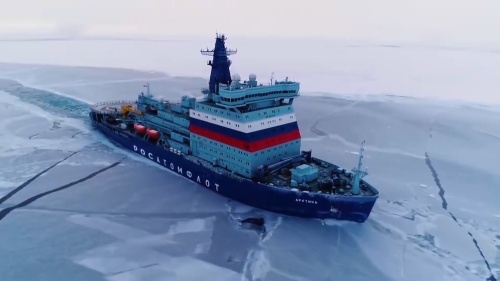
As Arctic shipping routes, polar research missions, and offshore resource development continue to expand, icebreakers have become some of the most technologically demanding vessels in the marine industry. Unlike conventional commercial ships, icebreakers operate in extreme low-temperature environments while enduring heavy mechanical loads, ice impacts, and prolonged exposure to seawater.
Among the many critical systems onboard, the stern system plays a vital role in ensuring propulsion reliability and vessel safety. High-performance sealing solutions are essential for protecting bearings, retaining lubricants, preventing seawater ingress, and maintaining compliance with increasingly stringent environmental regulations.
This article explores the key sealing applications within icebreaker stern systems, the challenges they face, and the seal technologies commonly used in modern polar vessels.
Understanding the Icebreaker Stern System
The stern system of a large icebreaker typically consists of:
- Propeller shaft assemblies
- Stern tubes
- Stern tube bearings
- Propellers
- Rudder systems
- Hydraulic control equipment
- Lubrication and monitoring systems
As propulsion shafts pass through the vessel’s hull, sealing systems are required to separate seawater from lubricating oil while accommodating shaft rotation, vibration, and movement. Failure of these seals can lead to lubricant leakage, seawater contamination, bearing damage, costly repairs, and environmental penalties.
Because icebreakers routinely operate under harsher conditions than conventional vessels, the sealing systems installed in stern assemblies must meet significantly higher performance standards.
Challenges Facing Icebreaker Stern Seals
Extreme Low Temperatures
Icebreakers frequently operate in Arctic and Antarctic regions where temperatures can fall below -40°C (-40°F).
Low temperatures can negatively affect conventional elastomer seals by causing:
- Reduced elasticity
- Increased hardness
- Compression set
- Seal shrinkage
- Cracking and leakage
To maintain sealing integrity in these environments, manufacturers often utilize advanced materials such as:
- Low-temperature NBR compounds
- HNBR
- Fluoroelastomers (FKM)
- PTFE-based materials
- Specialty engineered polymers
Ice Impact and Mechanical Shock
When a propeller cuts through ice, substantial shock loads and vibration are transmitted throughout the shaft line.
The sealing system must be capable of handling:
- Shaft misalignment
- Radial movement
- Axial displacement
- Dynamic vibration
- Sudden impact loads
These operating conditions demand seals with excellent wear resistance and long-term dimensional stability.
High Torque and Continuous Loads
Large icebreakers often utilize powerful propulsion systems capable of generating tens of megawatts of power.
As a result, stern shaft seals are exposed to:
- High rotational forces
- Continuous bearing loads
- Dynamic shaft movements
- Variable operating conditions
Seal performance directly influences system reliability and maintenance intervals.
Environmental Compliance Requirements
Marine environmental regulations continue to tighten worldwide.
Classification societies and international regulations increasingly require operators to minimize lubricant leakage and protect sensitive marine ecosystems.
Modern icebreakers therefore commonly incorporate:
- Environmentally acceptable sealing systems
- Air seal technology
- Zero-leakage sealing concepts
- Advanced monitoring systems
These developments have increased demand for high-performance sealing materials capable of delivering extended service life under challenging conditions.
Key Seal Types Used in Icebreaker Stern Systems
Stern Tube Seals
Stern tube seals are the primary sealing components in the propulsion shaft system.
Their main functions include:
- Preventing seawater ingress
- Retaining lubricating oil
- Protecting stern tube bearings
- Maintaining operational reliability
Common seal designs include:
- Multi-lip rubber seals
- PTFE lip seals
- Air seal systems
- Mechanical seal assemblies
For modern icebreakers, PTFE-based sealing technologies are increasingly preferred because of their superior wear resistance, low friction characteristics, and excellent low-temperature performance.
O-Rings
O-rings remain one of the most widely used sealing elements throughout marine propulsion systems.
Typical applications include:
- Seal housings
- Hydraulic systems
- Lubrication systems
- Monitoring equipment
- Pipe and flange connections
Common materials include:
- NBR
- HNBR
- FKM
- FFKM
Material selection depends on temperature range, operating pressure, and chemical compatibility requirements.
PTFE Seals
PTFE (Polytetrafluoroethylene) is widely recognized for its outstanding performance in harsh marine environments.
Advantages include:
- Low coefficient of friction
- Excellent chemical resistance
- Outstanding seawater resistance
- Wide operating temperature range
- Long service life
Typical applications include:
- Rotary shaft seals
- Hydraulic seals
- Wear rings
- Guide rings
- Backup rings
Filled PTFE compounds containing carbon, glass fiber, graphite, or other reinforcements are commonly used in high-load icebreaker applications to improve wear resistance and mechanical strength.
Spring Energized Seals
Spring energized seals have become increasingly popular in critical marine and offshore sealing applications.
These seals combine a PTFE jacket with an internal metal spring that continuously applies sealing force.
Key benefits include:
- Extremely low leakage rates
- Excellent low-temperature sealing performance
- Broad chemical compatibility
- Low friction operation
- Long service life
Typical applications include:
- Hydraulic control systems
- Valve assemblies
- Monitoring equipment
- Specialized propulsion components
The spring element helps compensate for thermal contraction and material deformation, making these seals particularly effective in Arctic environments.
Metal Seals
Metal seals are commonly specified for high-pressure and mission-critical applications where conventional elastomer seals may not provide sufficient reliability.
Applications include:
- Hydraulic power units (HPUs)
- High-pressure flange connections
- Control systems
- Specialized offshore equipment
Popular configurations include:
- C-Rings
- E-Rings
- Metal O-Rings
Metal seals offer exceptional resistance to pressure, temperature extremes, and mechanical loading, making them suitable for demanding marine environments.
Recommended Seal Materials for Icebreaker Applications
Selecting the appropriate sealing material is essential for ensuring long-term reliability.
| Application Area | Recommended Materials |
|---|---|
| Stern tube seals | PTFE composites, specialty FKM |
| Hydraulic systems | HNBR, FKM |
| High-pressure valves | PTFE spring energized seals |
| Flange connections | PTFE gaskets, metal seals |
| Extreme low-temperature zones | Modified PTFE, low-temperature HNBR |
| Environmental sealing systems | Advanced PTFE sealing solutions |
Future Trends in Icebreaker Sealing Technology
As polar shipping and offshore operations continue to expand, sealing systems are evolving to meet higher performance expectations.
Industry trends include:
- Longer service life requirements
- Reduced friction and energy loss
- Improved environmental protection
- Condition monitoring and predictive maintenance
- Advanced engineered polymer materials
- Increased use of PTFE and spring energized sealing solutions
For shipyards, marine engineering contractors, propulsion system manufacturers, and vessel maintenance providers, investing in high-performance sealing technologies is becoming essential for improving reliability, reducing downtime, and ensuring compliance with global environmental standards.
Conclusion
The stern system is one of the most demanding sealing environments found in marine engineering. Icebreakers operating in Arctic and Antarctic conditions require sealing solutions capable of withstanding extreme cold, heavy loads, continuous vibration, and aggressive seawater exposure.
From PTFE seals and O-rings to spring energized seals, metal seals, and advanced gasket technologies, selecting the right sealing solution is critical for maximizing vessel performance and minimizing maintenance costs.
As the marine industry moves toward greater efficiency, sustainability, and reliability, advanced sealing technologies will continue to play a vital role in the next generation of icebreaker propulsion systems.
Post time: Jun-01-2026


