
In industries such as chemical processing, semiconductors, pharmaceuticals, and high-purity gas systems, conventional elastomer O-rings often suffer from swelling, aging, and compression set when exposed to aggressive chemicals or prolonged service conditions. Standard FEP or PFA encapsulated O-rings improve chemical resistance, but their elastomer cores can gradually lose elasticity under high temperatures and continuous compression.
To overcome these limitations, the Spring Core Encapsulated O-Ring has emerged as an advanced sealing solution that combines the exceptional chemical resistance of fluoropolymers with the long-lasting resilience of a metallic spring core.
What Is a Spring Core Encapsulated O-Ring?
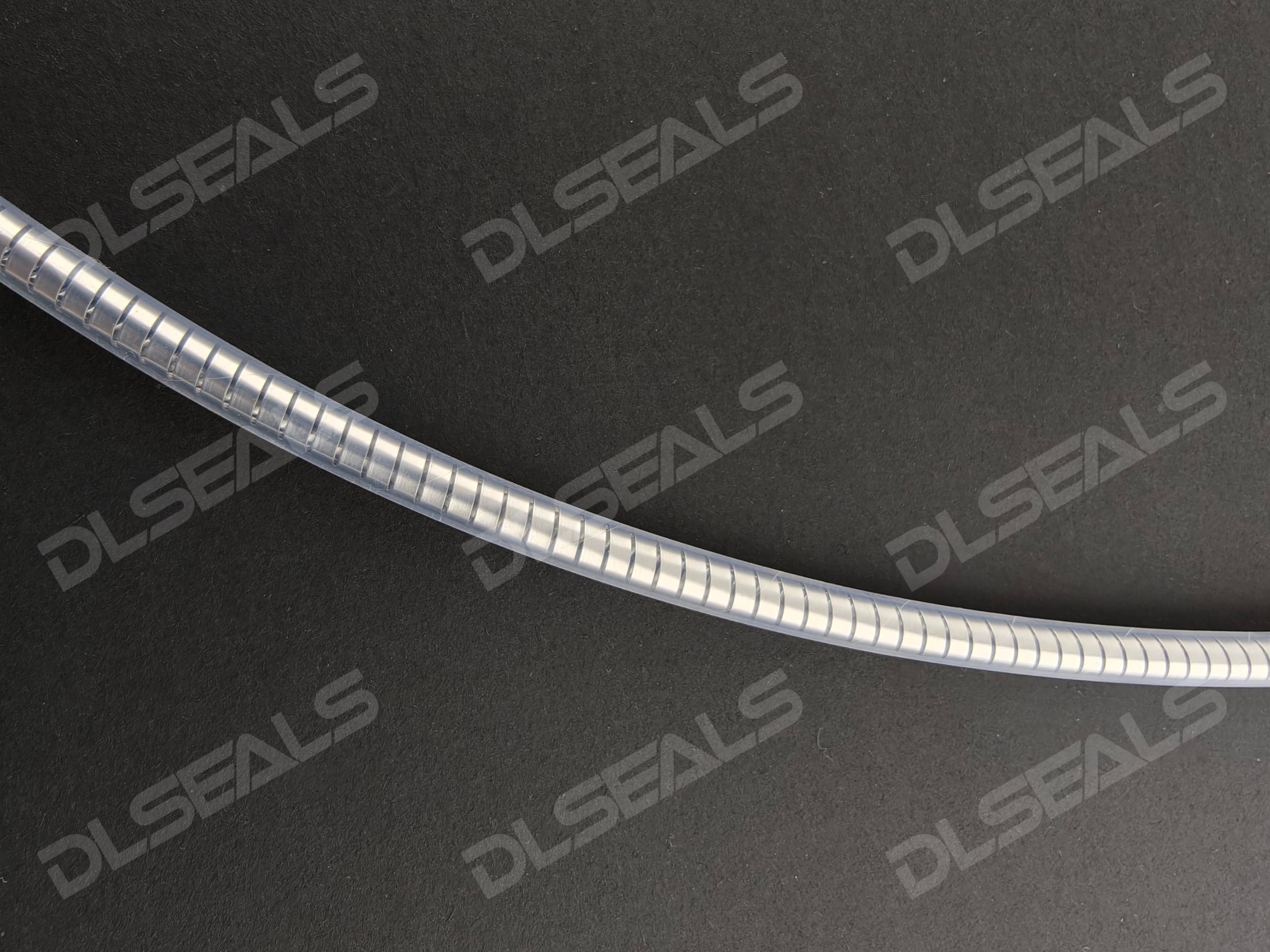
A Spring Core Encapsulated O-Ring is a high-performance sealing element consisting of a metallic helical spring fully encapsulated within a seamless fluoropolymer jacket, typically made from FEP, PFA, or PTFE.
Unlike conventional encapsulated O-rings that use silicone or FKM (Viton®) as the core material, this design utilizes a metal spring to provide continuous elastic recovery and long-term sealing performance.
Typical Construction
Outer Jacket Materials
- FEP (Fluorinated Ethylene Propylene)
- PFA (Perfluoroalkoxy Alkane)
- PTFE (Polytetrafluoroethylene)
Spring Core Materials
- Stainless Steel 304
- Stainless Steel 316L
- Inconel X-750
- Hastelloy Alloys
This unique combination delivers both superior chemical resistance and excellent elastic compensation.
How Does a Spring Core Encapsulated O-Ring Work?
During installation, the metallic spring is compressed, generating a continuous radial sealing force that presses the fluoropolymer jacket firmly against the mating surfaces.
Throughout the service life, the spring automatically compensates for:
- Thermal expansion and contraction
- Material creep and cold flow
- Minor wear of sealing surfaces
- Pressure fluctuations
This constant recovery force allows the seal to maintain reliable sealing performance even after long periods of compression, significantly outperforming conventional encapsulated O-rings with elastomer cores.
Key Advantages of Spring Core Encapsulated O-Rings
Outstanding Chemical Resistance
Since the process media only contact the fluoropolymer outer jacket, the seal exhibits exceptional resistance to nearly all aggressive chemicals, including:
- Sulfuric acid
- Hydrochloric acid
- Nitric acid
- Caustic solutions
- Organic solvents
- Ultra-pure chemicals
This makes it an ideal sealing solution for highly corrosive environments.
Lower Compression Set and Longer Service Life
Traditional encapsulated O-rings rely on elastomer cores, which can gradually lose resilience under continuous compression.
The metallic spring core provides:
- Excellent elastic recovery
- Superior fatigue resistance
- Minimal compression set
- Extended service life
As a result, Spring Core Encapsulated O-Rings are particularly suitable for applications requiring long-term static sealing.
Wide Operating Temperature Range
Depending on the selected materials, these seals can typically operate within:
-60°C to +260°C (-76°F to +500°F)
Special material combinations may even withstand intermittent temperatures approaching 300°C (572°F).
Excellent Gas and Vacuum Sealing Performance
The continuous sealing force generated by the spring core significantly improves sealing reliability in gas applications, including:
- Nitrogen systems
- Hydrogen systems
- Helium applications
- Vacuum equipment
- High-purity gas delivery systems
Reduced Maintenance Costs
Due to their outstanding durability and long service life, Spring Core Encapsulated O-Rings help reduce:
- Equipment downtime
- Seal replacement frequency
- Maintenance expenses
- Total cost of ownership
For critical process equipment, the long-term economic benefits often outweigh the higher initial cost.
Spring Core Encapsulated O-Ring vs. Standard Encapsulated O-Ring
| Item | Standard Encapsulated O-Ring | Spring Core Encapsulated O-Ring |
|---|---|---|
| Core Material | Silicone or FKM | Metallic Spring |
| Elastic Recovery | Good | Excellent |
| Compression Set | Moderate | Extremely Low |
| Long-Term Static Sealing | Good | Excellent |
| Gas Sealing Performance | Good | Superior |
| Service Life | Moderate | Extended |
| High-Temperature Stability | Good | Excellent |
Typical Applications
Chemical Processing Industry
- Chemical reactors
- Corrosive pumps and valves
- Acid and alkali storage tanks
- Chemical pipeline flanges
Semiconductor Industry
- Ultra-pure water systems
- Wet process equipment
- Chemical delivery systems
- Wafer cleaning equipment
Pharmaceutical and Food Processing Equipment
- Sterilization systems
- Pharmaceutical reactors
- Filling and dosing equipment
- CIP and SIP systems
New Energy Industry
- Hydrogen production equipment
- Electrolyzers
- Energy storage systems
- Specialty gas systems
High-Purity Gas Applications
- Helium systems
- Nitrogen systems
- Vacuum systems
- Semiconductor gas delivery equipment
How to Select the Right Spring Core Encapsulated O-Ring
To achieve optimal sealing performance, the following parameters should be considered:
- Operating temperature
- System pressure
- Media compatibility
- Groove dimensions
- Service life requirements
- FDA or food-grade compliance
- Vacuum or high-purity gas applications
Selecting the proper combination of fluoropolymer jacket and spring material is essential for maximizing sealing reliability and service life.
Conclusion
The Spring Core Encapsulated O-Ring represents a significant advancement over conventional encapsulated O-rings. By replacing the elastomer core with a metallic spring, it effectively eliminates problems associated with compression set and loss of elasticity while maintaining the exceptional chemical resistance of FEP, PFA, and PTFE materials.
For industries requiring long-term reliability, aggressive chemical resistance, and minimal maintenance, Spring Core Encapsulated O-Rings provide an ideal sealing solution that enhances equipment performance, extends service life, and reduces overall operating costs.
Post time: Jul-03-2026


