
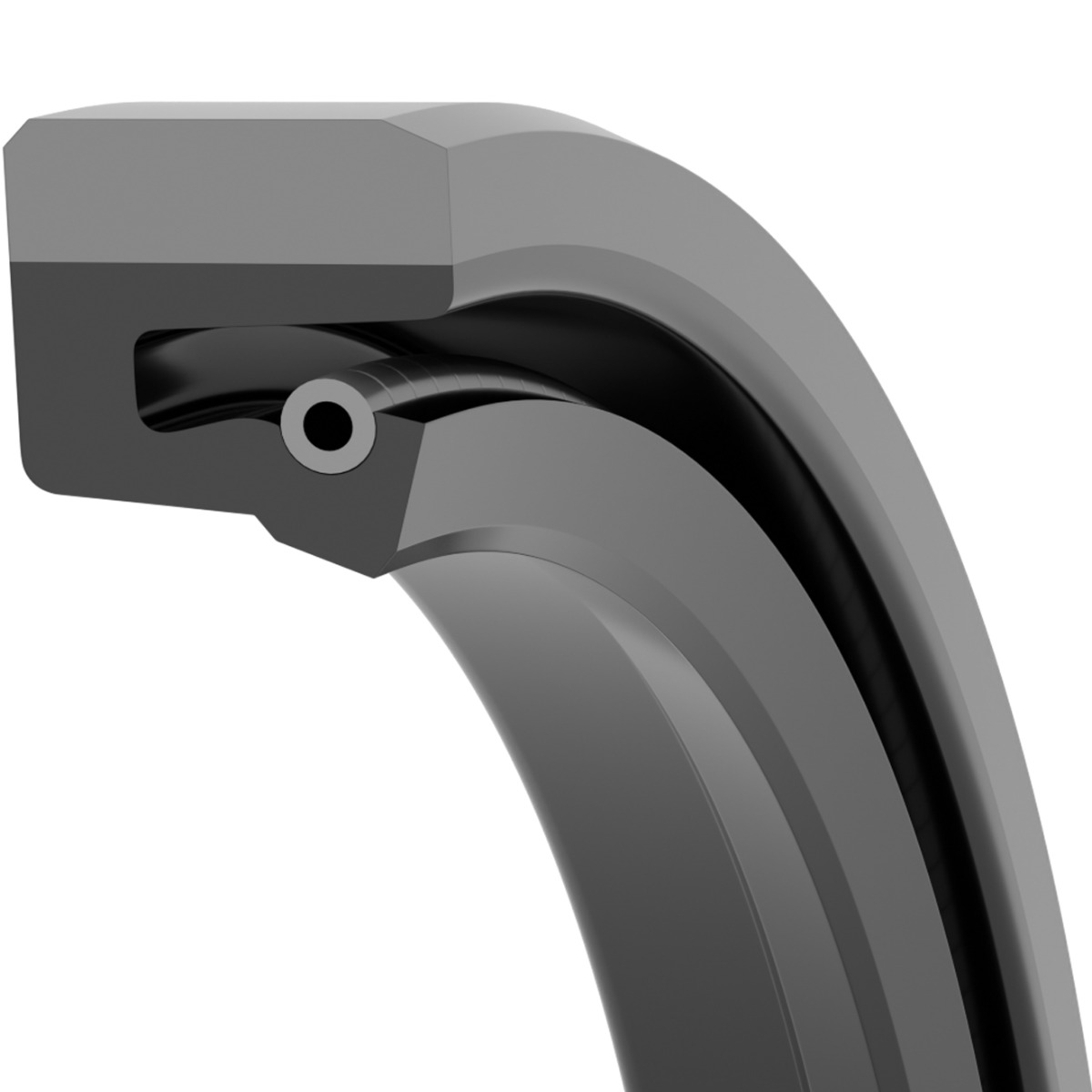
In rotating shaft sealing, spring-energized unbounded oil seals are widely used for their simplicity, ease of installation, and reliability. Among them, designs featuring Fluorocarbon Rubber (FKM) as the primary material, embedded FKM-coated fabric reinforcement layers, and a garter spring deliver high performance in demanding conditions. This article explains the structural advantages, the critical role of the spring, and alternative sealing materials and their applications.
I. Structural Design & Core Benefits
The typical unbounded oil seal comprises three layers (as depicted in the figure):
- FKM Sealing Body:
- Forms the dynamic sealing lip (primary and auxiliary dust lip).
- Advantages:
- Exceptional heat resistance (up to 200–250°C).
- Superior resistance to oils, fuels, chemicals, and solvents.
- Excellent weathering/oxidation stability.
- Fabric-Reinforced FKM Layer:
- Benefits:
- Enhanced rigidity: Prevents deformation during high pressure/speed.
- Reduced extrusion/wear: Extends service life.
- Structural support: Maintains lip-to-shaft concentricity.
- Benefits:
- Garter Spring:
- Critical Functions:
- Radial force compensation: Ensures constant lip contact pressure against the shaft.
- Wear/relaxation compensation: Counteracts material loss and stress relaxation.
- Shaft runout adaptation: Compensates for radial eccentricity.
- Low-pressure sealing: Maintains sealing at startup/low-lube conditions.
- Critical Functions:
II. Material Selection & Applications
| Lip Material | Key Properties | Primary Applications |
|---|---|---|
| Nitrile Rubber (NBR) | Mineral oil/grease resistance; cost-effective; limited heat resistance (-40–100°C) | Engine crankshaft seals; gearboxes |
| Fluorocarbon (FKM) | High-temp/chemical resistance (-20–250°C); fuel/oil compatibility | Turbochargers; chemical pumps; high-temp bearings |
| Silicone (VMQ) | Wide temp. range (-60–225°C); low compression set; poor oil resistance | Food machinery; low-temp equipment |
| Polyurethane (PU) | Extreme abrasion resistance; high load capacity; susceptible to hydrolysis | Hydraulic cylinder seals; heavy-duty applications |
| Acrylate (ACM) | Hot oil/ATF resistance (-25–175°C); poor low-temp performance | Automotive transmissions; steering systems |
Note: Garter springs are essential for dynamic oil sealing. Dust lips typically exclude springs.
Conclusion
The unbounded oil seal (FKM + fabric + spring) combines material science and structural optimization to deliver reliability in harsh environments. Understanding the spring’s compensative role and material properties is vital for sealing performance in rotating machinery.
Post time: Jul-25-2025


