
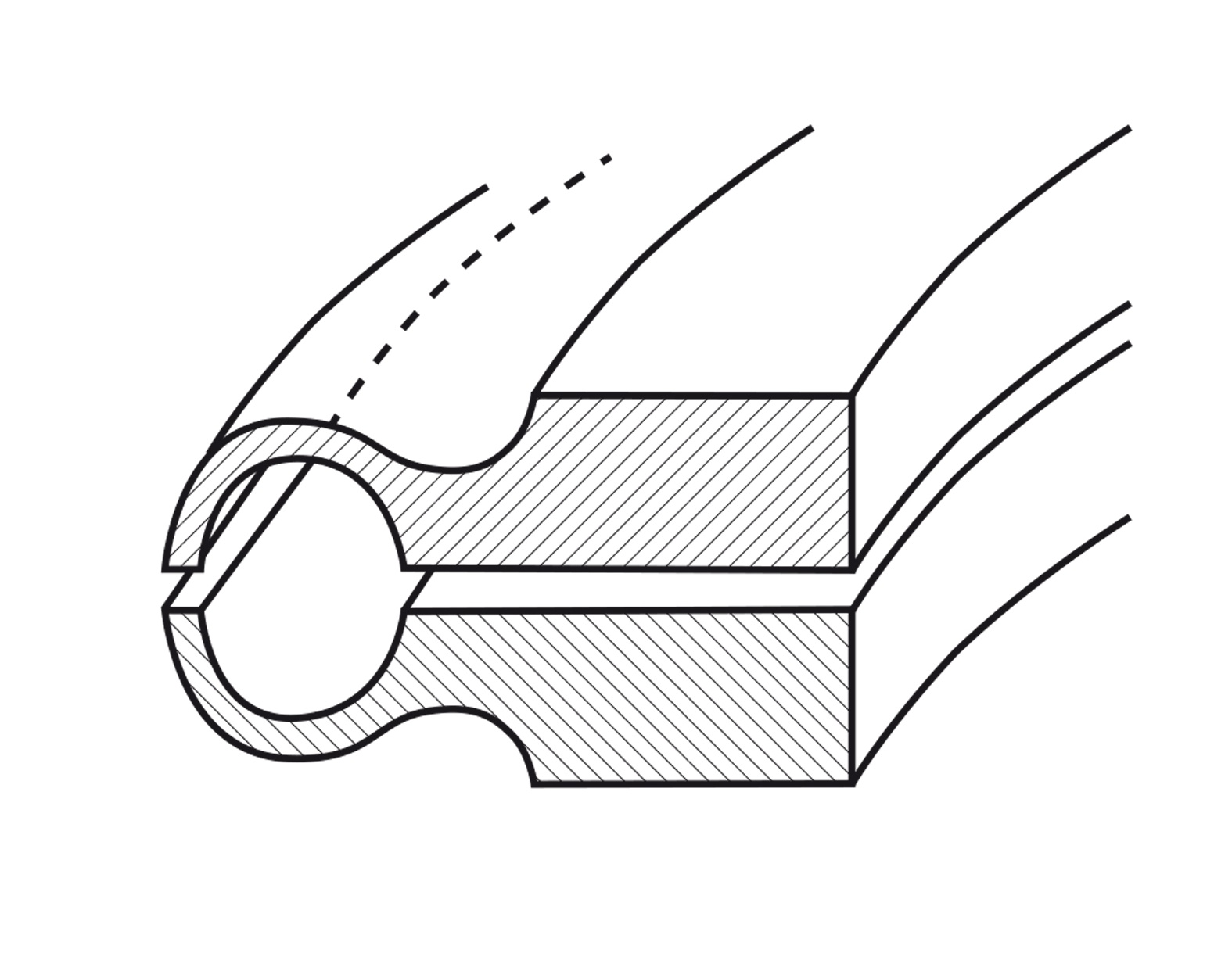
In high-vacuum equipment, high-purity gas systems, special gas applications, and other demanding industrial environments, conventional removable gaskets may not always provide the required level of long-term gas tightness. When extremely low leakage and high sealing reliability are required, weld ring gaskets offer a specialized metallic sealing solution.
Unlike conventional gaskets that rely primarily on bolt preload and surface compression, a weld ring gasket uses a welded metallic structure to create a continuous and permanent sealing boundary. This design makes it particularly suitable for applications where leakage must be minimized and the sealing connection is not intended to be frequently disassembled.
Structure and Working Principle
A weld ring gasket generally consists of metallic sealing elements that are welded to the corresponding flange surfaces and then welded together after assembly. The sealing boundary is therefore formed by the welded connection rather than by compression of a conventional gasket material.
This structure has an important advantage: the sealing path is not primarily dependent on gasket recovery, compression relaxation, or long-term creep. Once the welding process is properly completed, the metal-to-metal welded connection forms a continuous sealing barrier.
Depending on the application, weld ring gaskets can be designed with or without a hollow lip. The hollow-lip structure provides a certain degree of elastic compensation and can help accommodate differences in thermal expansion or minor displacement between the connected components. Designs without a hollow lip are generally more suitable for flange assemblies where the connected materials have similar thermal expansion characteristics and significant differential expansion is not expected.
Why Weld Ring Gaskets Provide High Gas Tightness
The key characteristic of a weld ring gasket is that the sealing boundary is created through welding. Compared with conventional compressed gaskets, this can significantly reduce potential leakage paths associated with gasket relaxation, material creep, or loss of contact pressure.
However, high gas tightness does not depend on the gasket alone. The flange design, material selection, welding process, dimensional accuracy, surface condition, welding deformation, and leak-testing procedure all influence the final sealing performance.
For critical applications, the welding procedure should be properly qualified and controlled. Welding parameters, joint geometry, heat input, material compatibility, and post-weld inspection must be considered as part of the overall sealing system.
Material Selection and Design Considerations
Weld ring gaskets are typically manufactured from corrosion-resistant and weldable metallic materials. Stainless steels are commonly selected for applications involving high-purity gases, vacuum equipment, chemical media, and corrosive environments. Nickel-based alloys and other specialized alloys may be considered when higher corrosion resistance, temperature resistance, or material compatibility is required.
Material selection should not be based only on the maximum operating temperature. The operating medium, pressure, vacuum level, thermal cycling, corrosion conditions, differential thermal expansion, welding compatibility, and required service life should all be evaluated.
For high-temperature applications, differences in thermal expansion between the gasket, flange, and connected components can generate additional stresses. In such cases, the geometry of the weld ring and the use of a hollow-lip structure may be important design considerations.
Weld Ring Gaskets vs. Conventional Metal Gaskets
Conventional metal gaskets, such as metal O-rings, lens gaskets, and ring-type joints, generally achieve sealing through controlled deformation and contact pressure generated by bolting. They can provide excellent sealing performance while still allowing the connection to be disassembled.
Weld ring gaskets use a different sealing principle. The sealing connection is created through welding, providing a more permanent sealing structure.
Therefore, the choice should depend on the application:
- Frequent disassembly and maintenance: conventional metal gaskets are generally more practical.
- Extremely high gas-tightness requirements: weld ring gaskets can provide significant advantages.
- Long-term operation with minimal maintenance: a welded sealing structure may be preferred.
- High-vacuum or high-purity systems: weld ring designs can help minimize potential leakage paths.
- Applications with significant thermal expansion: the gasket structure and welding configuration must be carefully designed.
Weld ring gaskets are therefore not simply a replacement for conventional metal gaskets. They represent a different sealing concept intended for specific high-reliability applications.
Typical Applications
Weld ring gaskets are particularly suitable for systems where leakage control is critical. Typical applications include:
- High-vacuum equipment and vacuum chambers
- High-purity gas systems
- Semiconductor manufacturing equipment
- Chemical and petrochemical processing equipment
- High-pressure gas systems
- Aerospace equipment
- Specialized process equipment
- Heat-treatment and high-temperature systems
- Pressure vessels and process pipelines
- Equipment handling corrosive or highly reactive media
In these applications, the objective is not simply to achieve sealing during initial assembly, but to maintain a highly reliable sealing boundary throughout long-term operation.
Key Points for Selection
When designing or selecting a weld ring gasket, several parameters should be evaluated together:
- Medium: gas, liquid, corrosive chemicals, high-purity gases, or special process media.
- Pressure and vacuum: operating pressure, pressure fluctuations, and required vacuum level.
- Temperature: operating temperature, thermal cycling, and temperature gradients.
- Material compatibility: corrosion resistance, weldability, and thermal expansion characteristics.
- Flange design: dimensional accuracy, sealing geometry, rigidity, and welding accessibility.
- Welding process: welding method, heat input, deformation control, and procedure qualification.
- Leak testing: the required leakage rate and appropriate testing method should be established according to the application.
For demanding sealing systems, the weld ring gasket should always be considered together with the flange, welding process, materials, installation conditions, and inspection method. Only by treating these components as one integrated system can the required sealing reliability be achieved.
Conclusion
Weld ring gaskets are specialized metallic sealing components designed for applications where high gas tightness, long-term reliability, and minimal leakage are critical. Their defining feature is the use of welding to create a continuous and permanent sealing boundary, making them particularly valuable in high-vacuum, high-purity, high-temperature, and other demanding environments.
Compared with conventional removable metal gaskets, weld ring gaskets require more careful consideration of material compatibility, flange design, welding technology, thermal expansion, and inspection. When properly designed and manufactured, they can provide a highly reliable sealing solution for critical industrial equipment.
GUANGDONG DLSEALS TECHNOLOGY CO., LTD. can provide customized metallic sealing solutions based on operating pressure, temperature, medium, vacuum level, flange structure, material requirements, and installation conditions.
Post time: Sep-07-2026


