
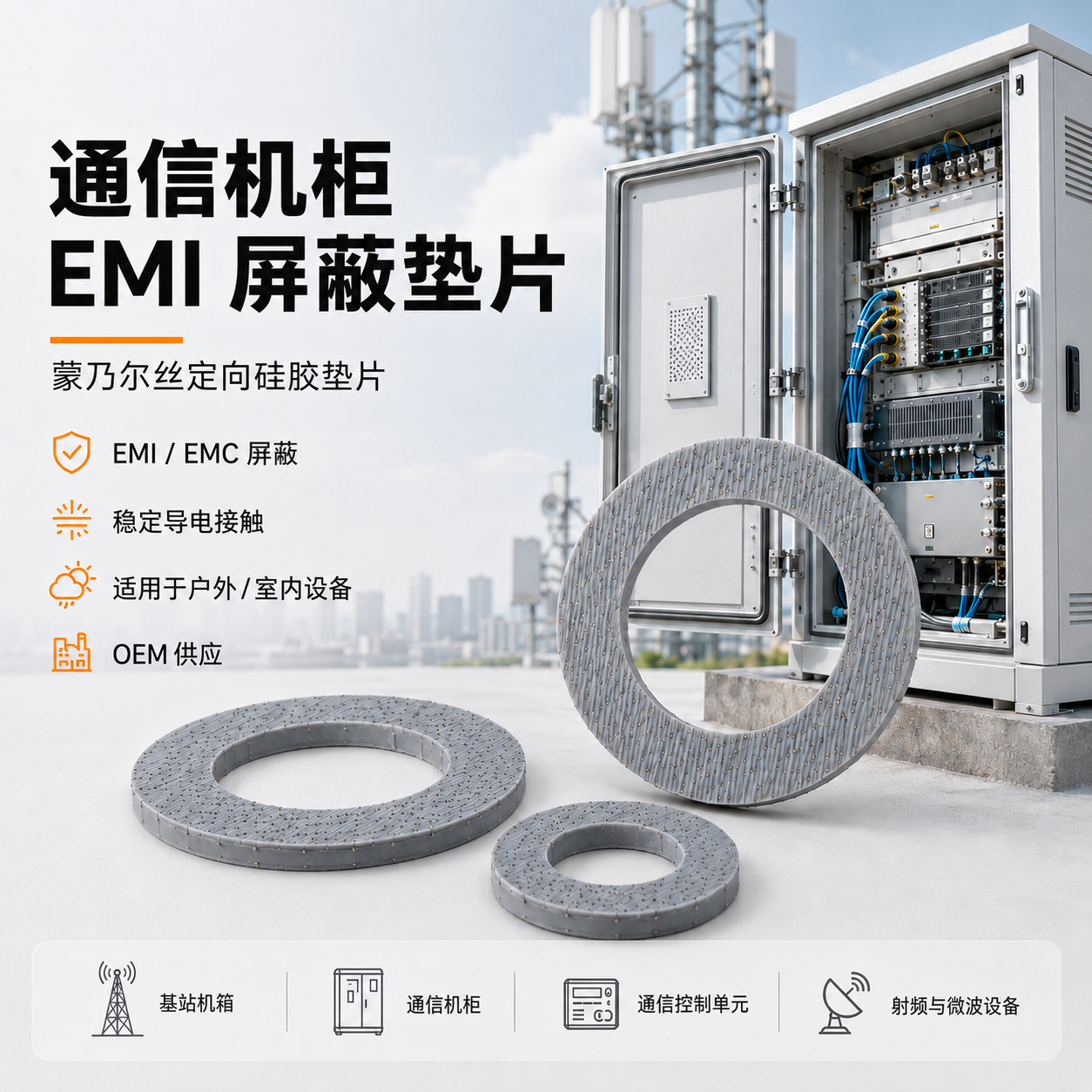
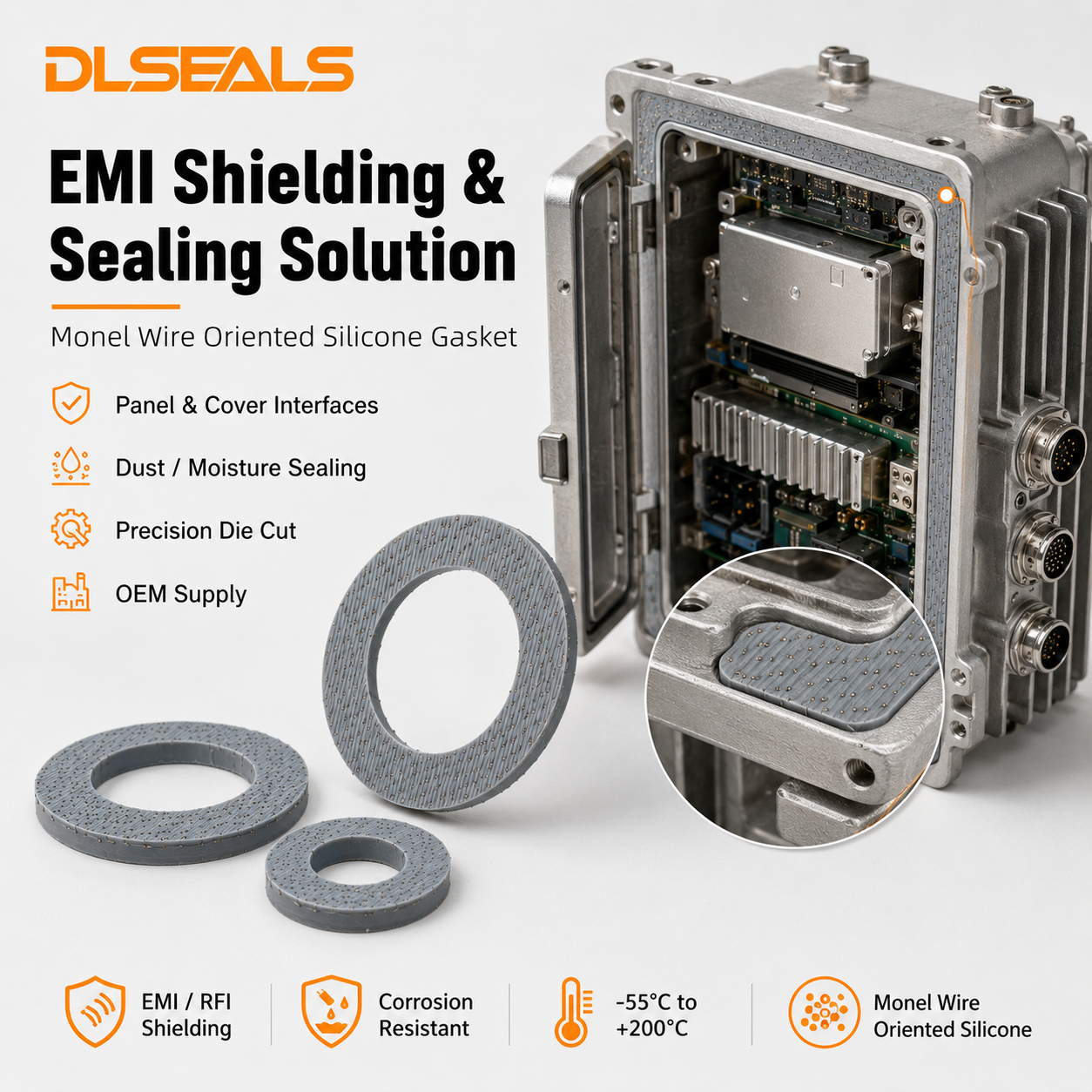
With the rapid development of communications, aerospace, military electronics, new energy systems, and high-frequency electronic equipment, controlling electromagnetic interference (EMI) and radio-frequency interference (RFI) has become increasingly important. Joints in equipment housings, cabinets, doors, and flanged connections can easily become weak points for electromagnetic leakage and external interference.
Wire mesh conductive gaskets are designed to address these challenges. By using a metal wire structure to create a continuous conductive contact network, these gaskets establish a low-impedance electrical path between two structural components, reducing electromagnetic leakage through joints while using their elastic compression characteristics to compensate for minor surface irregularities and gaps.
Structure and Working Principle
Wire mesh conductive gaskets are typically manufactured using woven, knitted, wound, or formed metal wire structures. Depending on the application, they can also be combined with rubber, elastomers, foam materials, or metal supports to create composite sealing structures.
When installed and compressed, the metal wires form multiple contact points with the mating surfaces. Because the metal wires have excellent electrical conductivity, these contact points create a continuous electrical connection and help maintain electrical continuity across the equipment enclosure.
Unlike conventional sealing rings, which primarily rely on material elasticity to provide sealing, wire mesh conductive gaskets are designed primarily to reduce contact impedance at joints and minimize electromagnetic leakage through structural gaps. Their overall performance therefore depends not only on the conductivity of the material but also on compression, contact pressure, surface treatment, installation design, and compatibility with the enclosure material.
Selection of Metal Wire Materials
The metal wire is one of the key factors determining the performance of a conductive gasket. Different materials provide different combinations of electrical conductivity, corrosion resistance, mechanical strength, and temperature resistance.
Stainless steel wire provides high mechanical strength, corrosion resistance, and environmental durability. It is suitable for industrial equipment, outdoor cabinets, and applications requiring high mechanical durability.
Tin-plated copper wire combines good electrical conductivity with improved corrosion resistance and is widely used in electronic cabinets, communication equipment, and general EMI shielding applications.
Silver-plated copper wire provides excellent electrical conductivity and low contact resistance. It is particularly suitable for high-frequency electronics, aerospace systems, and applications requiring high electromagnetic shielding performance.
Monel alloy wire offers excellent corrosion resistance, high-temperature performance, and mechanical stability. It is suitable for marine environments, aerospace equipment, and demanding industrial applications.
Material selection should therefore not be based solely on electrical conductivity. Operating temperature, humidity, corrosive media, mechanical vibration, and compatibility between the gasket material and equipment housing must also be considered.
Balancing Electrical Conductivity and Sealing Performance
One of the major advantages of wire mesh conductive gaskets is their ability to combine EMI shielding, electrical conductivity, and environmental sealing within a single structural solution.
For standard cabinets and electronic equipment, the primary objective is generally to maintain sufficient contact pressure and stable electrical continuity. For outdoor communication equipment, aerospace systems, and other demanding applications, resistance to dust, water, humidity, vibration, and environmental exposure may also be required.
In such applications, a composite structure combining metal wire mesh with rubber or an elastomer can be used. The metal mesh provides the conductive shielding path, while the elastomer improves compression recovery and environmental sealing performance, providing a better balance between EMI shielding and environmental protection.
Design and Selection Considerations
The performance of a wire mesh conductive gasket is closely related to its installation design. Important factors include gasket cross-section, compression, contact pressure, groove geometry, mating-surface condition, and installation method.
Insufficient compression may result in inadequate contact between the metal wires and the housing, increasing contact resistance. Excessive compression, on the other hand, may cause permanent deformation, excessive installation force, or damage to the mating surfaces. Therefore, the appropriate compression range should be determined according to the specific application.
The surface condition of the equipment housing is also critical. Oxide layers, contamination, coatings, and corrosion products can increase contact resistance. For applications requiring high shielding effectiveness, conductive contact areas should be properly designed and the metal wire material and surface treatment should be selected to match the housing material.
When different metals such as aluminum alloys, stainless steel, and copper are used together, galvanic corrosion and material compatibility must also be considered, particularly in high-humidity, salt-spray, or marine environments.
Typical Applications
Wire mesh conductive gaskets are widely used in applications requiring electromagnetic compatibility and reliable electrical contact, including aerospace equipment, military electronics, radar and communication systems, server cabinets, industrial control cabinets, railway electronic equipment, medical electronics, electric vehicles, high-frequency testing equipment, and microwave/RF systems.
In cabinet doors, equipment panels, flange interfaces, and removable structures, wire mesh conductive gaskets can maintain stable electrical contact under compression while allowing repeated disassembly and reassembly. This makes them particularly suitable for equipment requiring regular maintenance and servicing.
Conclusion
A wire mesh conductive gasket is more than simply a “conductive gasket.” Its primary function is to establish a stable, low-impedance electrical connection across equipment joints through carefully engineered metal wire materials and structures, thereby improving the overall electromagnetic shielding performance of the enclosure.
In practical applications, selection should consider shielding frequency, operating temperature, corrosion environment, enclosure material, compression, contact pressure, and requirements for water and dust protection. For high-reliability electronic, communication, aerospace, and specialized industrial equipment, proper material and structural design are essential to ensure long-term performance.
DLSEALS can provide conductive sealing solutions with different metal wire materials, cross-sectional designs, and composite structures according to equipment configuration, operating environment, and electromagnetic shielding requirements.
Post time: Aug-31-2026


