
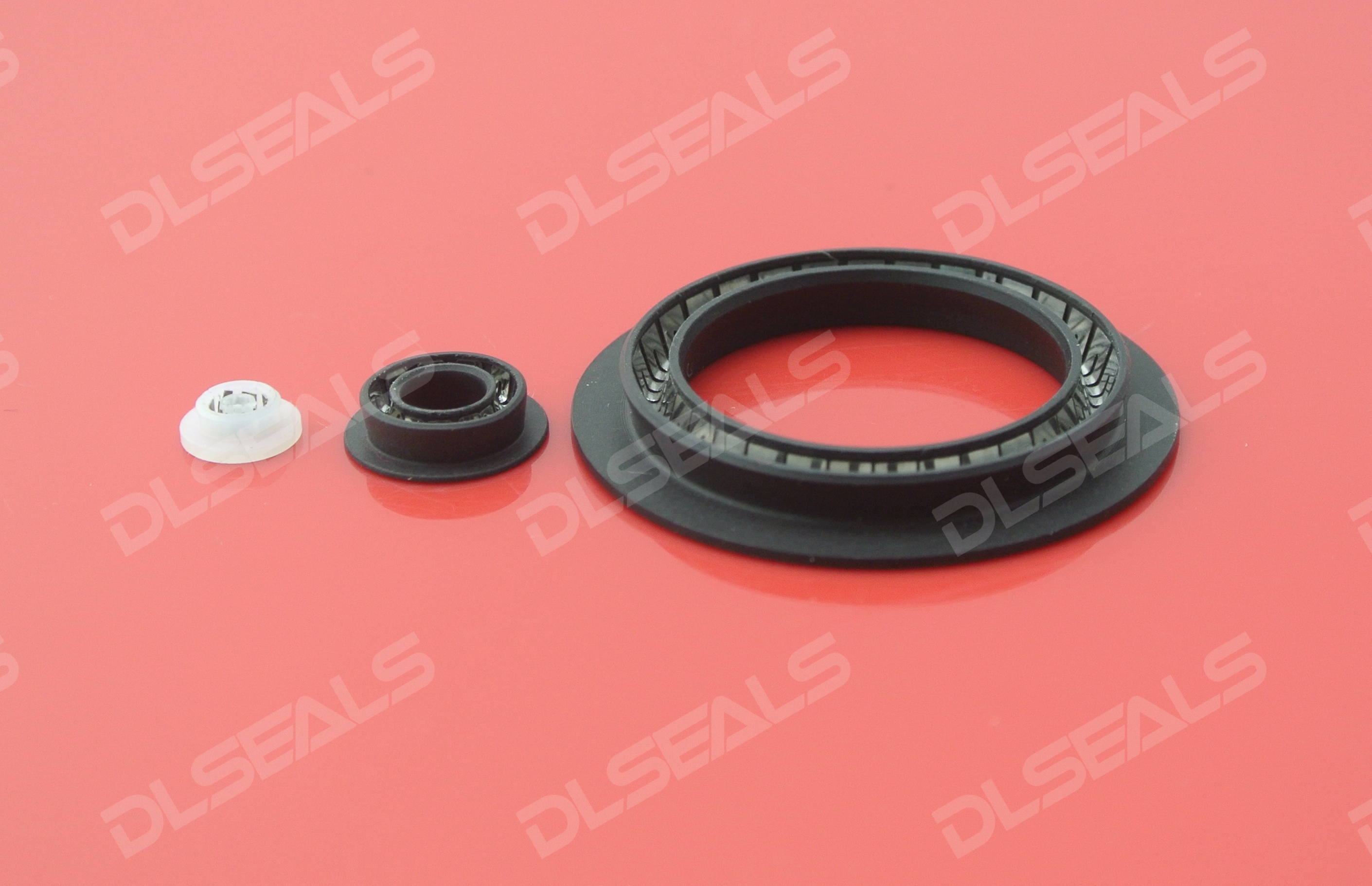
Polytetrafluoroethylene (PTFE), commonly known as Teflon or fluoroplastic, is one of the most important engineering plastics used in modern sealing technology. With excellent chemical resistance, a very low coefficient of friction, wide temperature resistance, and low adhesion, PTFE has been widely used in chemical processing, petroleum, pharmaceuticals, food processing, hydraulics, pneumatics, semiconductor manufacturing, aerospace, and advanced industrial equipment.
Compared with conventional rubber seals, the key advantages of PTFE sealing products are not simply their temperature resistance. Their real strengths lie in chemical resistance, low friction, wear resistance, resistance to aggressive media, and adaptability to demanding operating conditions.
Today, PTFE has developed into a comprehensive range of sealing products, including PTFE oil seals, spring-energized PTFE seals, PTFE gaskets, PTFE piston rings, PTFE guide rings, PTFE backup rings, PTFE rotary seals, and various filled and modified PTFE sealing products.
1. Key Performance Characteristics of PTFE Sealing Materials
The carbon-fluorine bonds in the molecular structure of PTFE provide exceptional chemical stability and are the fundamental reason for its outstanding performance.
1.1 Excellent Chemical Resistance
One of the most important advantages of PTFE is its excellent chemical resistance.
PTFE can withstand most industrial acids, alkalis, solvents, and many corrosive media, making it particularly suitable for applications where conventional rubber seals may swell, degrade, or corrode.
For this reason, PTFE seals are widely used in chemical equipment, corrosive-fluid pipelines, pumps, valves, reactors, and chemical processing systems.
However, excellent chemical resistance does not mean that PTFE is completely inert to every substance. High-temperature strongly oxidizing environments, molten alkali metals, elemental fluorine, and certain specialized fluorinated compounds require specific material compatibility evaluation.
1.2 Low Friction and Self-Lubricating Properties
PTFE has an extremely low coefficient of friction and good self-lubricating characteristics, making it particularly suitable for dynamic sealing applications.
In reciprocating, rotary, and sliding seals, low friction can reduce starting resistance, minimize heat generation, and help extend the service life of both the seal and the mating surface.
This is one of the main reasons PTFE oil seals, spring-energized seals, and PTFE piston rings can be used in high-speed rotation, reciprocating motion, and low-lubrication or certain dry-running conditions.
For dynamic sealing systems prone to stick-slip, low-friction PTFE compounds can also provide significant advantages.
1.3 Wide Temperature Resistance
PTFE offers a wide operating temperature range. Conventional PTFE sealing materials can typically operate continuously at temperatures around 260°C, while specialized PTFE sealing materials can also be used in cryogenic applications involving liquid nitrogen, liquid hydrogen, and liquid helium.
The actual allowable temperature depends on the specific PTFE grade, pressure, load, sealing geometry, and operating conditions.
This wide temperature capability allows PTFE sealing products to cover many high- and low-temperature applications where conventional elastomer seals have limitations.
1.4 Good Wear Resistance After Modification
Pure PTFE has excellent low-friction properties, but its wear resistance and load-carrying capability are not always sufficient for demanding dynamic applications.
Therefore, filled PTFE compounds are widely used in industrial sealing.
By adding carbon fiber, graphite, glass fiber, bronze, molybdenum disulfide, and other functional fillers, the wear resistance, compressive strength, creep resistance, thermal conductivity, and dimensional stability of PTFE can be significantly improved.
1.5 Good Resistance to Permeation and Vacuum Applications
PTFE has relatively low permeability and can be used in many vacuum sealing applications.
It is therefore suitable for vacuum pumps, vacuum valves, semiconductor equipment, vacuum chambers, and high-purity gas systems.
For gas sealing applications involving small molecules such as hydrogen and helium, the specific pressure, temperature, leakage rate, material grade, and sealing structure must be evaluated. Chemical resistance alone is not sufficient to determine suitability.
2. Why Is Pure PTFE Not Always the Best Sealing Material?
This is an important point when selecting PTFE seals.
Pure PTFE provides excellent chemical stability and very low friction, but it also has a significant limitation:
relatively limited resistance to creep and cold flow.
Under continuous pressure or mechanical load, PTFE can gradually deform. This may cause dimensional changes, reduction in sealing contact pressure, and eventually deterioration of long-term sealing performance.
For this reason, high-performance PTFE seals are often manufactured using filled PTFE, modified PTFE, or specialized PTFE compounds rather than unfilled virgin PTFE.
3. Why Is PTFE Modified?
PTFE modification refers to the use of fillers, additives, polymer modification, or compound technologies to improve the mechanical, tribological, thermal, and dimensional properties of PTFE.
Different fillers solve different problems.
Therefore, more filler does not necessarily mean better performance. The compound must be designed according to the actual sealing application.
3.1 Carbon-Filled PTFE
Carbon fiber can improve the hardness, compressive modulus, wear resistance, creep resistance, and dimensional stability of PTFE.
Carbon-filled PTFE is commonly used in:
- Hydraulic seals
- Reciprocating seals
- Rotary seals
- Shock absorbers
- Water pumps
- High-load dynamic seals
It is one of the most widely used modified PTFE systems for industrial dynamic sealing.
3.2 Graphite-Filled PTFE
Graphite provides excellent lubricating properties and can further reduce friction while improving wear resistance and thermal conductivity.
Graphite-filled PTFE is particularly suitable for:
- High-temperature rotary seals
- Reciprocating seals
- Low-lubrication or dry-running conditions
- High-temperature sliding components
- High-speed dynamic seals
For PTFE oil seals and rotary seals requiring low friction and good wear resistance, graphite-filled compounds can be an effective solution.
3.3 Bronze-Filled PTFE
Bronze-filled PTFE is a classic material system widely used in industrial sealing.
Bronze fillers can improve deformation resistance, thermal conductivity, wear resistance, and load-carrying capability.
Bronze-filled PTFE is commonly used for:
- Hydraulic piston seals
- Hydraulic rod seals
- High-load reciprocating seals
- High-pressure dynamic seals
- Construction machinery hydraulic systems
It is particularly useful in hydraulic applications where high load and extrusion resistance are required.
3.4 Glass-Filled PTFE
Glass fiber can improve creep resistance, wear resistance, compressive strength, and dimensional stability.
It is commonly used for:
- High-load seals
- Static seals
- Piston rings
- Guide rings
- Backup rings
- Hydraulic sealing systems
However, glass fiber is relatively hard and can have an abrasive effect on softer mating surfaces. The material and counterface must therefore be evaluated together.
3.5 MoS₂ and Other Lubricating Fillers
Molybdenum disulfide (MoS₂) and other solid lubricants can improve friction characteristics and running-in performance, making them useful for low-lubrication and dry-running dynamic seals.
Modern PTFE compounds may also incorporate materials such as PEEK, PPS, aromatic polymers, mineral fillers, and other functional additives to achieve specific combinations of wear resistance, creep resistance, high-temperature performance, and dimensional stability.
4. What Are the Advantages of Modified PTFE?
Modified PTFE (mPTFE) is another important material category for high-performance sealing applications.
Compared with conventional PTFE, modified PTFE can provide improved:
- Resistance to deformation under load
- Extrusion resistance
- Sealing performance
- Gas barrier properties
- Recovery characteristics
- Dimensional stability
These characteristics make mPTFE particularly suitable for sealing systems with strict leakage, dimensional stability, and installation requirements.
Modified PTFE should not be considered universally superior to conventional PTFE. Instead, it is optimized for specific applications. Because mPTFE can be more expensive, it is not always necessary when a conventional filled PTFE compound already satisfies the operating conditions.
5. PTFE Oil Seals: Low-Friction Rotary Sealing Solutions
PTFE oil seals generally use PTFE as the primary sealing lip material and may incorporate specialized lip geometries, spring energizers, or metal housings to achieve reliable sealing.
Compared with conventional rubber oil seals, PTFE oil seals offer several important advantages:
- Low friction
- High-temperature resistance
- Excellent chemical resistance
- Good wear resistance
- Suitability for high-speed rotation
- Suitability for certain dry-running conditions
- Good compatibility with oils and solvents
PTFE oil seals are particularly suitable for high-speed shafts, pump shafts, compressors, gearboxes, automotive components, and rotating machinery.
Where low friction, high rotational speed, and chemical resistance are required, PTFE rotary seals can offer significant advantages over conventional elastomer oil seals.
6. Spring-Energized PTFE Seals
Spring-energized PTFE seals generally consist of a PTFE sealing element combined with an internal metallic spring.
The spring continuously applies energizing force to the sealing lip, compensating for the relatively low elasticity of PTFE.
This design is particularly suitable for:
- High-temperature applications
- High-pressure applications
- Corrosive media
- High-speed rotation
- Reciprocating motion
- Low-speed motion
- Vacuum systems
- Cryogenic applications
The main advantage of a spring-energized seal is that PTFE provides temperature resistance, chemical resistance, and low friction, while the spring provides continuous sealing force.
This combination allows spring-energized seals to operate in many environments where conventional O-rings and rubber seals may have limitations.
Different spring designs and spring loads can be selected according to the application. Higher spring loads provide higher sealing contact pressure, while lower spring loads can reduce friction and wear.
7. PTFE Gaskets: An Important Solution for Corrosive Media
PTFE gaskets primarily rely on the excellent chemical stability of PTFE to provide sealing in flange connections.
Their main advantages include:
- Excellent acid and alkali resistance
- Resistance to many organic solvents
- Excellent resistance to corrosive media
- Low friction
- Low water absorption
- Good electrical insulation
- Excellent long-term chemical stability
PTFE gaskets are therefore widely used in:
chemical processing, pharmaceuticals, food processing, petroleum, electronics, semiconductor manufacturing, and corrosive-fluid pipelines.
For high-pressure applications, filled PTFE, modified PTFE, or metal-reinforced PTFE structures can be used to improve creep resistance, extrusion resistance, and dimensional stability.
8. PTFE Piston Rings: Combining Low Friction and Wear Resistance
PTFE piston rings are designed for reciprocating applications where low friction and good sealing performance are required.
Compared with conventional metal piston rings and certain elastomer seals, PTFE piston rings offer:
- Low friction
- Good wear resistance
- Excellent chemical resistance
- Self-lubricating characteristics
- Wide temperature capability
- Relatively low impact on mating surfaces
After modification with carbon fiber, glass fiber, bronze, graphite, or other fillers, PTFE piston rings can achieve improved wear resistance, deformation resistance, and load-carrying capability.
Typical applications include:
- Hydraulic cylinders
- Pneumatic cylinders
- Compressors
- Pumps
- Construction machinery
- Automation equipment
- High-temperature reciprocating equipment
9. PTFE Guide Rings and Backup Rings
PTFE is also widely used in guide rings and backup rings rather than as the primary sealing element.
In hydraulic and pneumatic cylinders, lateral loads acting on the piston or rod can cause uneven wear of the primary seal if adequate guidance is not provided.
PTFE guide rings can support lateral loads while offering low friction, wear resistance, and good dimensional stability.
In high-pressure hydraulic systems, filled PTFE backup rings can also be used together with O-rings to improve extrusion resistance and increase the overall pressure capability of the sealing system.
It is important to understand that the main function of a PTFE backup ring is to provide mechanical support and improve extrusion resistance, rather than simply replace the primary sealing element.
10. How to Select Different PTFE Sealing Products?
PTFE sealing products should not be selected based only on the product name. The selection should consider motion type, temperature, pressure, medium, load, lubrication, and friction requirements.
| Product | Main Characteristics | Typical Applications |
|---|---|---|
| PTFE Oil Seal | Low friction, wear resistance, oil resistance, suitable for rotation | Motors, pumps, gearboxes, rotating shafts |
| Spring-Energized PTFE Seal | Spring compensation, low friction, temperature and chemical resistance | Hydraulic systems, pneumatics, pumps, valves |
| PTFE Gasket | Chemical resistance, media compatibility | Chemical plants, pharmaceuticals, pipelines |
| PTFE Piston Ring | Low friction, wear resistance, reciprocating motion | Cylinders, compressors, pumps |
| PTFE Guide Ring | Low friction, load support, wear resistance | Hydraulic and pneumatic cylinders |
| PTFE Backup Ring | Extrusion resistance, pressure support | High-pressure hydraulic systems |
| Modified PTFE Seal | Improved overall performance | High-performance dynamic sealing |
| Filled PTFE Seal | Targeted improvement in wear and creep resistance | High-pressure, high-speed, heavy-duty sealing |
11. Major Applications of PTFE Sealing Products
Because PTFE combines chemical resistance, low friction, and wide temperature capability, it is used across a wide range of industries.
Chemical Industry
PTFE seals are used in reactors, pumps, valves, pipelines, flanges, and chemical processing equipment, particularly where corrosive chemicals are involved.
Oil and Gas Industry
PTFE oil seals, spring-energized seals, and other dynamic sealing products are used in pumps, compressors, valves, rotating equipment, and oil and gas systems.
Hydraulic and Pneumatic Industry
PTFE piston seals, rod seals, guide rings, backup rings, and spring-energized seals are widely used in hydraulic cylinders and pneumatic cylinders.
Automotive and Construction Machinery
PTFE oil seals, piston rings, and dynamic seals can be used in engines, transmissions, shock absorbers, water pumps, and hydraulic systems.
Food and Pharmaceutical Industries
Virgin PTFE and compliant PTFE compounds can be used in sealing components for food-processing, pharmaceutical, and high-cleanliness equipment.
Semiconductor and Vacuum Equipment
Because of its chemical stability and vacuum compatibility, PTFE can be used in vacuum chambers, pumps, valves, and high-purity gas equipment.
Aerospace and Extreme Environments
For applications requiring high-temperature resistance, cryogenic performance, chemical resistance, low friction, and high reliability, modified PTFE and advanced filled PTFE compounds can provide important advantages.
12. How Should the Advantages of PTFE Seals Be Properly Understood?
PTFE sealing products are not automatically better than rubber seals under every operating condition.
The main advantages of PTFE are:
Chemical resistance + low friction + wide temperature capability + low adhesion + excellent potential for material modification.
Its major challenges include:
Limited creep resistance in unfilled grades, lower elastic recovery than rubber, extrusion limitations under certain conditions, and relatively higher material cost.
Therefore, the key to high-performance PTFE sealing is not simply using “pure PTFE.” Instead, it requires a combination of:
Material modification + sealing geometry + mating surface optimization + correct installation.
Conclusion
From PTFE oil seals and spring-energized seals to PTFE gaskets, piston rings, guide rings, and backup rings, PTFE has evolved from a simple corrosion-resistant plastic into an important engineering material for modern high-performance sealing systems.
Virgin PTFE offers excellent chemical stability, low friction, and a wide operating temperature range. Through modification with carbon fiber, glass fiber, graphite, bronze, MoS₂, and other functional fillers, its wear resistance, creep resistance, load-carrying capacity, thermal conductivity, and dimensional stability can be further improved.
Therefore, the real value of PTFE sealing products is not simply their “chemical resistance” or “high-temperature resistance.” Their greatest advantage lies in the ability to optimize material formulations and sealing structures for different operating conditions.
For industries including chemical processing, oil and gas, hydraulics, pneumatics, automotive, pharmaceuticals, food processing, semiconductors, vacuum equipment, and aerospace, the proper combination of virgin PTFE, filled PTFE, modified PTFE, and spring-energized sealing structures can provide reliable, low-friction, and long-service-life sealing solutions.
Post time: Aug-21-2026


