
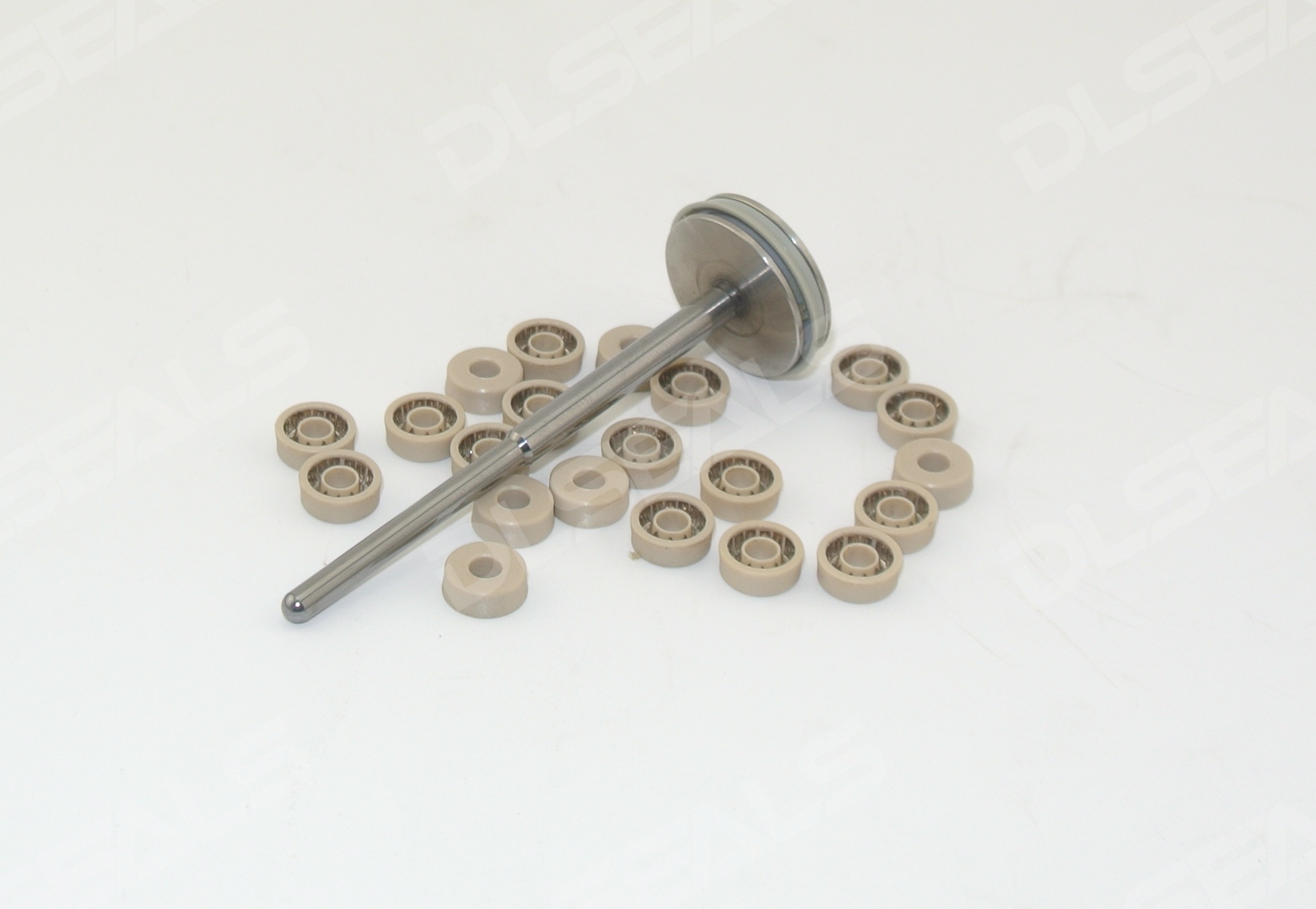
1. Overview of PEEK Material
PEEK (Polyether Ether Ketone) is a high-performance engineering thermoplastic known for its excellent mechanical strength, high temperature resistance, chemical resistance, and dimensional stability. Due to its superior comprehensive properties compared with conventional plastics and even some metals, PEEK has been widely used in aerospace, petrochemical, semiconductor equipment, medical devices, and advanced sealing applications.
In the sealing industry, PEEK is commonly machined into sealing rings, backup rings, guide rings, support rings, valve seats, and wear rings. It is especially suitable for high-temperature, high-pressure, high-speed, and chemically aggressive environments.
2. Core Performance Advantages of PEEK Seals
2.1 Excellent High Temperature Resistance
PEEK can operate continuously at temperatures up to 250°C, with short-term resistance exceeding 300°C. Its glass transition temperature is approximately 143°C, and melting point is about 343°C.
Benefits:
- Replaces PTFE in applications where creep deformation is a concern
- Suitable for steam systems, thermal oil equipment, and high-temperature hydraulic systems
2.2 Outstanding Mechanical Strength and Wear Resistance
PEEK offers high tensile strength, compressive strength, rigidity, excellent wear resistance, and a low friction coefficient.
Advantages:
- Strong anti-extrusion capability
- Minimal deformation under high pressure
- Long service life in reciprocating motion
- Can be used as support rings
In hydraulic sealing systems, PEEK is often used to replace metal backup rings or nylon support rings.
2.3 Superior Chemical Resistance
PEEK resists most acids, alkalis, organic solvents, fuels, lubricants, and steam, with only a few strong oxidizing acids affecting it.
Suitable Media:
- Hydraulic oil
- Natural gas
- Crude oil
- Acidic/alkaline cleaning solutions
- High-purity chemicals
- Steam and hot water
Therefore, it is widely used in petrochemical and semiconductor industries.
2.4 Excellent Dimensional Stability
PEEK has very low water absorption (approximately 0.1%) and a low thermal expansion coefficient, ensuring precision dimensions and long-term stability.
Key Benefits:
- Excellent fit in precision sealing grooves
- Minimal dimensional change under heat
- Ideal for dynamic sealing structures
2.5 Good Self-Lubrication and Low Friction
When modified with carbon fiber, graphite, or PTFE fillers, PEEK demonstrates even better tribological performance and reduces equipment wear significantly.
3. Common Types of PEEK Sealing Components
3.1 PEEK Backup Rings
Used to prevent O-rings from extrusion under high pressure, commonly applied in hydraulic cylinders, valves, and pumps.
3.2 PEEK Guide Rings
Used for piston guidance in hydraulic cylinders, preventing metal-to-metal wear.
3.3 PEEK Valve Seats
Applied in ball valves, needle valves, and control valves, offering excellent pressure and wear resistance.
3.4 PEEK Piston Rings / Wear Rings
Suitable for compressors, pumps, and high-frequency moving systems.
4. Typical Application Fields
4.1 Oil & Gas Industry
Used in downhole tools, mud pumps, production equipment, and valve systems operating under high pressure, high temperature, abrasive, and corrosive environments.
Typical Conditions:
- Temperature above 180°C
- Pressure above 50 MPa
4.2 Hydraulics and Construction Machinery
Used in high-pressure cylinders, rotary joints, and hydraulic valve blocks to improve service life and impact resistance.
4.3 Semiconductor and Precision Equipment
PEEK provides low outgassing, chemical resistance, and cleanliness, making it suitable for:
- Wafer processing equipment
- Vacuum systems
- Precision pump and valve systems
4.4 Aerospace Industry
Used in fuel systems, hydraulic controls, and high-temperature structural parts with lightweight advantages over metals.
4.5 Medical Equipment
PEEK offers biocompatibility and is used in sterilizable medical devices and sealing systems.
5. Comparison with Common Materials
| Property | PEEK | PTFE | Nylon PA | Metal |
|---|---|---|---|---|
| Heat Resistance | ★★★★★ | ★★★★ | ★★ | ★★★★★ |
| Wear Resistance | ★★★★★ | ★★ | ★★★ | ★★★★ |
| Pressure Resistance | ★★★★★ | ★★ | ★★★ | ★★★★★ |
| Chemical Resistance | ★★★★ | ★★★★★ | ★★ | ★★ |
| Lightweight | ★★★★★ | ★★★★★ | ★★★★★ | ★ |
6. Selection Recommendations
When choosing PEEK seals, consider:
- Operating temperature range
- System pressure level
- Motion type (reciprocating/rotary)
- Media compatibility
- Clearance gap
- Need for reinforced grades (glass fiber/carbon fiber/PTFE filled)
7. Future Development Trends
With the growth of advanced manufacturing, new energy, semiconductor industries, and localization demand, the PEEK sealing market is expanding rapidly.
Future Directions:
- Carbon fiber reinforced PEEK seals
- Ultra-precision machined PEEK parts
- Medical-grade PEEK seals
- Domestic alternatives to imported PEEK materials
8. Conclusion
With excellent heat resistance, mechanical strength, wear resistance, chemical resistance, and dimensional stability, PEEK seals have become an important solution in advanced sealing systems. Under severe operating conditions, PEEK significantly improves reliability, extends service life, and reduces maintenance costs.
For industries requiring high performance and reliability, PEEK seals are becoming the preferred material.
Post time: Apr-29-2026


