
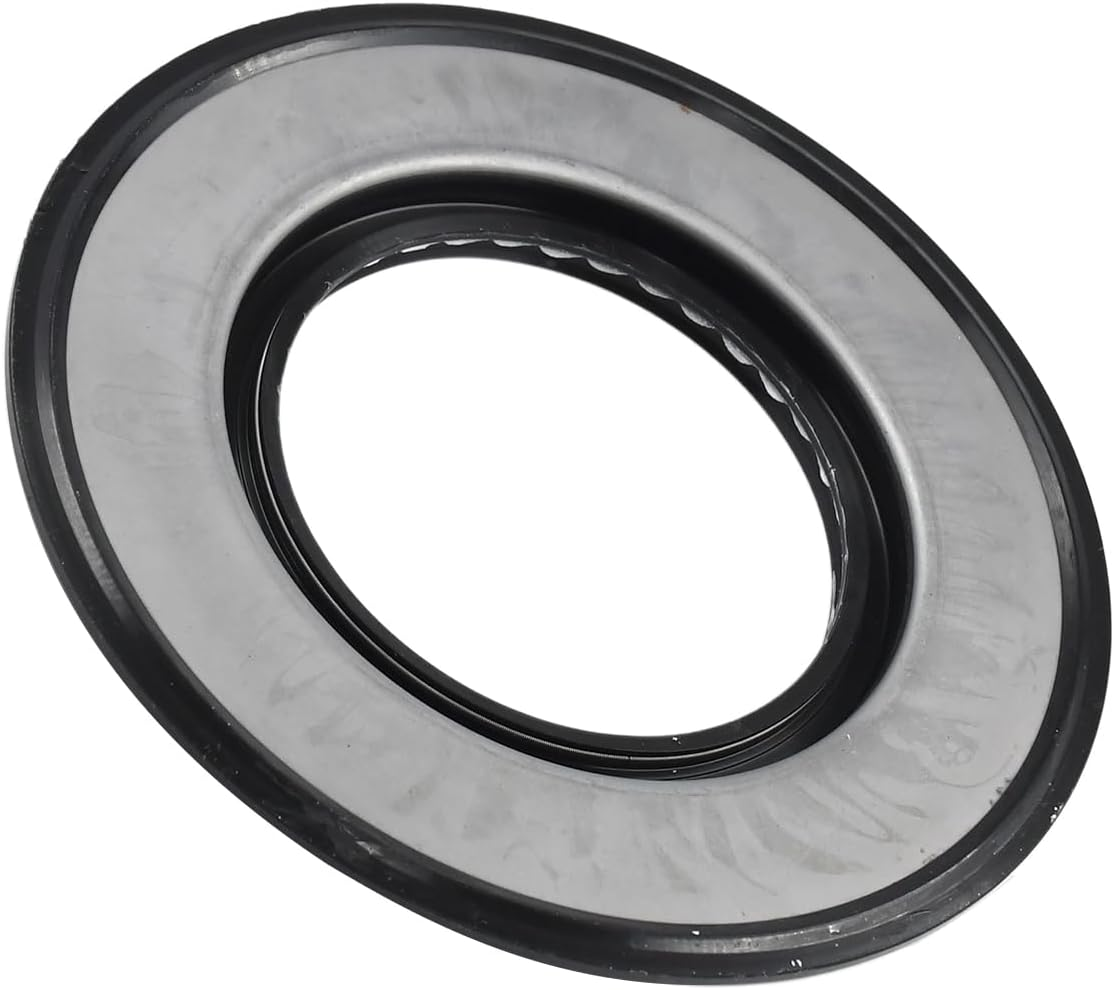
Beneath the steel body of a car, the engine acts as its constantly beating heart, the source of the vehicle’s power. Around this precise, high-speed component, there are seemingly inconspicuous but vital “loyal guardians” that work silently to prevent the lifeblood—engine oil—from leaking. Among them, the crankshaft oil seal is a key representative. Today, let’s unveil the mystery of this “unsung hero.”
1. What is a Crankshaft Oil Seal?
Simply put, a crankshaft oil seal is a sealing device installed at both ends (front and rear) of the engine crankshaft. Its core mission is singular: to seal.
- What does it seal? It seals the pressurized oil inside the engine, ensuring it does not leak through the gap between the crankshaft and the engine block.
- What does it block? Simultaneously, it must block external contaminants like dust, mud, and moisture from entering the engine, protecting the clean lubrication system and precision components.
You can think of it as a “one-way seal door” installed on the high-speed rotating crankshaft, allowing the crankshaft to turn freely but firmly preventing the oil from “crossing the boundary.”
2. The “Work Post” and Core Value of the Crankshaft Oil Seal
The crankshaft is the core component of the engine, converting the piston’s reciprocating motion into its own rotational motion to output power. Both ends of the crankshaft need to extend out of the engine block:
- Front End (Free End): Usually connected to the pulley, which drives accessories like the alternator, air conditioning compressor, and water pump.
- Rear End (Output End): Connected to the flywheel, transmitting power to the transmission, which ultimately drives the wheels.
These two locations are the “work posts” of the crankshaft oil seal. Its value is irreplaceable:
- Ensures Lubrication: The engine relies on oil to lubricate all moving parts (such as crankshaft bearings, camshafts, etc.). If the seal fails and causes oil leakage, insufficient lubrication can lead to severe dry friction, potentially causing engine bearing failure or even seizing within minutes, resulting in significant economic loss.
- Protects Environment and Safety: Leaked oil not only pollutes the environment but can also cause a vehicle fire if it drips onto the hot exhaust pipe. Oil on the ground poses a traffic safety hazard.
- Maintains Engine Health: Preventing contaminant ingress greatly extends the engine’s service life.
3. Common Types and Materials of Crankshaft Oil Seals
With technological advancements, crankshaft oil seals have mainly gone through two stages:
- Radial Lip Seals: Widely used in the past, consisting of a metal casing, a rubber sealing lip, and a garter spring. Relatively simple in structure, but durability and sealing performance under high temperature, pressure, and speed are limited.
- Fluoroelastomer (FKM) Oil Seals: Commonly used in modern cars. Their sealing lip is made of high-performance Fluoroelastomer (FKM) material, which offers excellent resistance to high temperatures (up to 200°C and above), engine oil, chemicals, and aging. This makes the lifespan of modern seals almost comparable to that of the engine itself.
4. “Warning Signs” and Replacement of the Crankshaft Oil Seal
Even the best oil seals succumb to the wear and tear of time. Long-term exposure to high temperatures, high rotational speeds, and poor oil quality can cause the rubber material to harden and lose elasticity, ultimately leading to failure.
When a crankshaft oil seal has problems, common signs include:
- Visible Oil Stains in the Engine Bay or Underneath: This is the most direct sign. After parking for a while, check the front bottom of the engine or the area where the engine and transmission meet for fresh oil droplets or accumulated grime.
- Abnormally High Oil Consumption: If you find yourself frequently adding oil, but the exhaust pipe isn’t emitting blue smoke (indicating it’s not burning oil), then leakage is the primary suspect.
- Oil Warning Light Illuminates in Case of Severe Leakage: If the leak is substantial, it causes low oil pressure, and the red oil warning light on the dashboard will illuminate. You must stop the engine immediately and call for roadside assistance.
Replacing a crankshaft oil seal is a highly specialized repair job. This is especially true for the rear seal, located between the engine and transmission, which requires removing the transmission and even the flywheel to access. The labor cost often far exceeds the cost of the part itself. Therefore, if replacement is needed, it is recommended to choose a reputable, professional repair shop and use high-quality parts from the original manufacturer or reputable brands to ensure repair quality and avoid the hassle of repeated repairs.
Conclusion
The crankshaft oil seal, a small component with a diameter of just over ten centimeters, carries the crucial responsibility of guarding the engine’s “lifeline.” It does not participate in creating power but is the cornerstone for the stable and long-term operation of the power system. Understanding it, paying attention to its signals, and providing timely care are ways we, as car owners, can show deep appreciation for our vehicle’s “heart.” Remember, behind every smoothly traveled mile, there is the silent dedication of this “loyal guardian.”
Post time: Dec-04-2025