
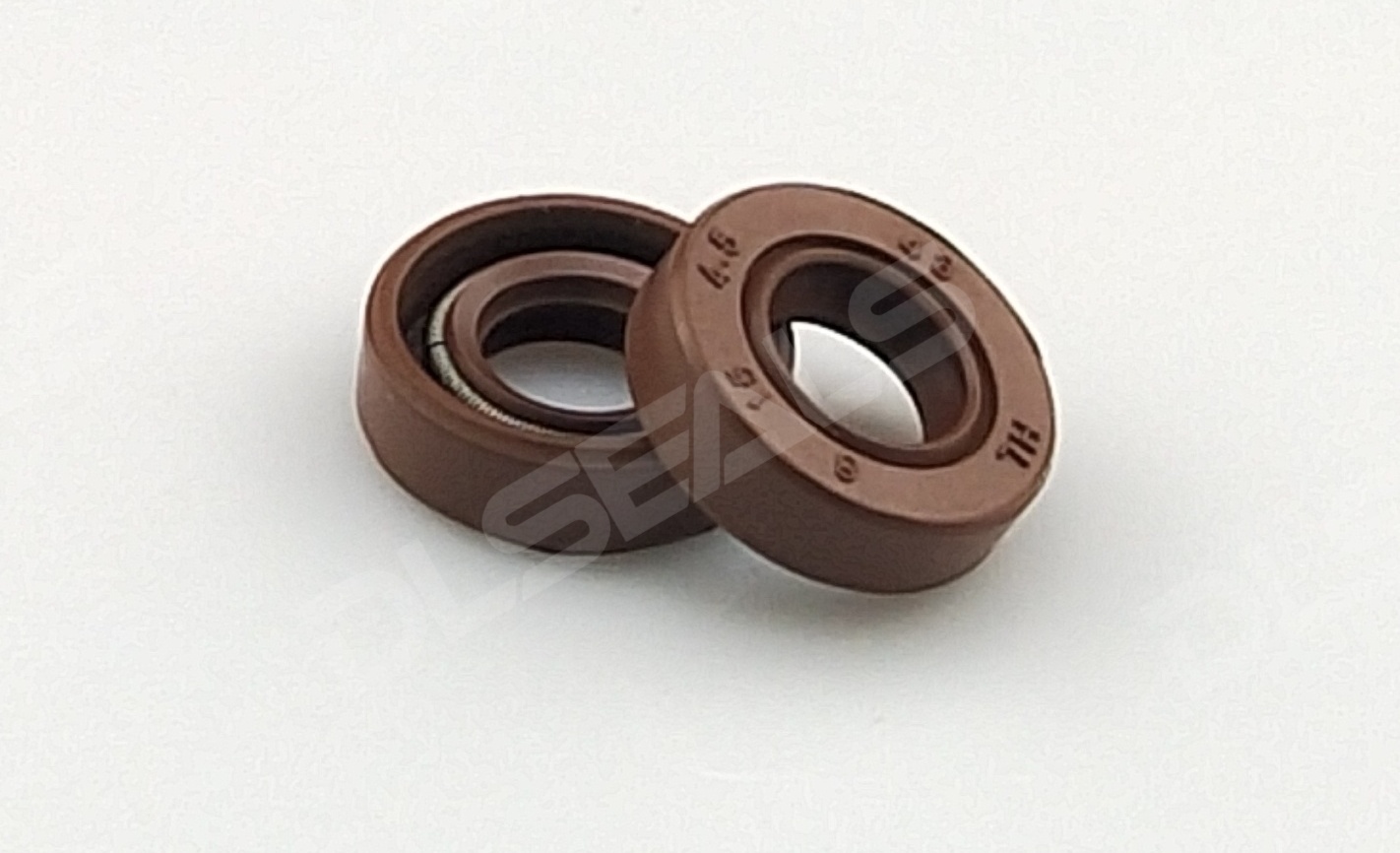
Selecting the right skeleton oil seal starts with accurate measurement. Any deviation can lead to oil leakage at best, or excessive friction damaging the shaft and burning the seal at worst.
1. Core Dimension Notation
The standard format for identifying an oil seal is: Inner Diameter (d) × Outer Diameter (D) × Width/Height (B/H).
-
Inner Diameter (d): Corresponds to the diameter of the shaft.
-
Outer Diameter (D): Corresponds to the internal diameter of the mounting bore or housing.
-
Width/Height (B/H): The thickness of the oil seal skeleton.
2. Measurement Steps
To ensure precision, use a vernier caliper rather than a tape measure.
-
Measuring the Shaft (ID): Do not measure the ID of the old seal, as it may be worn or deformed. Measure the actual diameter of the shaft where the seal operates.
-
Measuring the Bore (OD): Measure the internal diameter of the equipment housing bore. Take measurements from multiple angles and use the average to account for any out-of-roundness.
-
Measuring the Width (B): Measure the thickness of the old seal or the depth of the installation groove.
3. Common Structure Types
| Type | Name | Description |
| TC | Double Lip |
The most common type; features a primary sealing lip and a secondary dust lip.
|
| SC | Single Lip |
Features only a primary lip; suitable for dust-free environments.
|
| TB / SB | External Metal Case |
Features an exposed metal skeleton for high structural strength and better heat dissipation.
|
Professional Tip:
Providing specific material requirements (such as NBR for standard oil resistance or FKM for high temperatures) and operating conditions (speed and pressure) will significantly improve the accuracy of your custom order.
Post time: May-14-2026


